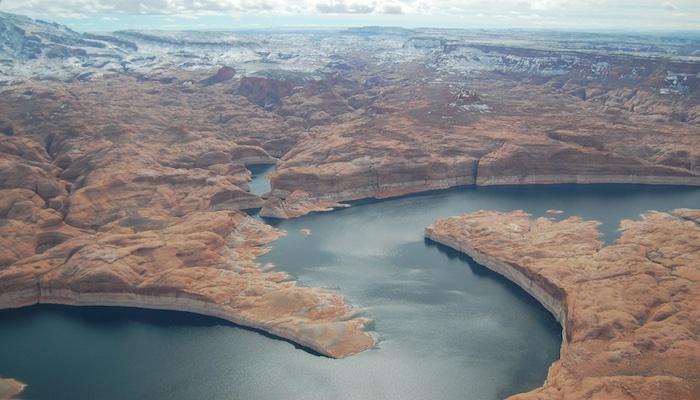
US government proposes steep Colorado River water cuts as worsening drought threatens supplies across Arizona, California and Nevada.
- +US Proposes Major Colorado River Water Cuts Amid Drought Crisis
The United States government has proposed sweeping cuts to Colorado River water allocations for Arizona, California and Nevada as worsening drought conditions and overuse continue to strain the river system.
The United States government has proposed sweeping cuts to Colorado River water allocations for Arizona, California and Nevada as worsening drought conditions and overuse continue to strain the river system.
Under the proposal by the US Bureau of Reclamation, the three lower-basin states could be required to reduce water consumption by up to three million acre-feet annually over the next decade to stabilise water levels at Lake Mead and Lake Powell.
The proposed reductions, which could amount to nearly 40 per cent of current water supplies, are almost double the 1.6 million acre-feet reduction earlier proposed by the three states on May 1.
Tom Buschatzke, Director of the Arizona Department of Water Resources, disclosed details of the federal plan during a meeting of Arizona water stakeholders on Wednesday.
He described the proposed cuts as “sobering,” warning that the Central Arizona Project (CAP), which transports Colorado River water across central and southern Arizona, could face severe disruptions.
“That’s us, that’s Arizona, and potentially CAP going to zero,” Buschatzke said.
According to the proposal, water releases from Lake Powell and Lake Mead would range between five million and 12 million acre-feet annually, depending on reservoir conditions.
Buschatzke warned that unless weather conditions improve significantly, water releases are likely to remain near the lower end of that range.
“I think we all know that unless Mother Nature starts doing her job, it’s going to be closer to the bottom end of this range,” he added.
The Colorado River supplies water to seven western US states and supports millions of households, farms and businesses.
Federal officials said the new framework was designed to provide stability while allowing flexibility for future consensus-based agreements among the states sharing the river.
The Bureau of Reclamation said the strategy could be implemented either under existing Colorado River laws or through negotiated agreements among the states.
The current water-sharing framework governing the river is set to expire this year, while negotiations among the seven basin states remain deadlocked.
Under the 1922 Colorado River Compact, California holds the highest priority rights to river water allocations, a factor expected to shape how future reductions are distributed.