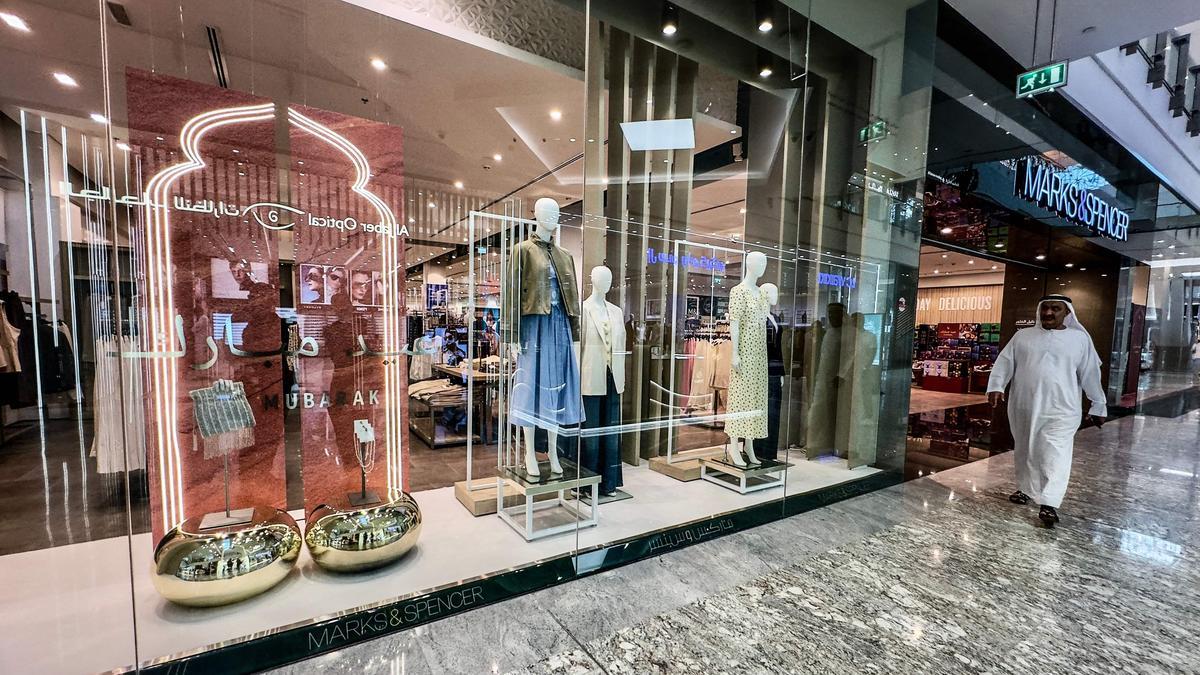
Luxury sales plunge in Dubai and Abu Dhabi as Iran conflict disrupts demand in key Gulf market.
- +Luxury Sales Drop In Dubai, Abu Dhabi As Iran Conflict Hits Key Growth Market
Sales at Europe’s biggest luxury brands have fallen sharply in Dubai and Abu Dhabi after the Iran conflict disrupted one of the sector’s fastest-growing markets, marking a fresh setback for an industry already under pressure from a three-year contraction.
Sales at Europe’s biggest luxury brands have fallen sharply in Dubai and Abu Dhabi after the Iran conflict disrupted one of the sector’s fastest-growing markets, marking a fresh setback for an industry already under pressure from a three-year contraction.
Luxury retailers reported sales declines of 30% to 50% at Dubai’s Mall of the Emirates in March compared with the same period last year, according to a source familiar with the previously unreported figures. Footfall at the mall also dropped by about 15% during the month.
The declines come as global luxury giants — including LVMH, Kering and Hermès — prepare to report quarterly earnings this week, offering the first detailed snapshot of how regional instability is affecting consumer demand.
The Mall of the Emirates, which hosts flagship stores for Louis Vuitton, Dior, Gucci, Cartier, Chanel and Rolex, as well as an indoor ski resort and wellness facilities, is one of Dubai’s premier retail destinations. Operators of the mall, Dubai Mall and Galleria did not respond to requests for comment, nor did LVMH, Kering or Hermès.
The Middle East, which accounts for roughly 5% of global luxury spending, had been one of the industry’s most resilient growth regions in recent years, even as demand weakened in China following the COVID-19 pandemic. But analysts say the recent escalation in regional tensions has shaken that momentum.
The conflict, which began with US and Israeli strikes on Iran on February 28, has heightened instability across the Gulf, undermining Dubai’s image as a stable luxury and tourism hub. Reports of drone attacks affecting infrastructure, including near key landmarks such as the Burj Al Arab and parts of Dubai’s airport, have added to investor concerns.
Carole Madjo, head of luxury research at Barclays, said the Gulf had previously been viewed as a cornerstone of growth for the sector.
“It was definitely a strategic region. Everything was okay,” she said, referring to the market’s recent performance before the escalation in hostilities.
The downturn adds further pressure to an industry already grappling with slowing global demand. Since the end of the post-pandemic luxury boom in 2022, the combined market value of LVMH and Kering has fallen by more than €100 billion, or over a quarter of their worth. Industry-wide sales also slipped by 2% last year, according to Bain & Company.
Analysts warn that the Gulf disruption could have wider implications if geopolitical risks spill over into global consumer sentiment. Bernstein analysts said rising oil prices, travel costs and inflation could “easily disrupt” luxury spending beyond the region, including in the United States.
Christopher Rossbach, portfolio manager at J Stern & Co, said any delay in recovery expectations would not be surprising.
“If it now turns out that whatever luxury recovery we were hoping for in 2026 is not going to happen, and it’s going to be postponed at best into the second half or into next year, I don’t think anybody can be surprised by it,” he said.
Despite the downturn, Dubai remains one of the most profitable luxury retail hubs globally due to low taxes, strong tourist traffic and high retail markups, with some flagship stores generating sales per square metre far above the global average. However, analysts say the latest conflict may test that long-standing advantage.