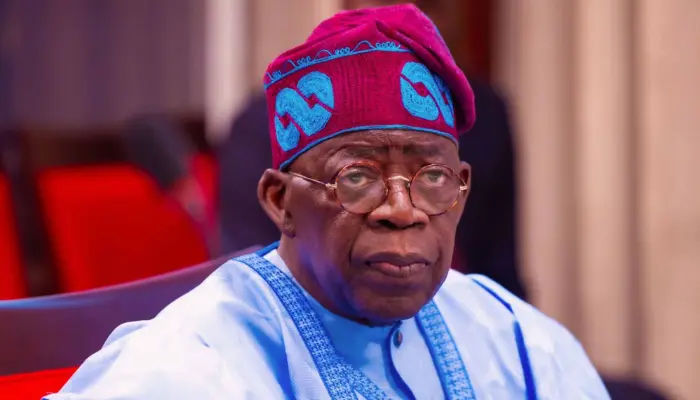
Nigeria’s total external debt stock rose from $42.49 billion in December 2023 to $51.86 billion in December 2025, marking a $9.36 billion increase over two years.
- +How Nigeria’s external debt rose to $51.86 billion under Tinubu
This is as the Federal Government intensified foreign borrowing under President Bola Tinubu’s administration.
This is as the Federal Government intensified foreign borrowing under President Bola Tinubu’s administration. The figures are based on the latest data published by the Debt Management Office (DMO).
The 22% increase reflects a major shift in Nigeria’s borrowing strategy away from reliance on bilateral creditors such as China and toward multilateral institutions, particularly the World Bank Group, alongside renewed access to international capital markets through Eurobond issuances.
The increase in external debt also comes at a time when the Federal Government is planning fresh World Bank loans estimated at $1.25 billion, even as concerns continue to mount over rising debt servicing costs and the country’s widening fiscal deficit.
In terms of domestic debt, the administration has increased the figure from N59.1 trillion to N89.4 trillion.
However, over N22.79 trillion was the Ways and Means debt obtained during the Buhari administration, but capitalized as public debt in the Tinubu administration.
This suggests domestic debts grew on a net by about N7.5 trillion under this administration
This article, however, focuses on the external debt’s growth.
Nigeria’s total external debt as of December 2025 stood at $51.86 billion, according to the latest DMO publication. The debt profile consists mainly of multilateral loans, bilateral loans, Eurobonds, and syndicated facilities from development finance institutions.
Meanwhile, loans from the African Development Bank rose from $3.2 billion to $3.9 billion, while bilateral loans increased from $5.9 billion to $6.7 billion, with China remaining one of Nigeria’s major bilateral creditors.
The World Bank emerged as the biggest contributor to Nigeria’s external debt growth over the two-year period. IDA exposure alone expanded by $3.55 billion, while IBRD loans also recorded significant growth.
Eurobond debt also surged following Nigeria’s return to the international capital market after years of limited activity.
Other contributors to the increase include a $524 million rise in African Development Bank loans, a new $517 million exposure from the China Development Bank, a $331 million increase from Agence Française de Développement, and a new $160 million facility from Unicredit.
However, exposure to China Exim Bank declined slightly as older facilities continued to amortize.
The composition of Nigeria’s external debt has changed significantly over the past two years, with multilateral lenders and Eurobonds now accounting for the bulk of foreign obligations.
As of December 2025, World Bank loans represented 38.36% of Nigeria’s total external debt stock of $51.86 billion.
While the government’s reform programme has attracted investor confidence, reflected in Moody’s upgrade of Nigeria’s rating from Caa1 to B3 and strong Eurobond demand, critics continue to express concerns over the pace of debt accumulation and the rising cost of servicing obligations.
Nigeria has recorded a fiscal deficit every year since President Bola Tinubu assumed office in May 2023, continuing a trend that has persisted for more than two decades.
Every fiscal deficit contained in the national budget represents fresh borrowing requirements for the government, suggesting that Nigeria’s total debt profile could continue to rise in the coming years, including through additional foreign loans.