Ibrahim Mohammed, 32, had spent years deep in the vast forests of Nigeria’s northeastern Borno State as a jihadist fighter when a video message from his mother changed everything.
- +Nigeria’s ex-terrorists seek new lives after vocational training
- +“It was not what we started in the name of Islam.”
A 2009 uprising by the Boko Haram group triggered Nigeria’s ongoing insurgency, which has killed tens of thousands of people and displaced more than 3 million.
A 2009 uprising by the Boko Haram group triggered Nigeria’s ongoing insurgency, which has killed tens of thousands of people and displaced more than 3 million.
“I received a video message from my mother. She pleaded with me to leave the group, lay down my arms, and return home,” Mohammed told AFP on Friday at a ceremony to mark the end of a rehabilitation programme for former jihadist fighters in Borno’s capital, Maiduguri, the epicentre of the 17-year-long insurgency.
“It touched me deeply. I realised that my family still cared about me and wanted me back. That was when I decided to leave the bush and surrender.”
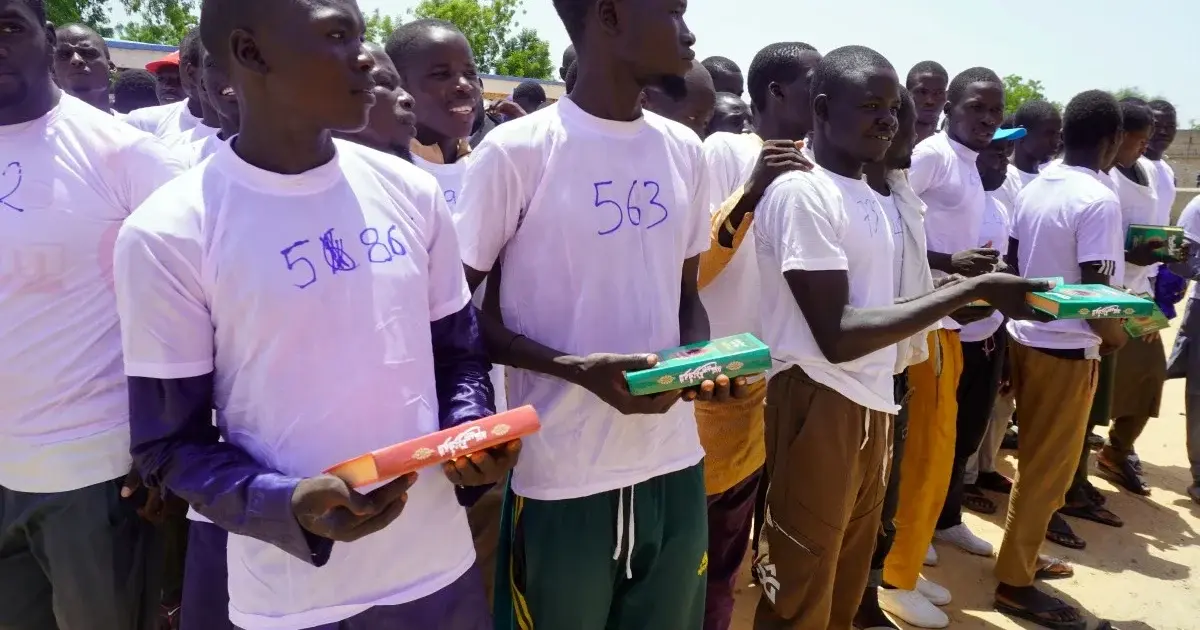
Mohammed was among about 720 former fighters who recently completed a state government rehabilitation programme, part of non-military efforts to counter the insurgency.
Standing under a scorching sun, the former fighters, dressed in white T-shirts, were handed copies of the Koran on which they swore an oath not to rejoin jihadist groups.
Among them were self-confessed former commanders, including one who said he gave permission for his son to be killed for refusing to attack a village.
“Because he rejected the movement and its mission, I gave permission for him to be killed,” Bulama Mukhtar, 36, said.
Women and children were also part of the programme, which officials said was aimed at making them self-reliant and productive.
At least 9,680 participants have been trained since it began in 2021, Sabi Abdullahi Ishaq, the security adviser to the Borno state governor, said.
Participants spent months at a camp in the state capital learning vocational skills such as car repairs and tailoring.
Boko Haram, meaning western education is forbidden, began waging a war to carve out an Islamic caliphate in 2009.
But some former fighters told AFP that they were misled and that the jihadist violence has less to do with religion.
“I realised that the violence and suffering inflicted on innocent people had nothing to do with genuine religious preaching,” said 36-year-old Mustapha Kaka, who rose to become an assistant commander.
“It was not what we started in the name of Islam.”
Idris Abdulkadir, 44, a former fighter with Boko Haram rival offshoot Islamic State West Africa Province (ISWAP), said he “got married and had 11 children while living in the bush.”
“Because I joined Boko Haram, I was left behind while my mates continued their education and became respected Islamic scholars,” Abdulkadir told AFP.
Former fighters said life was hard in the mountains and forests, where they were constantly on the move and often went days without sleep.
The rehabilitation programme is a “chance to rebuild our lives,” Mohammed said.
Ya Fanna Isa, 25, spent a decade in Boko Haram captivity after being abducted from her village, marrying a fighter and raising four children.
She eventually fled with two of her children, while her other two remained with their father.
“I want to start over and live in peace,” Isa said. “My hope is that my children will have opportunities that I never had.”
But despite the intentions behind the programme, Adebayo said it had flaws that could “affect their promise of stabilisation and durable peace”.
“One is the risk of granting blanket amnesty to those that have committed grievous atrocities and who claimed to be mere low-risk associates.,” he told AFP.