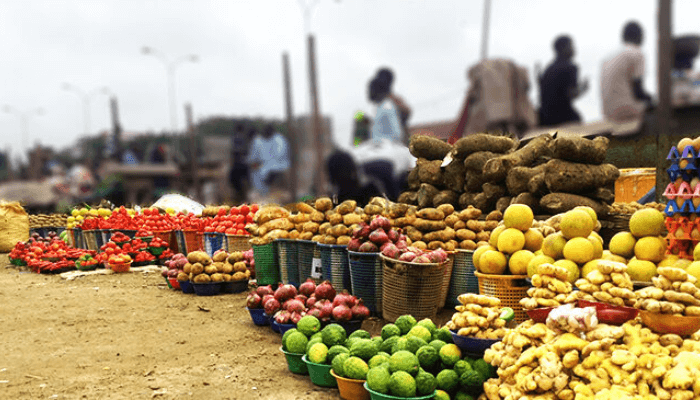
Across northern Nigeria, from the insurgency-ravaged communities of Borno State, Yobe State and Adamawa State to the banditry-prone zones of Kaduna State, Katsina State and Kano State, a deepening security crisis is steadily dismantling economic structures, crippling livelihoods and deterring investment on a scale that analysts warn could take decades to rebuild.
- +Insecurity squeezes Northern Nigeria as food prices surge
In these states, once-bustling agrarian rural economies are increasingly defined by abandoned farmlands, shrinking markets, disrupted transport networks and a growing population of displaced farmers and traders.
In these states, once-bustling agrarian rural economies are increasingly defined by abandoned farmlands, shrinking markets, disrupted transport networks and a growing population of displaced farmers and traders.
Checks conducted by BusinessDay across some of the affected states in the region revealed that economic activities have slowed sharply as persistent attacks, kidnappings and violent conflicts force businesses to shut down or relocate, while households struggle to cope with surging living costs.
This unfolding crisis underscores a broader reality: insecurity in northern Nigeria is no longer just a humanitarian concern—it has become a full-scale economic emergency, distorting both microeconomic stability at the household level and macroeconomic performance across the region.
From the North-East to North-West, and the North-Central, the economic consequences are spreading far beyond immediate conflict zones, threatening regional and national growth.
At the macro level, insecurity is eroding investor confidence, weakening internally generated revenues, and slowing economic expansion. At the micro level, households are grappling with rising food prices, shrinking incomes and declining purchasing power—creating what economists describe as a “cycle of economic contraction.”
Mohammed Aminu Aliyu, a professor of economics, said insecurity has emerged as one of the most significant structural constraints on northern Nigeria’s economy.
“Insecurity affects both supply and demand simultaneously,” he explained. “On the supply side, production drops because farmers and businesses cannot operate safely. On the demand side, incomes fall, so consumption declines. When you combine these effects, you get inflation, unemployment and reduced GDP growth.” He warned that the long-term implications could be severe. “Capital—both domestic and foreign—naturally flows away from risk. What we are seeing is capital flight within Nigeria itself, from rural and insecure areas to relatively safer urban centres. That creates uneven development and entrenches poverty.”
In Plateau State, persistent violence has crippled commercial activity, particularly in Jos and surrounding communities. Traders report declining patronage as fear restricts movement and weakens consumer confidence.
Mary Pam, a building materials trader in Jos South, said unpredictability has become the new normal. “We can no longer predict sales because people are afraid to travel. Even when goods arrive, buyers are scarce, and sometimes we lose everything during sudden attacks,” she said.
Experts note that such disruptions hit small and medium-scale enterprises hardest, as they depend on steady daily transactions to survive. Many businesses are now operating below capacity, while others have shut down entirely. Mathias Eneji described insecurity as a “grave threat” to economic development, warning that it undermines productivity and discourages investment.
Recent violence around the University of Jos community, he added, forced students out of hostels, triggering a sharp decline in commercial activities and leaving businesses struggling.
In Kwara State, the economic toll is increasingly visible in rural communities such as Edu and Kaiama, where farmers are abandoning their fields due to fear of kidnapping and attacks.
The result is declining agricultural output, disrupted supply chains and rising food prices. Traders now avoid high-risk routes, transporters charge higher fares, and workers are reluctant to accept postings in volatile areas.
Adamu Abdullahi, Sarkin Fulani of Kwara State, said the losses have been devastating. “We are losing too many resources to insecurity. Some of us who had up to 100 cows now have 40 or 50 left. Others have lost everything,” he said.
He noted that cattle prices have surged sharply due to dwindling supply, raising concerns about the long-term sustainability of the livestock sector.
Analysts say a “fear economy”—where ransom payments, security costs and risk premiums influence economic decisions—is gradually taking hold, distorting market behaviour and widening inequality.
In Kogi State, insecurity combined with rising fuel prices has intensified economic hardship, particularly in Lokoja. Transportation costs have surged, pushing up prices of staple goods. A mudu of beans now sells for as much as N1,700, up from N1,000, while yam and rice prices have risen significantly.
Mama Raahidat, a yam trader, described the dangers of sourcing goods. “Each time I travel, I just pray to return alive. But when we come back, customers accuse us of increasing prices,” she said.
Households are also under pressure. Civil servant Yusuf Kunle said rising transport costs have eroded his family’s food budget.
“Transport alone now takes a large portion of what we used to spend on food. Prices have changed completely,” he said.
Another resident, Lanre Isah, noted that even basic items like sachet water and garri have become more expensive, reflecting broader inflationary trends.
In Benue State, widely known as Nigeria’s food basket, insecurity has devastated agriculture—the backbone of the state’s economy.
Ernest Atoji, chairman of the All Farmers Association of Nigeria (AFAN) in the state, said farmers have lost billions of naira and countless lives over the past three years. “Insecurity has reduced agricultural output, destroyed farmlands and disrupted harvest cycles. Farmers are either displaced or too afraid to cultivate,” he said.
He explained that farmers now face both declining income and limited access to markets, as unsafe roads discourage transporters and traders.
“In some cases, farmers cannot even get their goods to market. Meanwhile, consumers pay higher prices, but farmers do not benefit,” he added.
The result is a breakdown in the agricultural value chain, contributing to food shortages and inflation.
Across northern Nigeria, a clear pattern is emerging: insecurity is systematically dismantling economic systems—from production to distribution and consumption.
Professor Aliyu warned that without urgent and coordinated intervention, the region risks long-term economic decline.
“What is required is a comprehensive approach—security reform, investment in rural infrastructure and policies that restore confidence. Otherwise, the economic damage could take decades to reverse,” he said.