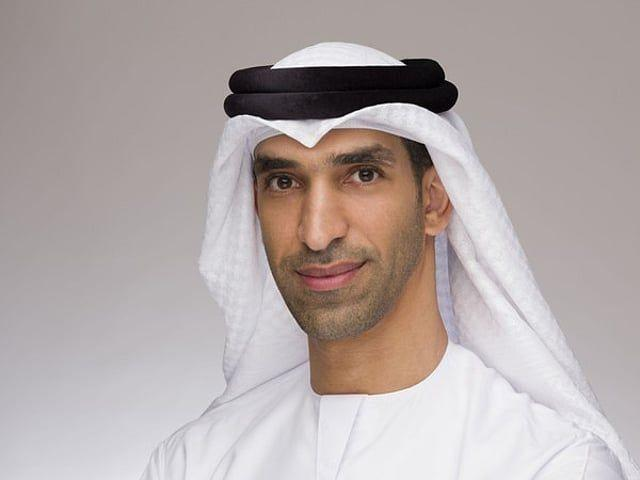
Thani bin Ahmed Al Zeyoudi, United Arab Emirates (UAE) Minister of Foreign Trade speaks on the UAE’s long-term vision for economic partnership and connectivity in Nigeria and across Africa, writes Iheanyi Nwachukwu. Excerpts
- +‘UAE invested $110bn across Africa between 2019 and 2024’
How is the UAE balancing its geopolitical priorities in the Middle East while maintaining strong economic and diplomatic engagement with African countries?
How is the UAE balancing its geopolitical priorities in the Middle East while maintaining strong economic and diplomatic engagement with African countries?
The UAE’s foreign trade policy is built on strategic diversification; we do not view geopolitical priorities and economic engagement as competing interests. Between 2019 and 2024, the UAE invested $110 billion across Africa, more than any other single country, underscoring the depth and long-term nature of that partnership.
In Nigeria, DP World’s logistics operations, AD Ports Group’s partnership on the Lekki Corridor, and First Abu Dhabi Bank’s $1.2 billion financing of the Lagos–Calabar Highway demonstrate engagement that is accelerating, not slowing. Africa’s importance to the global economy and to the UAE’s own diversification ambitions is reflected in sustained investment, infrastructure partnerships, and trade cooperation across the continent.
Are there specific sectors within Africa – such as energy, logistics, or agriculture – where UAE engagement has either intensified or declined due to the ongoing tensions?
Our engagement with Africa is long-term, strategic, and broad-based, spanning sectors central to both African growth and the UAE’s diversification ambitions. In logistics, for instance, DP World Group and DP World are collaborating with Nigeria on a national shipping carrier.
In energy, AMEA Power is deploying renewable capacity across 15 African countries, and Masdar has committed $2 billion to African renewable projects through 2030.
In agriculture, our trade agreements are helping to expand market access for Nigerian cocoa exports to the UAE and, through our trade networks, to high-growth Asian markets. These partnerships reflect a long-term commitment to connectivity, industrial growth, and sustainable development across Africa.
What role is the UAE playing in supporting African countries affected indirectly by the Middle East crisis, particularly in areas like food security and energy access?
Our support for Africa is centered on infrastructure development and capacity building to help countries across the continent navigate economic shocks stemming from a range of global challenges.
This includes the AED4.5 billion in clean energy financing we announced at COP28, which brings together the Abu Dhabi Fund for Development, Masdar, AMEA Power, and the Export Credit Insurance Company to facilitate 15GW of clean energy by 2030.
DP World’s logistics capabilities, including the management of major maritime gateways and digital trade systems, are also helping to ensure the efficient movement of essential products, such as food and pharmaceuticals, into and across African markets. At the same time, our trade agreements are designed to improve access to essential goods by reducing tariffs and other barriers to trade, benefiting businesses and consumers on both sides.
Looking ahead, do you foresee a strategic shift in UAE–Africa partnerships as a result of the crisis, especially in terms of diversification of trade routes or investment destinations?
We foresee an acceleration of the existing strategy rather than a fundamental shift in direction. Our bilateral trade with Nigeria has grown from $1.45 billion in 2019 to $4.8 billion in 2025, reflecting the strength and momentum of the relationship.
The diversification of trade routes is already underway through investments in port infrastructure, logistics networks, and digital trade platforms like DP World’s Dubuy e-commerce platform.
Nigeria, as Africa’s most populous nation and fifth-largest economy, remains central to the UAE’s long-term vision for economic partnership and connectivity across the continent.