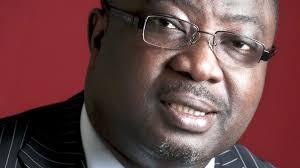
Few careers illustrate the power of journalism in shaping a nation’s conscience as vividly as that of Tunde Sarafadeen Rahman. Over four decades, his journey from newsroom reporter to presidential aide reflects a rare blend of intellectual discipline, strategic communication and unwavering commitment to the public good.
- +The Quiet Architect of Influence: Celebrating Tunde Sarafadeen Rahman at 60
Rahman’s story is not merely about professional advancement.
Rahman’s story is not merely about professional advancement. It is about how the craft of journalism, when guided by integrity and strategic thought, can strengthen democratic culture, influence public discourse and contribute meaningfully to nation-building.
Across Nigeria’s media landscape and political arena, his work has helped bridge an essential gap between citizens and power. His career demonstrates that communication is not only about information. At its highest level, it is about responsibility.
Every enduring legacy begins with curiosity.
For Tunde Rahman, that curiosity began in 1989 when he joined Lagos Horizon as a political correspondent. Within a year he moved to the international desk for a foreign media organisation, broadening his understanding of global political narratives. 
His defining formative years unfolded at the Daily Times of Nigeria, where he served for nearly a decade as political correspondent and later political editor. This period coincided with one of the most turbulent phases in Nigeria’s democratic journey. The young reporter found himself covering political transitions, institutional reforms and evolving democratic structures. 
Those years forged the intellectual habits that would later define him. Accuracy before speed. Context before sensationalism. Responsibility before popularity.
Rahman’s next chapter unfolded at Punch Nigeria Limited, where he rose to the position of Group News Editor, overseeing editorial output and shaping the editorial direction of one of Nigeria’s most influential newspapers. 
But it was at THISDAY that his influence reached national scale. Serving as editor from 2004 to 2014, Rahman presided over a decade in which the newspaper became a powerful platform for policy debate, public accountability and national conversation. 
Under his stewardship, the newsroom was not simply a production centre for headlines. It became a forum where ideas contested, policy was interrogated and citizens were empowered to understand the forces shaping their lives.
When he later founded Western Post, he pursued a different but equally strategic vision. The publication sought to deepen regional reporting and ensure that local realities were not overshadowed by national narratives. 
Through these roles, Rahman embodied the ideal of the journalist as a public servant whose pen becomes an instrument of civic education.
From 2016 to 2023 he served as media adviser to Asiwaju Bola Ahmed Tinubu, during a period marked by intense political competition and ideological contestation. 
Political communication at that level demands more than writing skills. It requires strategic judgement, emotional intelligence and the ability to translate complex political realities into messages that resonate with the public.
Rahman became known for his calm, measured approach. While political discourse often drifted toward confrontation, he focused on clarity and coherence. His work helped frame national conversations around governance, reform and democratic continuity.
President Tinubu later acknowledged this contribution, praising Rahman’s “strong leadership and extraordinary work ethic” and his crucial role as a political liaison and media strategist during the presidential campaign. 
The strategist’s task is not merely to win arguments. It is to shape understanding.
In that respect, Rahman’s work during Nigeria’s most contested political cycles demonstrated the importance of thoughtful communication in sustaining democratic dialogue.
In 2023, Rahman’s experience culminated in his appointment as Senior Special Assistant to the President on Media and Special Duties. 
The role carries enormous responsibility. Nigeria is Africa’s largest democracy, and the presidency operates within an environment of intense scrutiny, political diversity and complex policy challenges.
At the centre of this environment stands the task of explaining government decisions to millions of citizens whose daily lives are affected by policy outcomes.
Rahman’s role therefore extends beyond public messaging. It involves translating economic reforms, governance initiatives and national priorities into language that citizens can understand.
President Tinubu described him as a “conscientious journalist and newspaper editor who applied himself to professionalism and used journalism to promote public good and social justice”. 
Those words capture a deeper truth. The best communicators do not merely defend institutions. They strengthen them by fostering transparency, dialogue and accountability.
In this capacity, Rahman continues to play a vital role in shaping how governance is interpreted and understood across the country.
Behind the public roles lies a thinker who understands that communication must be grounded in ideas.
Rahman’s academic journey reflects that commitment. He holds a Master’s degree in Communication Studies from Lagos State University and completed an MBA at the University of Leicester School of Business in the United Kingdom in 2022. 
His writing often reflects a broader strategic outlook. In one widely discussed essay, he argued that Nigeria’s long history of peacekeeping across Africa strengthens its case for a permanent seat on the United Nations Security Council.
His reasoning drew on decades of Nigeria’s contributions to international peace operations in countries such as Liberia, Sierra Leone and Mali.
Such interventions illustrate Rahman’s belief that communication should elevate national ambition while remaining grounded in evidence.
Beyond writing, his greatest scholarly contribution may be mentorship. Colleagues and younger journalists frequently speak of his patience, guidance and insistence on ethical standards.
In an age where speed often replaces reflection, Rahman represents a different tradition. The tradition of thoughtful journalism rooted in public service.
At sixty, Tunde Rahman stands as one of the quiet architects of Nigeria’s communication landscape.
His career demonstrates that journalism is not simply a profession. It is a civic institution capable of shaping national character.
From reporter to editor, from strategist to presidential aide, Rahman has consistently pursued one central mission: to strengthen the relationship between truth, leadership and public understanding.
His life reminds us that influence does not always arrive with noise. Sometimes it emerges through decades of disciplined work, ethical commitment and intellectual clarity.