'Such a let-down' - healthcare students on NHS recruitment squeeze
"A career for life" - this is what many students were told when applying for healthcare degrees.
"A career for life" - this is what many students were told when applying for healthcare degrees.
But a week ago, a trainee paramedic spoke to the BBC about how she is now looking for work abroad because of a recruitment freeze in Wales.
The story resonated with many people, and dozens studying midwifery, physiotherapy, nursing and other healthcare degrees got in touch, saying they too felt they had been left in limbo.
It has now been announced university-run paramedic courses in Wales will be paused from September because there are not enough jobs available.
The Paramedic Science courses are currently run at Swansea University and Wrexham University.
The HEIW said the decision, made with the Welsh government and the Welsh Ambulance Services University NHS Trust (WAST), was "to reduce competition for vacancies over the next few years" and "improve employment opportunities".
WAST confirmed recruitment of more paramedics will be "extremely limited this year, reflecting a wider UK trend".
The Welsh and UK governments said they are working with universities, health boards and graduates to get people into work.
Students in England and Scotland also described how they feared there would be no jobs for them at the end of their degrees, with one woman describing how her heart breaks for her son, who is working in Starbucks and considering moving to Canada so he can use his physiotherapy degree.
"It's awful, it's such a let-down. So disappointing," said Emma Coomer, 41, from Aberdare, Rhondda Cynon Taf, who left a full-time job with a good wage and regular hours at a GP practice to study for a nursing degree at the University of South Wales.
"I gave that up because I wanted to be a nurse, but juggling shifts and weekends, missing things with the children has been hard," said the mum-of-two.
"All the way along I've sort of said it'll be worth it.
"In the end I'll have a good job, a good income, I've been trying to better our lives."
But as the course nears its end, and at a point when most students usually have jobs lined up, many don't - leaving them confused.
Emma added: "We were told not to panic.
"It will turn a lot of people away from nursing.
"So the NHS will be in an even worse state than it is now."
As many as half of all new nursing graduates could be left without work, the Royal College of Nursing Cymru said earlier this month, adding that the lack of jobs represented "a serious failure of workforce planning".
Chloe Hurst, 20, from Powys, is in her final year studying physiotherapy at Cardiff University and feels disillusioned.
She said there are currently no Band 5 physiotherapy jobs available in Wales, despite these roles usually being open at this stage.
Instead, graduates have been encouraged to apply for Band 3 and 4 positions - roles that do not require a degree.
She said even these jobs with health boards are scarce.
As a recipient of a Welsh NHS bursary, Chloe said it was frustrating that she cannot apply for roles across the border in England.
"I'm very much a home person, so aside from the whole financial thing, it was a big deal, me moving away from like a rural area to a city," she added.
"So knowing that I put myself through that to maybe not even get a job at the end, that is bigger for me than the money side of things."
She said she will apply for anything, even outside healthcare, just "to show I'm trying" and is hoping she will be allowed by bursary bosses to apply for jobs regardless of location.
"It's a waiting game and there's not really much we can do about it," she added.
The Chartered Society of Physiotherapy described recruitment freezes, deleted posts and unfilled vacancies being widespread in services across the UK, with the situation continually worsening.
More than 80% of its members believe staffing levels are insufficient to meet patient needs, while many have seen colleagues leave the NHS because workloads have become increasingly overwhelming, it said.
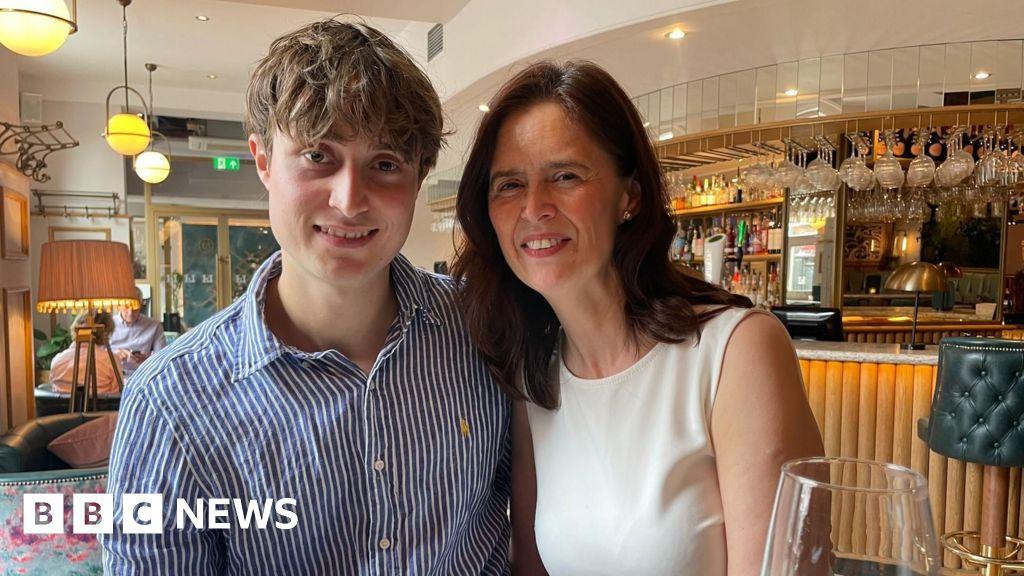
Estelle Bellamy, 54, described how her heart breaks watching son Ben working in Starbucks after completing his physiotherapy degree.
Ben, from Lancashire, graduated from Manchester Metropolitan University last June after funding his studies himself.
"He worked his little socks off, he gave everything," she said, adding he was "desperate" to start work.
Estelle contributed £600 a month, alongside a small NHS bursary of around £1,000 a term, and she said: "I couldn't care less about the money if he'd got a job.
"It was an investment to me and something that he wanted to do, his passion.
"Why are the NHS funding graduates if they can't give them any jobs?"
Initially aiming for sports or gym work, Ben shifted towards respiratory and stroke care after hospital placements, finding it "really rewarding".
Despite multiple applications and a few interviews, he hasn't found work.
"My heart breaks for him because I wonder how long he will keep his hopes up," she said.
"It's all really sad and frustrating and bless his cotton socks, he is just beside himself at the minute, like just desperately wants to get on the ladder."
Estelle said he was now considering opportunities abroad, having reached interview stage in British Columbia.
"So it seems like there's more opportunity for them in Canada than in our own country," she explained.
"I just think it is just absolutely ridiculous."
Other students from England got in touch to describe similar issues.
A 22-year-old student from Cambridgeshire said she and other final-year students had been left with "zero information" about jobs, adding pressure during exams and as they prepare dissertations.
She completed almost 1,000 unpaid placement hours as a paramedic, adding: "The thought that I could have tried so hard, put the time and all my energy in for three years and not get a job at the end of it is crazy.
"It's ridiculous that politicians talk about trying to reduce ambulance wait times and hospital wait times and then refuse to give these sectors more money to hire more staff.
"We only want to help the sick and vulnerable and we're being denied that opportunity to help our communities."
A mother of a student paramedic in Bristol said they were told in February there would be no recruitment for the 2026 cohort.
Her daughter will leave with £60,000 debt, and she added: "They've been out there working from the age of 18 or 19 on placement, seeing the most horrific things and it honestly feels like they're just being thrown on the scrap heap."
A 36-year-old woman from Oxfordshire said she qualified as a paramedic last June but has still not found work.
"I now owe £66,000 (which is ever growing due to interest), work a minimum wage job after making significant sacrifices to study and qualify with two children and a mortgage," she added.