The Lagos State Government is seeking climate financing to support an ambitious plan to deploy 70 electric ferries over the next five years, as Africa’s largest city pushes to expand water transport and cut carbon emissions from urban mobility.
- +Africa’s largest city seeks climate financing for electric ferry expansion
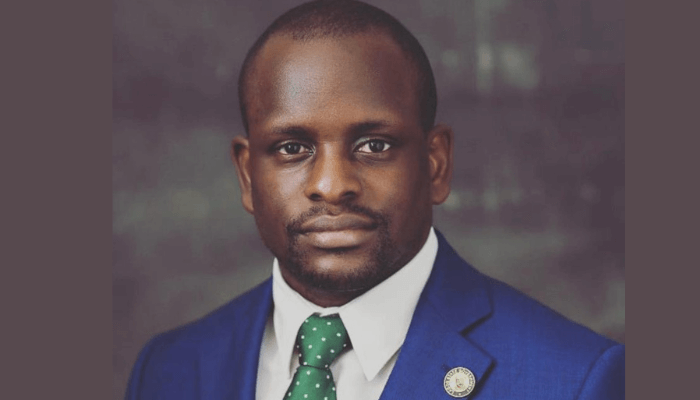
Oluwadamilola Emmanuel, special adviser to the governor on blue economy, said the state is positioning the project as part of a broader transition toward cleaner and more integrated transportation infrastructure capable of attracting private capital.
Oluwadamilola Emmanuel, special adviser to the governor on blue economy, said the state is positioning the project as part of a broader transition toward cleaner and more integrated transportation infrastructure capable of attracting private capital.
“For our project in Lagos, it’s strictly electric ferries,” Emmanuel said during a panel session on the sidelines of the Africa CEO Forum Thursday. “It’s about 70 electric ferries coming to Lagos.”
The project forms part of Lagos’ wider effort to ease pressure on its overstretched road network by shifting commuters and cargo movement onto waterways, while linking water transport to ports and road corridors across the commercial hub.
Emmanuel said the government is looking to climate finance and carbon markets to help fund the initiative, arguing that lower emissions from electric-powered ferries could unlock access to green funding pools increasingly targeted at sustainable urban infrastructure projects.
“We’re reducing carbon emissions,” he said. “We’re going to have access to those carbon emission funds as well.”
Lagos, a coastal city of more than 20 million people, has in recent years intensified efforts to develop its blue economy amid worsening traffic congestion, rising logistics costs and growing pressure on public transport systems.
Authorities are betting that waterways, long underutilised despite the city’s extensive lagoon network, could emerge as a viable alternative for both passenger and commercial transportation if safety, infrastructure and regulatory coordination improve.
As part of that strategy, Emmanuel said the state established a waterways monitoring and data management centre to improve visibility across inland waterways and support planning decisions.
“It started to give us real-time data because we realised there’s no data,” he said. “If you don’t know the waterways, you don’t know anything.”
The government is now looking to scale the platform into a vessel-tracking system capable of monitoring movements across Lagos waterways in real time, an initiative officials believe could improve safety and increase investor confidence in the sector.
Emmanuel said attracting private investment into water transportation would depend largely on reducing operational risks and demonstrating clear commuter demand.
“If you’re in the private sector, you want to ensure that your investment is safe,” he said. “We need to ensure that we can help them with de-risk.”
He added that infrastructure investments must be phased and designed around demand generation rather than supply alone, warning that large-scale transport projects often struggle when usage assumptions fail to materialise.
“Whatever you’re funding should also help drive up demand,” he said. “At the end of the day, the private sector is concerned about demand.”
The state is also seeking closer integration between waterways, roads and ongoing port developments in Lagos, positioning the ferry expansion as part of a multimodal transport ecosystem rather than a standalone initiative.
“We don’t think about water transportation in isolation in Lagos,” Emmanuel said. “It’s about how it links to the road and, where possible, how it links to the rail.”