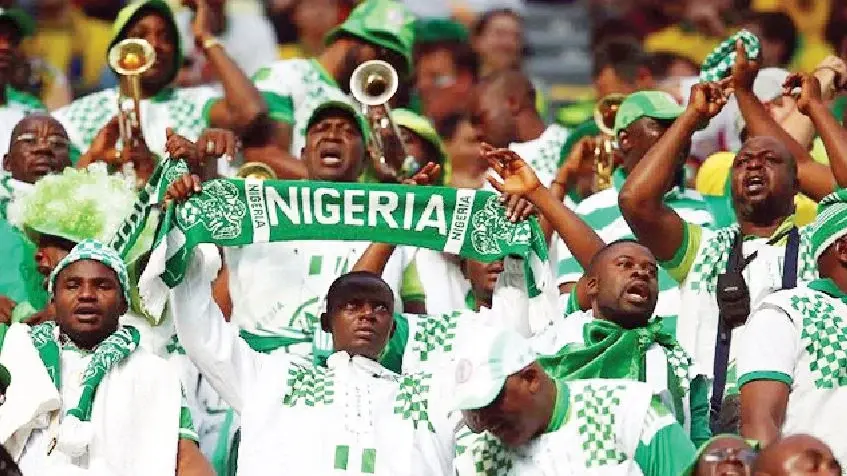
As football’s biggest tournament begins in North America, Nigerians at home and abroad recount the heartbreak, lost opportunities and frustration of watching the Super Eagles miss a second consecutive World Cup, writes PETER AKINBO
- +Nigerians count losses as World Cup begins without Eagles
The 2026 FIFA World Cup kicks off on Thursday (today) at the iconic Estadio Azteca in Mexico City, where co-hosts Mexico face South Africa in the opening match of football’s biggest spectacle.
The 2026 FIFA World Cup kicks off on Thursday (today) at the iconic Estadio Azteca in Mexico City, where co-hosts Mexico face South Africa in the opening match of football’s biggest spectacle. Yet for millions of Nigerians, the start of the month-long tournament will be accompanied by a familiar feeling of disappointment, as the Super Eagles are absent from the competition for the second consecutive edition.
With the World Cup expanding to 48 teams and offering Africa a record number of qualification slots, many had expected Nigeria to be among the continent’s representatives. Instead, fans will once again be forced to watch from afar as other nations chase football glory on the grandest stage.
For Nigerians at home, in the diaspora and across the global football community, the occasion is less a celebration than a painful reminder of what might have been.
Soyemi Tosin had it all planned out.
The Lagos-born sociology graduate, who relocated to the United Kingdom five years ago, had spent months setting money aside with one goal in mind — to finally watch the Super Eagles play at a World Cup in person.
It was a dream he had carried for years.
When Nigeria last qualified for the tournament in 2018, Tosin was still living in Lagos and could only follow the team’s progress from television screens and viewing centres. The 2026 edition, hosted across the United States, Canada and Mexico, appeared to offer him the perfect opportunity to experience the World Cup atmosphere firsthand.
“The last World Cup Nigeria played, I was in Lagos watching on television,” he told The PUNCH.
“I told myself that next time I would be in the stadium. I started saving. I even looked up venues and ticket prices. Now I will have to wait for the next time.”
For Tosin, the disappointment extends beyond football. The World Cup represented an opportunity to create memories, travel with friends and witness a moment of national pride alongside thousands of fellow Nigerians.
He is one of millions of supporters worldwide for whom Nigeria’s failure to qualify represents not just the absence of a football team, but the collapse of a deeply personal plan.
For Precious Ogbolu, a Nigerian resident in Canada — one of the tournament’s three host nations — the disappointment carries an additional sting.
With matches scheduled across Toronto and other Canadian cities, Ogbolu had imagined, for the first time in his years abroad, that he might watch the Super Eagles play competitive football on his doorstep.
“Canada is a host country. Imagine watching the Super Eagles play here, in my city,” he told our correspondent.
“I was already thinking about which games they could play in Toronto. Now I am just watching other African teams and seeing their fans live the dream that should have been ours.”
According to him, the absence of Nigeria has reduced the excitement among many members of the Nigerian community in Canada, who had anticipated gathering in large numbers to support the team.
The disappointment is not limited to fans.
For content creators and influencers who have built businesses around Nigerian football, the Eagles’ absence also carries significant financial consequences.
One football content creator, who asked not to be named, had hoped the tournament would provide opportunities similar to those she enjoyed during the 2025 Africa Cup of Nations in Morocco, where Nigeria finished third and generated enormous engagement online.
“At AFCON, I was flown to Morocco and back. Brands wanted to be associated with Nigerian football content because the Eagles were there,” she said.
“I had much bigger expectations for the World Cup because the audience would have been larger. But the brands have gone quiet. The deals are not coming.”
She explained that major tournaments often create opportunities for sponsorships, live coverage partnerships, social media campaigns and fan engagement projects. Without Nigeria’s participation, many of those opportunities have disappeared.
Nigeria’s absence from the 2026 World Cup is the culmination of a qualification campaign that has increasingly been described by analysts and former players as one of the country’s most disappointing football failures in recent years.
The Super Eagles were drawn in Group C alongside Lesotho, Zimbabwe, South Africa, Benin Republic and Rwanda — a group many observers considered favourable for a nation of Nigeria’s pedigree and talent.
Yet the campaign quickly became a story of inconsistency, missed opportunities and mounting frustration.
A series of disappointing results left the Eagles chasing qualification rather than controlling their destiny, ultimately denying them an automatic ticket to the tournament.
The instability surrounding the national team did little to help matters.
Three coaches — Jose Peseiro, Finidi George and eventually Eric Chelle — took charge at different stages of the qualification process, with each manager tasked with reviving the campaign.
Chelle eventually guided Nigeria into the continental play-offs, keeping alive hopes of a late rescue mission. However, after a tense 1-1 draw against the Democratic Republic of Congo, the Eagles were eliminated on penalties — a heartbreaking conclusion that left players and supporters devastated.
For many critics, the qualification failure exposed deeper structural problems within Nigerian football.
Former Super Eagles captain and Chelsea midfielder John Obi Mikel has been among the most vocal critics of the Nigerian Football Federation, calling for sweeping reforms and greater accountability.
“You have to say stop. Enough is enough,” Mikel said.
“Football is the one thing that brings people together in Nigeria, whether you are Christian or Muslim. And for the past eight years now, the NFF has deprived us of that by mismanagement and corruption.”
His comments reflect a growing sentiment among supporters who believe administrative shortcomings, rather than a lack of talent, are largely responsible for Nigeria’s recent struggles.
Former Super Eagles midfielder Sunday Oliseh delivered an even more sobering assessment of the situation.
“If we do not act today, we will be the next Italy of world football,” Oliseh warned.
“A third consecutive failure to qualify for the World Cup will kill Nigerian football.
“A 12-year absence from the World Cup destroys sponsorship, kills the dream of the next generation and erases a nation from the global scouting map.”