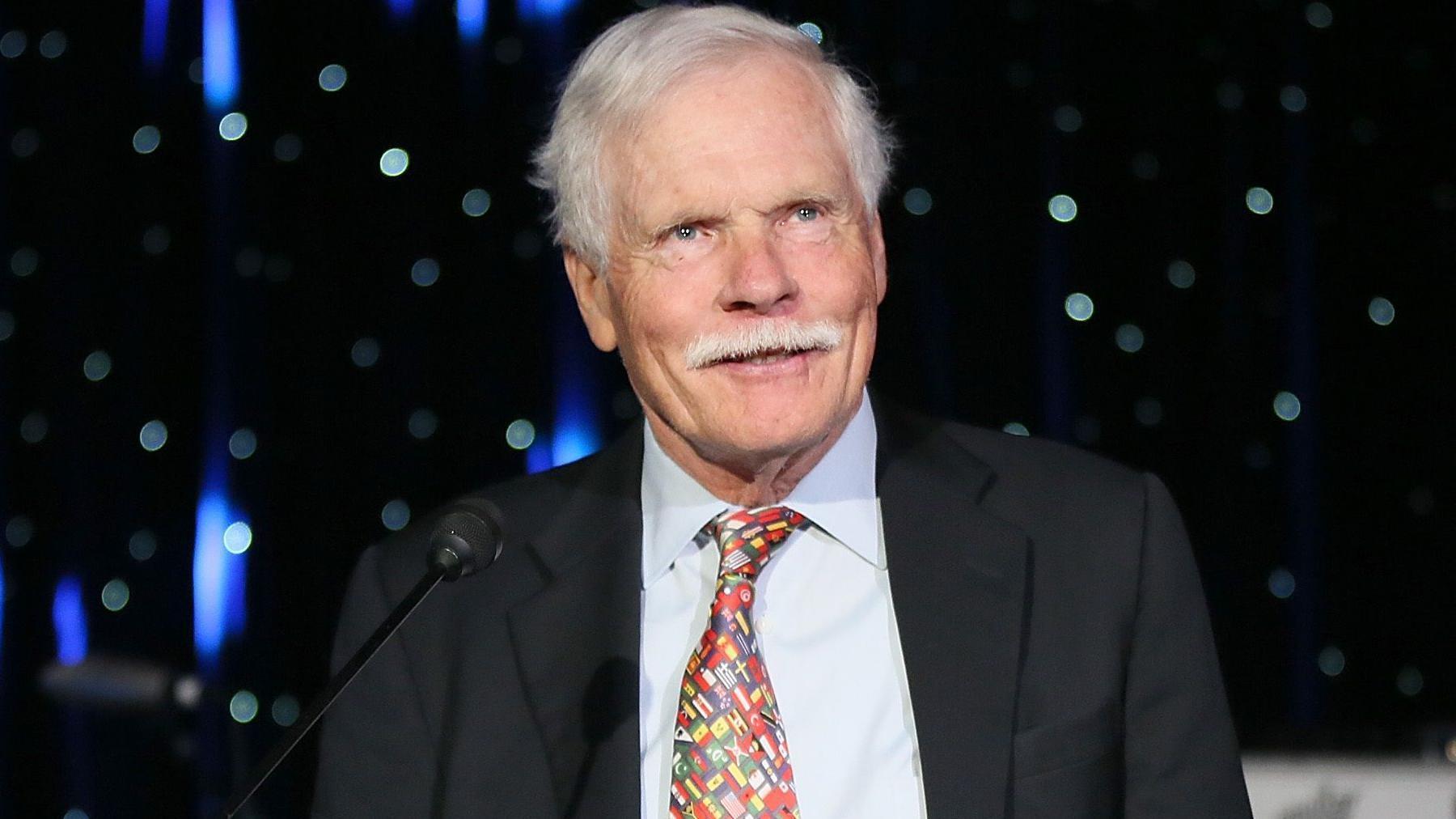
Ted Turner, the media maverick and philanthropist who founded CNN, a pioneering 24-hour network that revolutionised television news, died peacefully on Wednesday, surrounded by his family. He was 87. Turner Enterprises confirmed the news via an official release, marking the end of an era for the Ohio-born Atlanta businessman.
- +CNN founder Ted Turner, architect of global cable news, dies at 87
Nicknamed “The Mouth of the South” for his outspoken nature, Turner built a media empire that encompassed cable’s first superstation, popular channels for movies and cartoons, and professional sports teams, including the Atlanta Braves.
Nicknamed “The Mouth of the South” for his outspoken nature, Turner built a media empire that encompassed cable’s first superstation, popular channels for movies and cartoons, and professional sports teams, including the Atlanta Braves. Beyond the boardroom, he was an internationally renowned yachtsman, a conservationist, and a philanthropist who founded the United Nations Foundation.
Audacious vision for real-time journalism Turner’s most significant contribution was his audacious vision to deliver news from around the world in real time at all hours. In 1991, Time magazine named Turner its “Man of the Year” for influencing the dynamic of global events and turning viewers in 150 countries into “instant witnesses of history”.
On 1 June 1980, Turner launched CNN as the first 24-hour, all-news cable network. Although he eventually sold his networks to Time Warner and later exited the business, he continued to express immense pride in the network, calling it the “greatest achievement” of his life. Mark Thompson, CNN Worldwide Chairman and CEO, described Turner as an “intrepid, fearless” leader and the “giant on whose shoulders we stand”.
Impact of a television news revolution Turner’s media career was built on seeking greater influence through broadcast innovation. He initially boosted ratings on his early stations by airing old sitcoms and classic films before purchasing independent UHF television stations in Atlanta and Charlotte. One of these eventually became WTBS, television’s first “superstation”, which utilised satellite technology to carry its signal nationwide.
Turner was often critical of broadcast television and establishment news judgments. He believed that audiences were ill-informed because evening newscasts were limited to specific time slots. Envisioning a wider aperture for television news—including dedicated segments for business, health, and sports—he recruited experts to help launch the 24-hour cycle. Despite early technical snafus, the 1991 Persian Gulf War solidified CNN’s importance as the first war broadcast live.
A life shaped by advocacy and legacy Beyond news, Turner was an activist who sought the worldwide elimination of nuclear weapons and became one of the foremost landowners in the United States. He played a crucial role in reintroducing bison to the American West and created the Captain Planet cartoon to educate children about the environment.
In his later years, Turner battled Lewy body dementia, a progressive brain disorder he revealed in 2018. In early 2025, he was hospitalised with a mild case of pneumonia before recovering at a rehabilitation facility. He is survived by his five children, 14 grandchildren, and two great-grandchildren.