Google’s first half of 2026 has been defined by one word: agents.
- +Every product Google has announced so far in 2026
- +Android XR and Intelligent Eyewear
From new Gemini models and an upgraded Search experience to AI-powered shopping tools, Google has spent the first half of the year weaving artificial intelligence into nearly every product it makes.
Android XR and Intelligent Eyewear
From new Gemini models and an upgraded Search experience to AI-powered shopping tools, Google has spent the first half of the year weaving artificial intelligence into nearly every product it makes.
The message from Google’s annual I/O developer conference and other announcements is clear: the company wants Gemini to become the connective tissue across its ecosystem, helping users search, shop, work, create, and complete tasks on their behalf.
If you missed the barrage of announcements, here’s everything Google has unveiled in 2026 so far.
Google’s AI ambitions took centre stage this year, with the company unveiling new Gemini models built around reasoning, speed, and action.
Gemini 3.5 Flash is Google’s new default AI model across the Gemini app and AI-powered Search experiences. According to Google, Gemini 3.5 Flash combines frontier-level intelligence with the ability to take action across complex workflows.
The company says the model outperforms Gemini 3.1 Pro on coding, multimodal and agentic benchmarks while operating at a significantly lower cost. Google also claims it generates outputs four times faster than comparable frontier models. For users, this could mean faster responses and improved performance on multi-step tasks.
The company announced the model on May 19 at its I/O 2026 developer conference and was rolled out the same day.
Google also previewed Gemini 3.5 Pro, which it positions as the most capable model in the Gemini 3.5 family. While Gemini 3.5 Flash is optimised for speed and everyday use, Gemini 3.5 Pro is designed for advanced reasoning, complex coding, research-intensive tasks and sophisticated agentic workflows. At Google I/O 2026, CEO Sundar Pichai said the model was expected to become available in June 2026.
Gemini Omni represents Google’s next step in multimodal AI. Unlike traditional AI models that primarily process text, Gemini Omni can accept images, audio, video and text as input. Google says the model can generate videos grounded in real-world understanding and edit them through natural-language conversations.
The company describes Gemini Omni as a system that can “create anything from any input,” starting with video. The first model in the Gemini Omni family, Gemini Omni Flash, is being rolled out through Google’s video creation ecosystem. Google says the model powers video generation and editing experiences in the Gemini app and Google Flow, with the broader goal of making high-quality video creation accessible to users without professional editing skills.
The Gemini app is evolving beyond a simple AI assistant.
Google says the app is becoming more agentic, with new capabilities that can use context, learn user preferences over time, and help complete multi-step tasks across Google services. At Google I/O 2026, the company announced new agents and automation features designed to provide more personalised assistance, organise information, and proactively help users accomplish everyday tasks.
Google introduced Gemini Spark, a personal agent designed to complete tasks on users’ behalf. It is currently rolling out to AI Ultra subscribers in the US, with a broader rollout planned for later in the year.
Daily Brief is Gemini’s personalised morning digest. Drawing on information from Gmail, Google Calendar, tasks, and connected Gemini context, it organises and prioritises the day’s most important items. Beyond summarising information, Daily Brief suggests next steps and actions, helping users stay on top of their schedule and responsibilities. Over time, it can adapt to user preferences to deliver more relevant briefings.
Gemini Live received major updates designed to make interactions more fluid and conversational. Users can switch seamlessly between typing and speaking without losing context, while a redesigned voice experience enables more natural conversations. Google also announced support for regional dialects and deeper integration of Gemini Live across the Gemini app.
Google introduced Neural Expressive, a new design language for the Gemini app. The refresh brings:
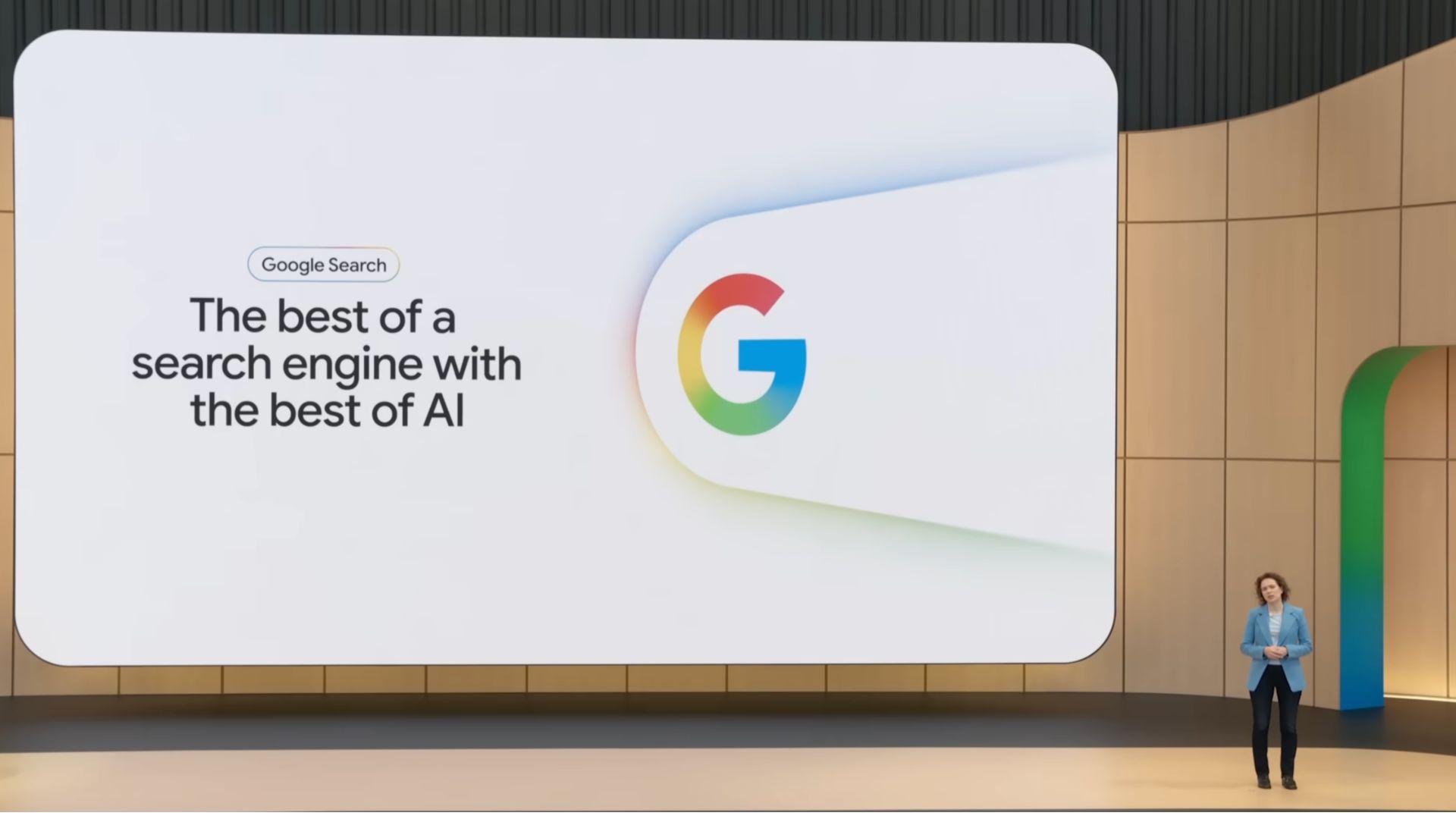
Google Search is evolving from a list of links into an AI-powered assistant. With new capabilities announced at Google I/O 2026, Google Search can answer complex questions, reason across multiple sources, and help users complete tasks directly from the search experience.
Google has integrated Gemini 3.5 Flash into its AI-powered Search experiences, including AI Mode and AI Overviews. This upgrade enables more complex queries and more comprehensive, context-aware responses across Search.
Search will increasingly present AI-generated responses alongside traditional results, with more interactive and visually rich formats. Depending on the query, users may see dynamic layouts, visual elements such as charts or images, and explanations tailored to the context of their question.
Google is introducing agent-like capabilities in Search that support multi-step and ongoing tasks, allowing users to continue and track certain workflows over time. Search is increasingly designed to help users complete tasks as well as find information.
Shopping is also receiving the AI treatment.
Google wants to help users move from discovery to purchase with minimal friction.
Universal Cart is one of the biggest new Shopping announcements. It is a Gemini-powered shopping cart and agentic hub available across Google Search, Gemini, YouTube, and Gmail (with integrations rolling out progressively).
Once you add a product, Google can proactively:
Rather than acting as a traditional product catalogue, Shopping is evolving into a buying assistant that helps users make decisions and take action.
Google continues to embed Gemini throughout Workspace. The company has steadily integrated Gemini into its productivity ecosystem, turning Workspace into an AI-assisted environment across core applications.
Across these tools, Gemini acts as an embedded assistant that helps users generate, refine, and interpret work content directly inside Workspace apps. The broader direction of Workspace is shifting toward an AI-first productivity model, where Gemini functions as a cross-app intelligence layer supporting writing, analysis, communication, and collaboration.
Google Pics is a generative AI design and image creation tool introduced at Google I/O 2026 and integrated into Google Workspace. It allows users to create and edit images using natural language prompts, including modifying or repositioning specific objects within an image through AI-powered segmentation. The tool is designed for creating visuals such as posters, presentations, and marketing assets directly inside apps like Google Slides and Drive. Google has also incorporated its SynthID watermarking system to support AI content provenance across generated media.