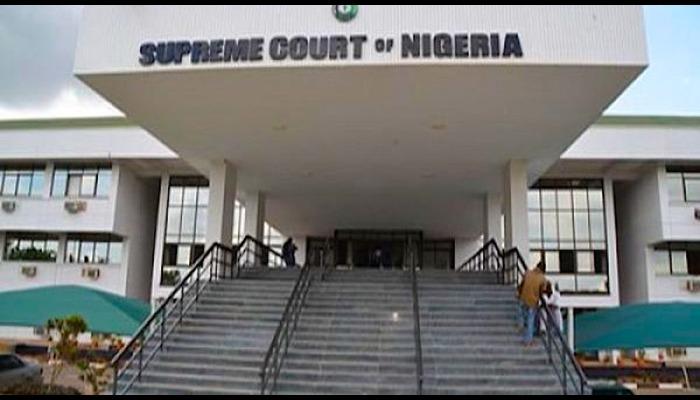
Supreme Court pushes Kano Emirate dispute to 2027, extending year-long legal battle
Nigeria’s protracted Kano Emirate crisis took another turn on Monday as the Supreme Court adjourned proceedings in the high-stakes dispute to April 17, 2027, further delaying a final resolution to a conflict that has reshaped traditional authority in the state.
Nigeria’s protracted Kano Emirate crisis took another turn on Monday as the Supreme Court adjourned proceedings in the high-stakes dispute to April 17, 2027, further delaying a final resolution to a conflict that has reshaped traditional authority in the state.
Justice Adamu Jauro, who presided over the matter, fixed the new hearing date without delving into substantive arguments, effectively extending a legal contest that has lingered across multiple administrations and court levels.
The adjournment underscores the enduring complexity of the Kano Emirate tussle, a dispute rooted in a controversial restructuring of the centuries-old institution and subsequent political reversals that have triggered overlapping legal claims.
The crisis dates back to 2019 when the Kano State Government under former governor Abdullahi Ganduje split the historic Kano Emirate into five separate emirates—Kano, Bichi, Rano, Karaye, and Gaya. The move, widely interpreted as a political maneuver, led to the deposition of the then Emir of Kano, Muhammadu Sanusi II, in 2020. Sanusi’s removal and the fragmentation of the emirate sparked widespread debate over the limits of executive power in chieftaincy matters.
Legal challenges quickly followed. Parties opposed to the restructuring argued that due process was not followed and that the emirate’s alteration undermined established traditions. Supporters, however, maintained that the state government acted within its constitutional authority.
The dispute deepened in 2024 when the Kano State Government, under Governor Abba Kabir Yusuf, repealed the law that created the additional emirates and reinstated Sanusi II as Emir of Kano. This reversal triggered fresh litigation from deposed emirs and other stakeholders who questioned the legality of both the initial fragmentation and its subsequent repeal.
Conflicting court rulings at various levels have since complicated the matter, with injunctions and counter-orders creating uncertainty over the rightful occupants of traditional stools and the legal framework governing the emirate system.
The case before the Supreme Court is expected to provide a definitive interpretation of the constitutional and statutory issues at the heart of the crisis, including the powers of state governments over traditional institutions and the validity of actions taken by successive administrations.
Monday’s adjournment, however, means that clarity remains distant. Analysts say the delay could prolong tensions within Kano’s traditional and political landscape, where loyalty to rival claimants has occasionally threatened stability.
For residents and stakeholders, the extended timeline raises concerns about the broader implications for governance and cultural heritage. The emirate, which has historically played a central role in community leadership, conflict resolution, and religious guidance, remains entangled in legal uncertainty.
As the Supreme Court prepares to revisit the case in 2027, observers note that the eventual ruling will likely set a far-reaching precedent, not just for Kano but for the relationship between state authorities and traditional institutions across Nigeria.
Until then, the Kano Emirate crisis remains unresolved—its fate suspended between history, law, and politics.