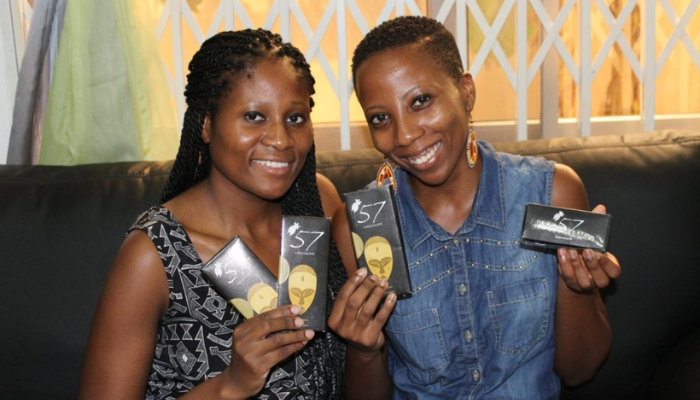
How Kimberly and Priscilla Addison are proving that Africa’s greatest export should no longer be cocoa beans, but world-class brands. For more than a century, the world’s finest chocolate has carried European names.
- +Sisters who refused to let Switzerland own Ghana’s cocoa story
Walk into Harrods in London, Galeries Lafayette in Paris, or a luxury food hall in Dubai, and the shelves tell the same story.
Walk into Harrods in London, Galeries Lafayette in Paris, or a luxury food hall in Dubai, and the shelves tell the same story. Swiss chocolate. Belgian chocolate. French chocolate. Italian chocolate. Beautifully wrapped bars command premium prices, celebrated as symbols of craftsmanship and luxury.
What the packaging rarely tells consumers is where the journey actually began.
More often than not, it started thousands of kilometres away, on a cocoa farm in West Africa.
Ghana and Côte d’Ivoire together produce about 60 per cent of the world’s cocoa beans, supplying the essential ingredient that fuels a global chocolate industry worth well over US$130 billion. Yet for decades, the greatest share of that value has been captured far from the farms where cocoa is grown.
Kimberly and Priscilla Addison looked at that contradiction and asked a question that would change their lives.
If Switzerland could become famous for chocolate without growing cocoa, why couldn’t Ghana become famous for chocolate while growing some of the world’s best cocoa?
The answer became ’57 Chocolate.
It is one of the most compelling stories emerging from Africa’s new manufacturing movement, not because two sisters built another chocolate company, but because they challenged one of the oldest assumptions in global trade: that Africa should export ingredients while others export brands.
The idea was born not in Accra but in Switzerland.
While living in Geneva, Kimberly Addison visited a Swiss chocolate factory. She admired the precision, the craftsmanship and the experience. Then she discovered that much of the cocoa powering Switzerland’s celebrated chocolate industry came from her own country, Ghana. The revelation was unsettling. Ghana supplied one of the world’s finest cocoa beans, yet it was Switzerland that enjoyed the reputation, the premium pricing and the global prestige.
For many people, it would have been an interesting observation. For Kimberly, it became a business plan.
She returned home determined to learn the science and craft of bean-to-bar chocolate making. Her sister, Priscilla, whose background was in international development and communications, joined the mission. Together they spent years studying chocolate production, refining recipes and experimenting until they could produce chocolate that could stand confidently beside the world’s finest.
When they finally launched in 2016, they gave their company a name loaded with symbolism.
’57. Not a product code. Not a marketing slogan.
Nineteen fifty-seven was the year Ghana became the first country in sub-Saharan Africa to gain independence from colonial rule. For the sisters, the name represented something deeper than political freedom. It represented economic independence and the unfinished task of transforming African resources into African industries.
Their mission was deliberately provocative. They were not simply making chocolate.
They wanted to change what the words “Made in Ghana” could mean.
Instead of exporting dried cocoa beans, they transformed them into handcrafted premium chocolate produced entirely in Ghana. Their products incorporated local ingredients such as hibiscus, moringa, coconut and tiger nuts, while their packaging celebrated Ghana’s Adinkra symbols, turning every chocolate bar into a lesson in African culture as well as a luxury confection.
It was manufacturing with identity. That distinction matters.
Across much of Africa, discussions about industrialisation focus on factories, machinery and exports. The Addisons understood that manufacturing alone is not enough. The greatest value in modern economies often lies in branding, design and intellectual property.
Consumers rarely ask where cocoa was grown. They ask for a particular chocolate brand.
That insight explains why Switzerland, which grows no cocoa commercially, has become synonymous with luxury chocolate. It explains why European brands command premium prices using African ingredients. And it explains why Africa’s next industrial revolution will depend not only on processing raw materials but also on owning globally recognised consumer brands.
The sisters are determined to prove that Africa can do both.
Their chocolate is produced in small batches without artificial preservatives, colours or flavours. Cocoa remains the dominant ingredient, allowing consumers to taste the quality of Ghanaian beans rather than excessive sugar or additives. Every design choice reinforces their central message: Ghana should no longer be known only for exporting cocoa. It should also be known for producing some of the world’s finest chocolate.
Their products have been showcased at international chocolate exhibitions, featured in leading food publications and profiled as part of a growing movement to reclaim more value from Africa’s agricultural resources. Academic researchers now cite ’57 Chocolate as a case study in entrepreneurial value addition, demonstrating how African firms can move beyond commodity exports into premium manufacturing.
Yet perhaps their greatest achievement lies elsewhere. They have changed the aspirations of a generation.
For decades, African entrepreneurs were taught that success meant exporting more commodities.
The Addisons argue that real success means exporting fewer commodities and more finished products. That philosophy sits at the heart of Africa’s industrial future.
The continent does not suffer from a shortage of resources. It suffers from a shortage of brands built around those resources.
Coffee should become African coffee houses.
Cotton should become African fashion labels.
Leather should become African luxury goods.
Shea should become African cosmetics.
Cocoa should become African chocolate.
The logic extends far beyond Ghana.
Nigeria, the world’s largest cassava producer, still imports significant quantities of industrial starch. It exports cocoa but imports premium chocolate. It grows sesame, hibiscus, ginger and cashew, yet many of the world’s leading consumer brands using those ingredients are headquartered elsewhere.
That pattern is beginning to change.
Across the continent, entrepreneurs are quietly rewriting Africa’s role in global value chains. Companies are processing, packaging and branding products once shipped abroad as raw materials. They are proving that Africa’s competitive advantage is no longer confined to production.
It can extend to ownership. Kimberly and Priscilla Addison are among the pioneers of that movement.
Their story is not really about chocolate. It is about refusing to accept a century-old economic model that asked Africa to grow the world’s ingredients while others built the world’s brands.