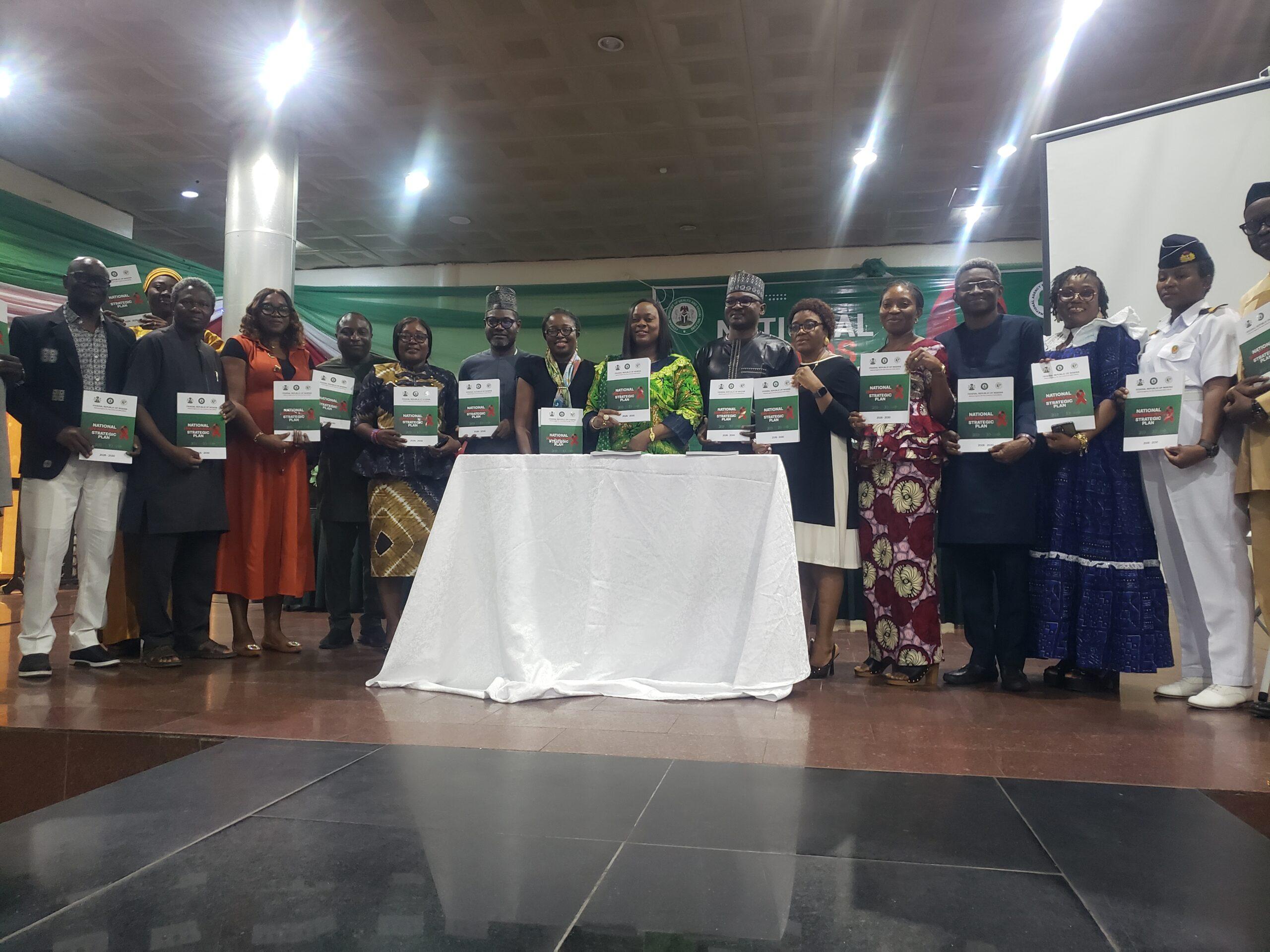
Nigeria unveils new HIV plan, seeks shift from donor dependence to domestic financing
Nigeria has unveiled a new National HIV and AIDS Strategic Plan (NSP) 2026–2030, outlining a transition from donor-supported interventions to a domestically financed and government-led response to HIV/AIDS.
Nigeria has unveiled a new National HIV and AIDS Strategic Plan (NSP) 2026–2030, outlining a transition from donor-supported interventions to a domestically financed and government-led response to HIV/AIDS.
The plan, presented on Thursday in Abuja, comes amid declining external funding and growing calls for Nigeria to assume greater ownership of its health system, particularly in sustaining long-term HIV interventions.
Speaking at the unveiling ceremony, the Director-General of the National Agency for the Control of AIDS (NACA), Temitope Ilori, said Nigeria’s HIV response had reached a critical point that requires a strategic reset in line with emerging realities.
Ms Ilori said the country had recorded significant progress over the past two decades, including reductions in new infections and improved treatment access, but noted that changing global and financial conditions demanded a new approach.
She explained that the new strategic plan represents a recalibration rather than a replacement of the existing framework and aligns Nigeria’s response with emerging evidence and global priorities.
“This new Strategic Plan reflects lessons learned from implementation, new evidence from the National HIV Estimates and the need to reposition the response in a rapidly changing global environment,” she said.
Ms Ilori said declining external funding and fragmented programme structures had made it necessary for Nigeria to adopt a government-led and government-owned response model.
According to her, the NSP prioritises the integration of HIV services into national systems across sectors, including health, education, youth development, gender and justice.
She added that the plan was developed through extensive consultations involving government institutions, civil society organisations, development partners, private sector actors and community networks.
“This Strategic Plan calls on all stakeholders to renew their commitment and work collectively to achieve a resilient, equitable, and sustainable HIV response for Nigeria,” she said.
Presenting the framework, NACA’s Deputy Director of Policy, Planning and Coordination, Mariam Ezekwe, said Nigeria’s HIV response had reached a decisive point, with notable achievements but persistent gaps that require structural reforms.
Ms Ezekwe said the country had made substantial gains in reducing infections and expanding access to treatment, but stressed that the next phase must focus on sustainability and stronger system integration.
She outlined the country’s current realities, describing a system that had made progress but still faced structural weaknesses in financing and service delivery.
“Fifty-two per cent reduction in new infections since 2010, and just about 80 per cent of People Living with HIV/AIDS know their status in 2025,” she said.
“These are the latest data from the Spectrum estimate. And currently we have an estimated 1,985,284 people living with HIV/AIDS.”
She added that the NSP prioritises legislative financing, health insurance expansion, and integration of HIV services into primary healthcare systems.
During a panel discussion on domestic financing and sustainability, stakeholders called for stronger private sector participation, expanded insurance coverage and formal integration of faith-based organisations into the national response.
Representing the Nigeria Business Coalition Against AIDS (NIBUCCA), Opeyemi Yekini said private sector actors should be treated as co-owners of the HIV response rather than mere contributors.
Mr Yekini noted that businesses increasingly recognise that workforce health directly affects productivity and economic stability.
Also speaking, Executive Secretary of the Country Coordinating Mechanism (CCM), Tajudeen Ibrahim, said Nigeria’s transition strategy extends beyond enrolling people living with HIV into health insurance schemes and includes strengthening systems capable of sustaining HIV financing after donor support declines.
Mr Ibrahim said governments at different levels were already committing resources to HIV programmes, but weak tracking and reporting mechanisms made it difficult to determine the full extent and impact of domestic investments.
He said strengthening financial accountability and visibility would be essential to demonstrating country ownership and ensuring resources are used efficiently.
“There are several mechanisms that we are currently using to fund health, and these mechanisms need to be properly tracked. As part of Global Fund support to the country, we are investing in strengthening our public financial management system,” he said.
Emmanuel Okechukwu, co-chair of the Nigeria Interfaith Coalition on AIDS (NIFCOB-AIDS), also called for the formal integration of faith-based organisations into the national HIV response framework.
He said faith institutions had long played a central role in providing care and social support, particularly at the community level.
“The faith-based community is asking for integration, both in policy and programming. If you want to attain universal health coverage, you must go to the people who are in the grassroots to provide the healthcare communities require,” he said.
The NSP 2026–2030 outlines a long-term goal of eliminating parallel HIV programmes and embedding interventions within routine government systems.
NACA said implementation of the plan would increasingly rely on domestic financing, strengthened health insurance systems, digital health expansion and coordinated multisectoral accountability mechanisms.
By 2030, Nigeria aims to sustain HIV control through integrated systems fully owned and financed at national and subnational levels.