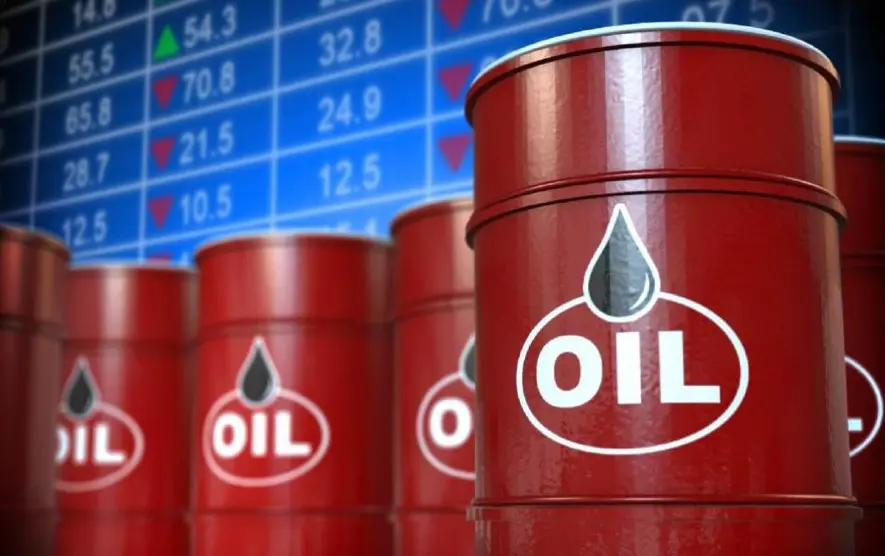
Nigerian crude blends and major oil contracts plummeted after the US and Iran reached a temporary agreement to put an end to their months-long conflict.
- +Bonny Light plunges as US-Iran truce threatens Nigerian oil premium
The peace initiative and subsequent announcement that the Strait of Hormuz -a vital transit corridor, handling 20% of global oil traffic- is to be reopened sent to the markets tumbling.
The peace initiative and subsequent announcement that the Strait of Hormuz -a vital transit corridor, handling 20% of global oil traffic- is to be reopened sent to the markets tumbling.
Immediately, light sweet crudes such as Bonny Light, the flagship Nigerian oil, and Qua Iboe came under pressure.
Prices reacted to the impending reintroduction of stranded Middle Eastern oil to the market.
Nigerian physical crude grades until now have commanded a premium with refiners desperate to substitute for lost Middle Eastern barrels. Bonny Light – prices have rapidly fallen back to double digits to $90s/bbl from trading between $100-$102 at the end of May.
The broader market decline of Brent is fast eroding the export premiums on Nigerian crude, while demand in the Nigerian downstream market is very firm, with the gigantic Dangote refinery lifting more Nigerian streams on the domestic market to fulfill its feedstock requirements of light grades such as Bonny Light, Forcados, and Qua Iboe.
The latest dynamics could allow the Strait of Hormuz to reopen and ease a supply shortage that has shaken the world’s energy markets
West Texas Intermediate was close to $81, while Brent fell more than 4% to less than $84 per barrel after closing last week at a three-month low.
President Donald Trump stated that he was approving the “toll-free opening” of Hormuz and lifting the blockade of the Islamic Republic. The strait will reopen on Friday after the agreement is signed.
Oil traders and analysts took a more circumspect stance while the US president celebrated the decision to “let the oil flow!“, pointing out the text’s lack of specifics, obstacles for the shipping sector to resume waterway transits, and a protracted timeline for fields to resume pumping.
Kazem Gharibabadi, Iran’s deputy foreign minister, acknowledged that a deal had been reached, but the text would only be made public following the signing ceremony in Switzerland. Trump might attend the ceremony, according to US Vice President JD Vance, who stated he “certainly” plans to do so.
The world’s energy markets have been engrossed in it since the war began in late February, when the US and Israel attacked Iran to stop its nuclear program.
In retaliation, Tehran shut down Hormuz, which carried around a fifth of the world’s oil flows during peacetime, and launched strikes throughout the Persian Gulf. US forces imposed their own blockade of ships connected to Iran.
Brent’s prompt spread, or the difference between its two closest contracts, shrank to less than $1 per barrel in backwardation amid the market’s changing dynamics.
It is down from more than $12 in April, but it is still a bullish pattern with the nearer contract above the next in line. Crude production from Persian Gulf fields that were shut down during the conflict may resume, so traders will be on the lookout for any indications.
Due to technical and geological difficulties, as well as infrastructure damage, producers have cautioned that it may take months to restore supplies at full capacity.