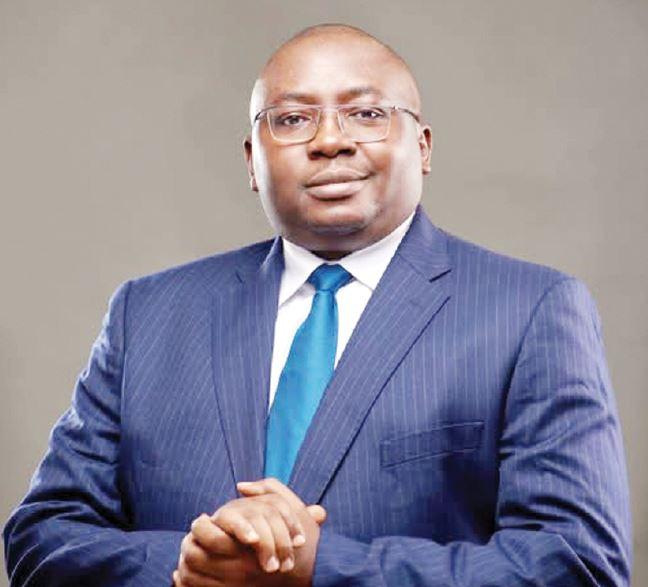
The Minister of Power, Adebayo Adelabu, on Wednesday, resigned his position to pursue a governorship bid in Oyo State.
- +Adelabu resigns as Presidency explains Edun, Dangiwa exit
- +“Most of the MDAs are not getting the capital releases they want.”
Adelabu is the third minister to exit President Bola Tinubu’s Federal Executive Council within the past 48 hours.
Adelabu is the third minister to exit President Bola Tinubu’s Federal Executive Council within the past 48 hours.
This was as the Presidency pushed back against reports that the former Minister of Finance and Coordinating Minister of the Economy, Wale Edun, and former Minister of Housing, Ahmed Dangiwa, were sacked.
Adelabu’s resignation letter, dated April 22, 2026, and addressed to President Bola Tinubu through the Office of the Secretary to the Government of the Federation, stated that his exit would take effect on April 30, 2026, to allow for a smooth and orderly handover of responsibilities.
He wrote, “I write with a deep sense of honour and profound gratitude to formally tender my resignation as the Honourable Minister of Power of the Federal Republic of Nigeria.
“It has been a rare honour to contribute to national development under your leadership and to play a role in advancing reforms in the power sector, one of the most critical foundations of Nigeria’s industrial growth and economic transformation.”
Adelabu, a chartered accountant and former Deputy Governor of the Central Bank of Nigeria, said his Oyo governorship ambition predated his ministerial appointment, tracing it back to 2016 during his time at the CBN, an aspiration that first led him to voluntarily resign from the apex bank in 2018.
“My decision to step down is informed by my intention to focus fully on my gubernatorial ambition in Oyo State,” he wrote, adding, “In line with the provisions of the Amended Electoral Act 2026, which precludes political office holders from contesting elections, I consider it both appropriate and necessary to resign at this time.”
The Electoral Act 2026, signed by Tinubu on February 18, 2026, reduced the statutory notice period for elections from 360 to 300 days and bars serving political appointees from contesting, a provision now visibly reshaping cabinet composition as the 2027 electoral cycle draws closer.
In his resignation letter, Adelabu gave a detailed account of his stewardship of the power sector.
He noted that when he assumed office in 2023, available generation capacity stood at between 3,500 and 4,500 megawatts against an installed capacity of over 13,000 megawatts.
He also explained that the strained transmission network, widespread metering gaps affected more than half of electricity consumers, and left a sector debt overhang exceeding N4tn.
He credited the implementation of the Electricity Act 2023, the integration of the Zungeru Hydropower Plant and the rehabilitation of thermal assets for pushing peak generation above 6,000 megawatts.
He also cited progress in transmission infrastructure through the Presidential Power Initiative, improvements in revenue collection and a N4tn debt restructuring programme that raised market revenue from N1tn in 2023 to N2.3tn by 2025.
Adelabu acknowledged, however, that the sector continued to face “important challenges, particularly in the area of gas supply constraints, infrastructure vandalism, and the need for full commercialisation across the value chain.”
In a series of exit recommendations, he called for cost-reflective tariffs with targeted subsidies for vulnerable Nigerians, accelerated nationwide metering, recapitalisation of the distribution segment and sustained investment in transmission infrastructure.
He also recommended the appointment of a coordinating minister for energy to provide strategic oversight across power, gas, water resources and the environment, a structural proposal that signals his view that the sector’s persistent problems require cross-ministerial coordination to resolve.
On Wednesday, the Presidency pushed back against characterisations of Tuesday’s cabinet changes as sackings, insisting that both Edun and Dangiwa exited voluntarily.
Special Adviser to the President on Information and Strategy, Bayo Onanuga, said in a statement that Edun submitted his resignation letter on Monday, the same day he turned 70, citing health reasons, before holding an hour-long valedictory meeting with Tinubu at the Villa on Tuesday, ahead of the SGF’s formal announcement. File photo of the Former Minister of Finance and Coordinating Minister for the Economy, Olawale Edun
“It has been a pleasure and privilege to serve your administration and the Renewed Hope Agenda,” the Presidency quoted Edun as writing in his letter.
He added, “Under your leadership, Nigeria has emerged stronger, more resilient and more internationally respected. I wish you and the administration every success in the future.”
Dangiwa equally submitted a resignation letter in which he thanked the President for the opportunity to serve, the Presidency said.
Tinubu expressed appreciation to both men for their contributions to the administration’s economic reform programme.
However, an official close to the President told one of our correspondents that the circumstances leading to Edun’s exit were his approach to funds disbursement to government ministries, departments and agencies.
The official told The PUNCH that complaints from various MDAs about the non-release of budgetary capital allocations had weighed heavily on the decision.
“The main issue is priority spending. That’s all. There were complaints about MDAs not getting money. Edun was simply making money available to what he considers the most pressing priority.
“A bridge will be more important than sending money for changing vehicles for directors in an agency, or gadgets, or new computers.
“He would rather pay for a road or bridge contract than the next vehicle for an MDA,” the official said.
A second source went further, dismissing what it described as circulating allegations linking the exit to Tinubu’s acclaimed confidant, billionaire businessman Gilbert Chagoury.
The official said, “There has been a lot of talk about Chagoury and the likes. Those are not true. The truth of the matter is priority spending.
“He was accused of starving MDAs in the name of majoring on the most pressing priorities.
“Most of the MDAs are not getting the capital releases they want.”
The source added, “To him, he must have been doing the right thing. But the balance is the matter.
“If you don’t balance the capital spending, the local economy hardly benefits because there is a multiplier effect to capital expenditure.”
Edun, 70, is an economist and investment banker whose association with Tinubu stretches back to the latter’s days as Lagos State Governor, where he served as commissioner for finance from 1999 to 2004.
Earlier in his career, he worked at Chase Merchant Bank from 1980 to 1986 before joining the World Bank through its elite Young Professionals programme in September 1986, where he worked on economic packages for countries across Latin America and the Caribbean.