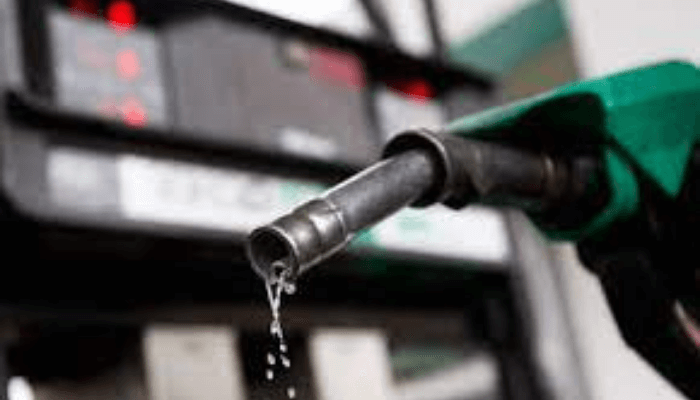
The Federal Competition and Consumer Protection Commission is putting fuel marketers and depot operators on notice, warning that it will sanction those found to be exploiting consumers after a sharp global drop in crude oil prices failed to translate into meaningful relief at the pump.
- +FCCPC threatens sanctions as petrol price fails to track global oil crash
Nigeria’s consumer protection agency said Sunday it had been monitoring the downstream petroleum market and found that price reductions by local refiners, marketers and retail outlet operators were “token” at best, far out of step with a steep decline in international crude benchmarks that has now returned oil to where it was in February.
Nigeria’s consumer protection agency said Sunday it had been monitoring the downstream petroleum market and found that price reductions by local refiners, marketers and retail outlet operators were “token” at best, far out of step with a steep decline in international crude benchmarks that has now returned oil to where it was in February.
Crude prices have collapsed from a peak of $120 per barrel in April to $73 following a ceasefire accord between the United States and Iran two weeks ago and the subsequent reopening of the Straits of Hormuz, a fall of nearly 40 percent in roughly two months.
Yet Nigerian motorists are still paying an average of N1,200 per litre for petrol, a far cry from the N800 to N900 range that prevailed in February when global prices were at comparable levels.
“We are concerned that while dealers often respond swiftly by hiking pump prices whenever crude prices rise, it is curious that it is taking forever for consumers to benefit significantly when crude prices fall,” Tunji Bello, FCCPC executive vice chairman and chief executive officer, said in the statement. “Competitive markets must work fairly in both directions.”
When tensions in the Gulf escalated between April and May, local refiners and marketers wasted no time pushing petrol prices to between N1,350 and N1,500 per litre, with diesel hitting N2,000.
The speed of that upward move now sits in sharp contrast to the sluggish downward adjustment the FCCPC says it is observing. Some local refiners have so far set gantry prices between N1,025 and N1,075 per litre, reductions the commission considers inadequate given the scale of the global reprieve.
The FCCPC was careful to draw a clear boundary around its authority. The commission does not set or approve petroleum prices in what is now a deregulated downstream market, Bello said. Its mandate under the Federal Competition and Consumer Protection Act of 2018 is narrower but still consequential — it is charged with promoting competitive markets, preventing anti-competitive conduct, and shielding consumers from what it described as unfair, deceptive and exploitative business practices.
That mandate, the commission argued, remains fully intact regardless of deregulation.
“Market liberalisation does not diminish businesses’ obligations to compete fairly or consumers’ right to fair treatment,” Bello said. “Where credible evidence indicates conduct that undermines competition, exploits consumers or otherwise contravenes the Federal Competition and Consumer Protection Act, the Commission will investigate and take appropriate enforcement action.”
The commission said it recognises that domestic fuel prices are shaped by a range of legitimate commercial variables, including refining costs, foreign exchange movements, logistics, financing and distribution expenses. But it argued that competitive market dynamics should, under normal circumstances, have already driven those cost efficiencies down the chain to end consumers.