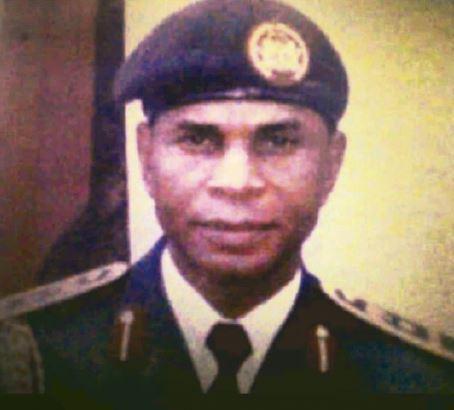
Naval officers illegally occupying my late father’s property for over 20 years — Rivers bizman
- +Who are you to the late General Lawrence Zidougha?
- +When did your father join the army?
- +Was there anything like bullet wounds to suggest he was killed?
- +What steps did you take to recover the property when you grew up?
- +Where were you living as a family?
- +What happened after your mum’s death?
- +How long have they occupied the property?
- +What were the highlights of the court sessions for those 10 years?
A businessman and resident of Port Harcourt, Rivers State, Mr Desmond Zidougha, recounts to BIODUN BUSARI how some naval officers illegally occupied his late army officer father’s property for more than 20 years and are still occupying it after a court judgment in his family’s favour
A businessman and resident of Port Harcourt, Rivers State, Mr Desmond Zidougha, recounts to BIODUN BUSARI how some naval officers illegally occupied his late army officer father’s property for more than 20 years and are still occupying it after a court judgment in his family’s favour
Who are you to the late General Lawrence Zidougha?
I’m the son of the late General Lawrence Zidougha. I am a businessman. I’m from Bayelsa State, but I reside in Port Harcourt, Rivers State.
When did your father join the army?
I can’t say the actual time my father joined the army. The reason is that I grew up meeting my father as a soldier. He was an active soldier, and we all lived happily until he died in 2001.
He died as a commander. He was a commanding officer in Lokoja, the capital of Kogi State.
My dad was assassinated, but the army said he died in an accident. Some people didn’t like the fact that he was made a commander of the Army Records and Pensions.
Insider sources revealed to my family that he was killed, and that was what we have lived with till today. The sources said his face was destroyed, and opening it would have caused plenty of issues.
He had a building in Port Harcourt, which some naval officers were illegally occupying at the time of his demise.
Was there anything like bullet wounds to suggest he was killed?
They did not open the casket fully. They only opened the lower half of the casket for the family members to view. So, we didn’t see the whole remains as such. He was 53 when he died. He was buried in Sabagreia, Bayelsa State.
Speaking about your late father’s property, how did the naval officers become the illegal occupants?
The property is at Plot 81, Rose Ada George Close, GRA Phase One, Port Harcourt, Rivers State. It’s a three-bedroom bungalow with a kitchen behind it. It’s about eight plots.
I grew up knowing that the Navy was occupying that property. Whenever I spoke with my dad about it when I was much older, he would say he didn’t want to bring up any issues with the Navy because he was a junior officer at that time.
My father acquired it many years ago. There was a time when the Rivers State Housing and Property Development Authority put out buildings. The house was one of the buildings published for sale. My dad was lucky to have bought that one from the government and paid for everything.
We have documents. But from that time, naval officers occupied the property. There were many buildings illegally occupied by many people.
So, when my father was a lieutenant colonel, he bought the property, and kept saying he didn’t want to have issues with his colleagues in the armed forces. Unfortunately, he passed away when he became a general.
What steps did you take to recover the property when you grew up?
My mum and I took the matter up to retrieve the property from the illegal occupants. She wrote a series of letters to her lawyer and to different appropriate authorities. The lawyer is also late now.
She wrote to the Ministry of Defence. She wrote letters to everybody whom we thought could intervene to help, but nothing happened in our favour. Nobody helped.
So, we just kept writing letters as advised. She was in this struggle until she passed in 2010. My mother just suddenly fell ill, and she didn’t recover for eight months. Then she gave up the ghost. It was a rude shock to the family.
Where were you living as a family?
We were living in an estate. It was rented. That was where we stayed. Meanwhile, my dad didn’t stay in Port Harcourt. He did come and go, but we lived in the estate.
What happened after your mum’s death?
After my mum passed, I took up the case. It was a kind of inherited struggle. I started where my mother stopped. I began to write letters to authorities through my lawyers as well.
We wrote a series of letters. I think on two occasions, we were invited to the Navy Headquarters, where they apologised for the illegal occupation. They said they were sorry and admitted that the property didn’t belong to them.
They even said they agreed to pay the rent arrears. They offered to buy the building outright from me. They told me to do a letter of offer stating that I wanted to sell the property. I think my lawyer even did that.
But after that, we didn’t hear from the Navy again. So, I told my lawyer that instead of waiting for them, we should take the case to court.
The case has been in court since 2016, and until about two weeks ago, we finally obtained a judgment on the property and the cause of the injury. We won the case.
How long have they occupied the property?
They have been there since I was a child. It was as good as saying my siblings and I grew up knowing those living there were illegal occupants of my father’s property. It will interest you to know that I was just 19 years old when my father died.
What were the highlights of the court sessions for those 10 years?
It was frustrating. Going to court on a case for a decade without making any headway was frustrating. There were times when their representatives wouldn’t show up in court without notice.
If you think of the time and financial resources that went into the case, all this made it a frustrating experience in one’s lifetime. The judgment just a few weeks ago was a sigh of relief.
During those times, we had documents to back our case that the property belonged to us, but they (the Navy) didn’t have any. They never denied that anyway.
There was a time they told the Rivers State Government that they wanted to buy the property, but the government told them to meet us because we are the legal owners of the building.
However, they refused to come to us. I have all the documents; I have the letters they wrote to the government; I have the letters that the government responded to, and everything.
It’s just so sad that they did all that, even though my father was an officer in the army who died in active service, and his wife also died trying to get justice. This is to tell you the kind of Nigerian society we live in. It is sad.
Do you think this issue would not have occurred if you or your siblings were in the military?
I don’t think so. They did it to my father when he was alive. The same year that my father passed, his colleagues were promoted. He should have been among them.
It was during the administration of former President Olusegun Obasanjo. I think it was less than two to three months after he was buried that the promotion occurred.
He was supposed to be promoted to Major General, but only his colleagues were promoted. If he was alive at that time, he would have been promoted with his colleagues. It was aired on national television.
In all this, what has been the input of the Nigerian Army towards recovering your late dad’s property?
No, we did not get any form of intervention from the army.