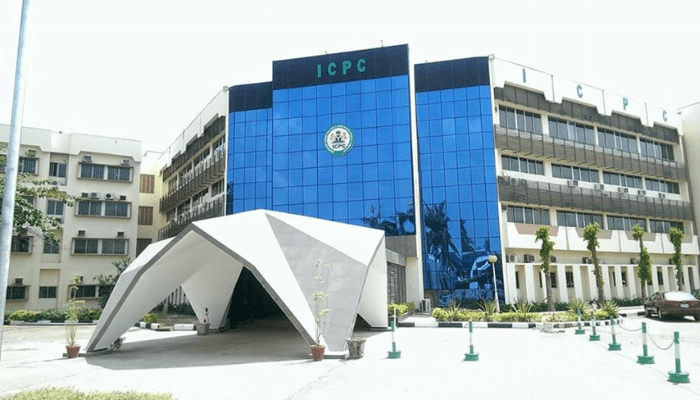
ICPC tracks N22.9tn projects, recovers billions with AI-driven monitoring initiative
The Independent Corrupt Practices and Other Related Offences Commission (ICPC) has disclosed that it has tracked government-funded projects worth over N22.9 trillion and recovered billions of naira through its technology-driven Constituency and Executive Projects Tracking Initiative (CEPTI).
The Independent Corrupt Practices and Other Related Offences Commission (ICPC) has disclosed that it has tracked government-funded projects worth over N22.9 trillion and recovered billions of naira through its technology-driven Constituency and Executive Projects Tracking Initiative (CEPTI).
This was as Commonwealth African anti-corruption agencies moved to adopt artificial intelligence in the fight against corruption.
Musa Aliyu, chairman of the Independent Corrupt Practices and Other Related Offences Commission, made the disclosure at the 16th Regional Conference and Annual General Meeting of Heads of Anti-Corruption Agencies in Commonwealth Africa held in Yaoundé.
The ICPC boss showcased Nigeria’s use of geospatial mapping, data analytics, and AI-powered monitoring tools to tackle contract inflation, ghost projects, abandoned projects, and diversion of public funds.
The conference, hosted by the National Anti-Corruption Commission of Cameroon in collaboration with the Commonwealth Secretariat, focused on the theme, “Deploying Artificial Intelligence in the Fight Against Corruption in Commonwealth Africa”.
The ICPC chairman described CEPTI as one of the country’s major technology-backed interventions aimed at improving transparency and accountability in public project execution.
Representing Aliyu at the conference, Ahmed Abdul, ICPC’s Head of External Cooperation, explained that CEPTI was established as a proactive monitoring mechanism to ensure value for money in government-funded projects nationwide.
According to him, the initiative deploys geospatial mapping technology and data-driven monitoring systems to track constituency and executive projects in real time, enabling the Commission to validate project implementation and analyse performance across the country.
He disclosed that since its inception, CEPTI has tracked projects valued at more than N22.9 trillion, while recoveries from improperly executed projects have exceeded N4.9 billion.
He added that the federal government has also saved more than N91.4 billion through the cancellation, re-scoping, or prevention of inflated and abandoned projects uncovered under the initiative.
The ICPC chairman said the technology-driven framework had significantly reduced corruption linked to public infrastructure delivery, including contract inflation, diversion of public funds, ghost projects, and abandoned contracts.
He further noted that contractors involved in abandoned projects were often compelled to return to project sites for completion following the Commission’s intervention.
“Artificial Intelligence, geospatial technology, and data analytics have become essential tools in promoting transparency and accountability in governance across Africa”, Aliyu stressed.
He urged anti-corruption agencies within the Commonwealth African bloc to institutionalise technology-based project-tracking mechanisms and strengthen cooperation in digital investigations, intelligence gathering, and data science.
According to a statement by the commission, the conference also produced a set of resolutions aimed at deepening the use of artificial intelligence in combating corruption across the continent.
In a communiqué issued at the end of the meeting, delegates agreed to promote digital transformation in public service delivery and encourage the adoption of emerging technologies to improve transparency in public procurement and public finance management.
The agencies also resolved to strengthen legal and policy frameworks for the recovery of stolen assets and improve cross-border collaboration among anti-corruption institutions.
Participants further agreed to build the capacity of anti-corruption personnel in the use of artificial intelligence for evidence gathering, investigations, and prosecution of corruption-related cases.
The communiqué also emphasised the need to empower young people with digital skills capable of promoting integrity, accountability, and transparency across Commonwealth African countries.
At the conclusion of the conference, the National Anti-Corruption Commission of Cameroon was confirmed as chair of the Association of Anti-Corruption Agencies in Commonwealth Africa for the 2026–2027 term, while Kenya was announced as host of the 17th Regional Conference and Annual General Meeting scheduled for 2027.