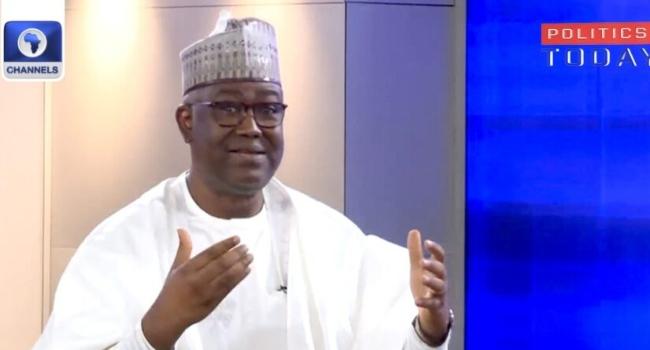
The presidential candidate of the Accord Party, Gbenga Olawepo-Hassim, has called for regional inputs and global cooperation to end insurgency in Nigeria and the Sahel.
- +Olawepo-Hashim Seeks Global Cooperation, Regional Inputs To End Insurgency
Olawepo-Hassim said this on Tuesday when he spoke on Channels Television’s Politics Today, arguing that Nigeria cannot win the battle against insecurity without the cooperation of neighbouring nations.
Olawepo-Hassim said this on Tuesday when he spoke on Channels Television’s Politics Today, arguing that Nigeria cannot win the battle against insecurity without the cooperation of neighbouring nations.
“Now, you can’t deal with these things if you are at loggerheads with your neighbours—Mali, Niger, and Chad. You must have an integrated strategy,” the Accord Party chieftain said on the show.
“So, the first thing I’m going to do is to have an international conference on security here, not a local conference. You need the input of our neighbours—Chad and Niger—and the cooperation of Mali and Burkina Faso.
“You need global cooperation because the Russians are dealing with this issue on behalf of Mali in the Sahel region, and you also need the French, who were part of the problem in the first place.
“All of these problems are linked with what happened in Libya and the importation of a host of extremist groups to that area, and cleanups were not done.
“So, these guys are advising all manner of groups across the Sahel region, not just in Nigeria. So, you are dealing with a much more complicated crisis than people are able to admit.”
His comment came amid the rising state of insecurity in Nigeria, especially with the recent abduction of teachers and students in Oyo State, a development that has sparked national outrage.
Olawepo-Hassim blamed the country’s leaders for the state of security in Nigeria, saying most of them do not understand the concept of national security.
“The problem we have now is that even most of the political leaders don’t understand what is called national security. Because I see it in the way the government formulates policies,” the human rights activist said.