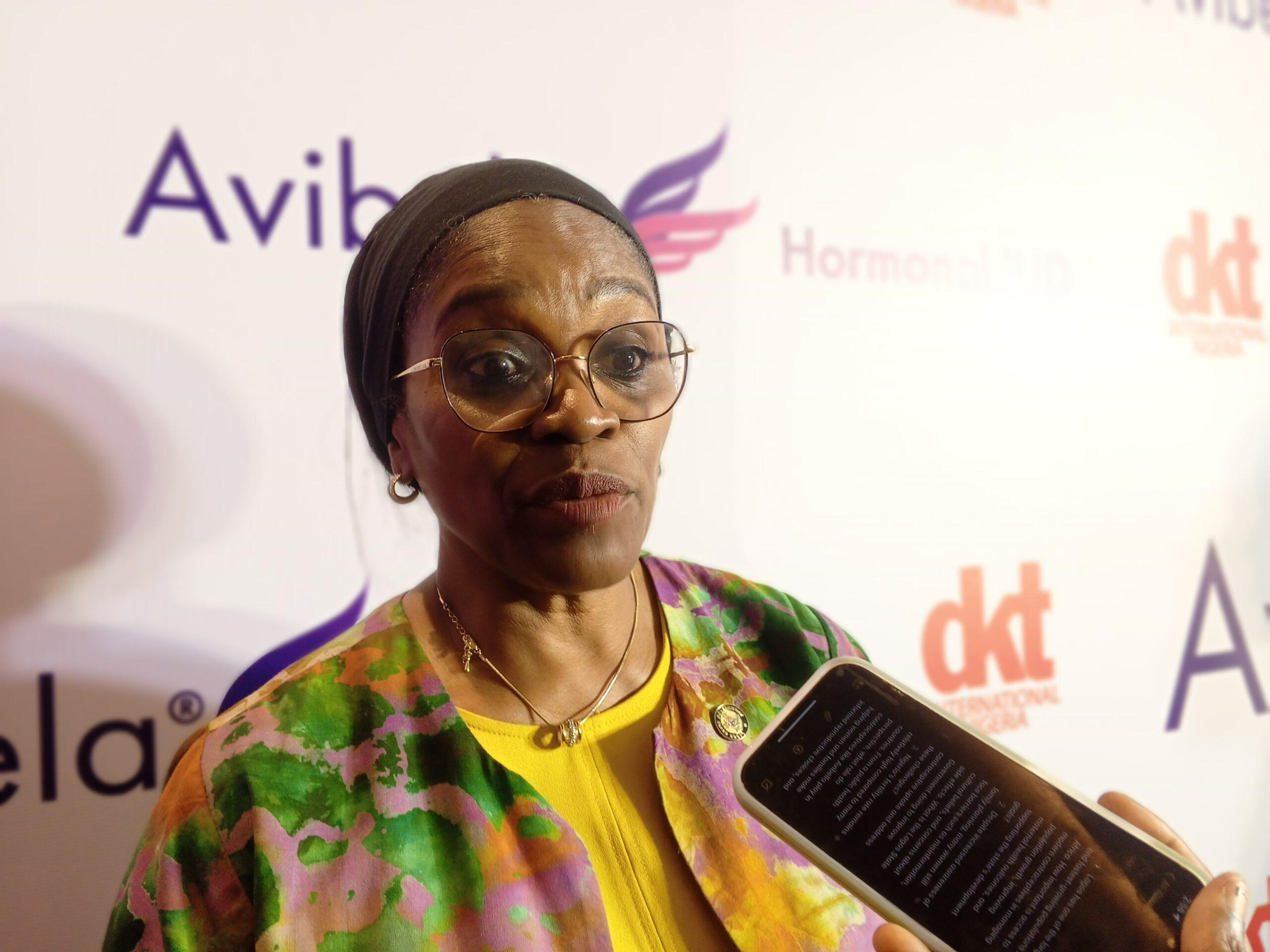
Lagos tackling contraceptive barriers through community engagement, awareness campaigns — Official
The Lagos State government has said it is implementing community-based sensitisation programmes to address barriers to contraceptive access and improve family planning uptake across the state.
The Lagos State government has said it is implementing community-based sensitisation programmes to address barriers to contraceptive access and improve family planning uptake across the state.
The Special Adviser to the Governor on Health, Kemi Ogunyemi, disclosed this while speaking with journalists during the unveiling of the Avibela Hormonal Intrauterine Device (IUD) in Ikeja, Lagos, on Tuesday
According to her, the state’s family planning initiatives deliberately engage men, traditional rulers, religious leaders and other key community stakeholders to address misconceptions and improve acceptance of contraceptive services.
“We believe that no matter how you look at it, men still have this power over women’s choices,” Ms Ogunyemi said.
She explained that involving men is particularly important for IUD users, noting that some women request the removal of the device after their husbands complain of feeling the strings during sexual intercourse.
Ms Ogunyemi said sustained awareness campaigns have helped demystify myths, misinformation and disinformation surrounding family planning and contraceptive use.
She added that the government is also exploring ways to expand access to family planning services in riverine and hard-to-reach communities, where residents often face significant barriers to healthcare.
“We are working towards that. We need to build more primary healthcare facilities. We are hiring more people to go there,” she said.
Nigeria continues to face significant gaps in access to modern contraceptives despite efforts to improve reproductive healthcare services.
Although women account for nearly half of the country’s population of over 200 million people, the uptake of modern contraceptive methods remains low. Health experts say millions of women of reproductive age still have an unmet need for family planning services.
The country also has one of the world’s highest maternal mortality burdens, with unintended pregnancies, unsafe abortions and high fertility rates contributing significantly to preventable maternal and newborn deaths. Public health experts consider family planning one of the most effective interventions for improving maternal and child health outcomes.
Contraceptive methods available to women include condoms, diaphragms, vaginal rings and intrauterine devices (IUDs), which can be either hormonal or non-hormonal.
At the event, DKT International, a social enterprise focused on sexual and reproductive health products, launched Avibela, a hormone-releasing IUD designed to prevent pregnancy for up to eight years.
The T-shaped device is inserted into the uterus by a trained healthcare provider and gradually releases levonorgestrel, a progestin hormone commonly used in contraceptive pills.
Speaking during a keynote presentation, Ayodeji Oluwole, chairman of the Medical Advisory Committee at Lagos University Teaching Hospital (LUTH), said Nigeria’s unmet need for contraception is driven by multiple factors, including supply chain challenges, fear of side effects, cultural and religious concerns, widespread misconceptions and disparities in access between urban and rural communities.
According to him, approximately one in five Nigerian women of reproductive age has an unmet need for contraception, while an estimated 6.8 million unintended pregnancies occur annually.
The Professor of Obstetrics and Gynaecology at the University of Lagos said hormonal IUDs address several challenges associated with contraceptive use because they provide a highly effective, long-acting and reversible “set-and-forget” option.
“They bypass the need for daily pill adherence while simultaneously offering clinical health benefits that help reduce cultural stigmas, ultimately increasing family planning acceptance nationwide,” Mr Oluwole said.
He noted that the use of long-acting reversible contraceptives has increased in recent years. While fewer than two per cent of married women used implants and IUDs in 2013, adoption rose to 24 per cent by 2018, comprising 18 per cent for implants and six per cent for IUDs.
Beyond pregnancy prevention, he said hormonal IUDs provide additional health benefits, including reduced menstrual bleeding, relief from menstrual pain and protection of the endometrium.
Also speaking, DKT International’s Country Director, Debo Satapathy, said the organisation is working with private healthcare providers, non-profit organisations and government health authorities to ensure the product is widely available across Nigeria.
He noted that Avibela is already available in more than 19 countries and underwent extensive clinical testing before being introduced into the Nigerian market.
“We make sure that every batch that we get here is lab tested before they are distributed in the system,” he said.
Mr Satapathy added that DKT International plans to conduct outreach programmes that will provide the product free of charge to women who cannot afford it.