Power supply setback hits northern states days after minister’s 14-day improvement pledge
Millions of electricity consumers across five Northern Nigerian states are bracing for a major power disruption following the announcement by the Transmission Company of Nigeria (TCN) that it will shut down a critical transmission line for emergency maintenance, a development that comes amid heightened public expectations after the new Minister of Power promised noticeable improvements in electricity supply within 14 days.
Millions of electricity consumers across five Northern Nigerian states are bracing for a major power disruption following the announcement by the Transmission Company of Nigeria (TCN) that it will shut down a critical transmission line for emergency maintenance, a development that comes amid heightened public expectations after the new Minister of Power promised noticeable improvements in electricity supply within 14 days.
The planned outage, scheduled for Sunday, affected Kano, Katsina, Jigawa, Bauchi and Yobe states, as well as parts of neighbouring Niger Republic that depend on electricity supplied through Nigeria’s national grid.
TCN disclosed the development in a statement issued on Saturday by its spokesperson, Ndidi Mbah, explaining that the interruption had become necessary to enable engineers carry out maintenance work on the Mando–Kumbotso 330kV transmission line, one of the key power supply routes serving the North-West and parts of the North-East.
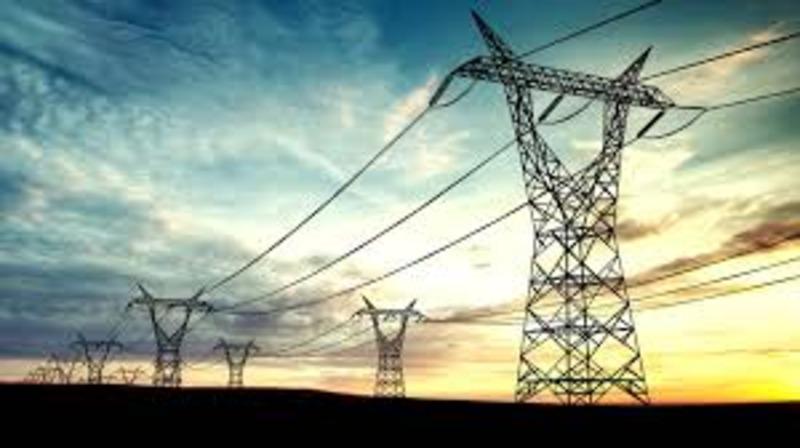
According to the company, the maintenance operation will involve the replacement and amendment of a damaged Red Phase Conductor on Tower T187 located along the transmission corridor.
“The outage is necessary to enable TCN’s maintenance crew to amend a damaged Red Phase Conductor on Tower T187 along the line route,” the statement said.
As a result of the work, the Kano Electricity Distribution Company (KEDCO) will temporarily be unable to receive electricity from the national grid for distribution to customers across Kano, Katsina and Jigawa states, while some parts of Bauchi and Yobe states will also experience power cuts.
TCN further stated that communities in Gazaoua, located in the Republic of Niger and connected to Nigeria’s transmission infrastructure, would equally be affected. The company said the maintenance exercise is expected to commence at 9:00 a.m. and end by 4:00 p.m. on Sunday. However, it did not specifically indicate when normal electricity supply would resume after the completion of the work, raising concerns among consumers already grappling with erratic power supply.
The announcement comes at a sensitive period for Nigeria’s electricity sector, which is under increasing scrutiny following recent assurances by the newly appointed Minister of Power that Nigerians would begin to witness measurable improvements in electricity supply within two weeks.
Shortly after assuming office, the minister acknowledged the challenges facing the sector, including transmission constraints, ageing infrastructure, vandalism and inadequate generation capacity. He nevertheless assured Nigerians that immediate interventions were being put in place to stabilise the grid and improve power delivery nationwide.
That pledge generated optimism among households and businesses, particularly in Northern Nigeria, where electricity supply has remained inconsistent despite recent investments in transmission and distribution infrastructure.
Sunday’s planned outage is therefore likely to test public patience, even though TCN insists the interruption is necessary to prevent more serious technical failures that could trigger prolonged blackouts in the future.
Aliyu Musa, Industry expert note that preventive maintenance of transmission facilities is a critical component of grid reliability, especially on heavily loaded lines that serve large population centres such as Kano and neighbouring states. Also, power systems analyst based in Kano, Bashiru Yakubu, said routine maintenance, although inconvenient, is often preferable to emergency breakdowns that can leave entire regions without electricity for days.
“The challenge is not necessarily the maintenance itself, but ensuring that such interventions are communicated effectively and completed within schedule. Consumers are more concerned about whether power will return immediately after the exercise,” he said.
The latest outage also highlights the persistent infrastructure challenges facing Nigeria’s electricity transmission network. Over the years, the national grid has suffered repeated disturbances caused by ageing equipment, line faults, vandalism and inadequate investment. While the government has embarked on several transmission expansion projects, demand for electricity continues to outpace available infrastructure in many parts of the country.
Businesses in Kano, one of Nigeria’s largest commercial hubs, are expected to be among the hardest hit by Sunday’s outage. Small-scale manufacturers, cold-room operators, welders, ICT centres and other enterprises that rely heavily on electricity may be forced to depend on generators during the seven-hour maintenance window, leading to increased operating costs.
Fatima Danlami, one of the residents of Kano, in an interview with BusinessDay expressed concerns about the timing of the outage as temperatures continue to soar across many northern states, increasing reliance on fans, air conditioners and refrigeration.
Despite these concerns, TCN appealed for public understanding, stressing that the maintenance exercise is aimed at strengthening the reliability and safety of power transmission to the affected regions. The company reiterated its commitment to maintaining critical infrastructure and ensuring efficient electricity delivery across the country.
For consumers across Northern Nigeria, however, the immediate concern remains whether the interruption will end as scheduled and whether the promised improvements in electricity supply by the new minister will soon become visible. As the countdown to the minister’s self-imposed 14-day benchmark continues, Sunday’s blackout serves as a reminder of the complex challenges confronting Nigeria’s power sector and the difficult balance between infrastructure maintenance and the public’s growing demand for stable electricity.