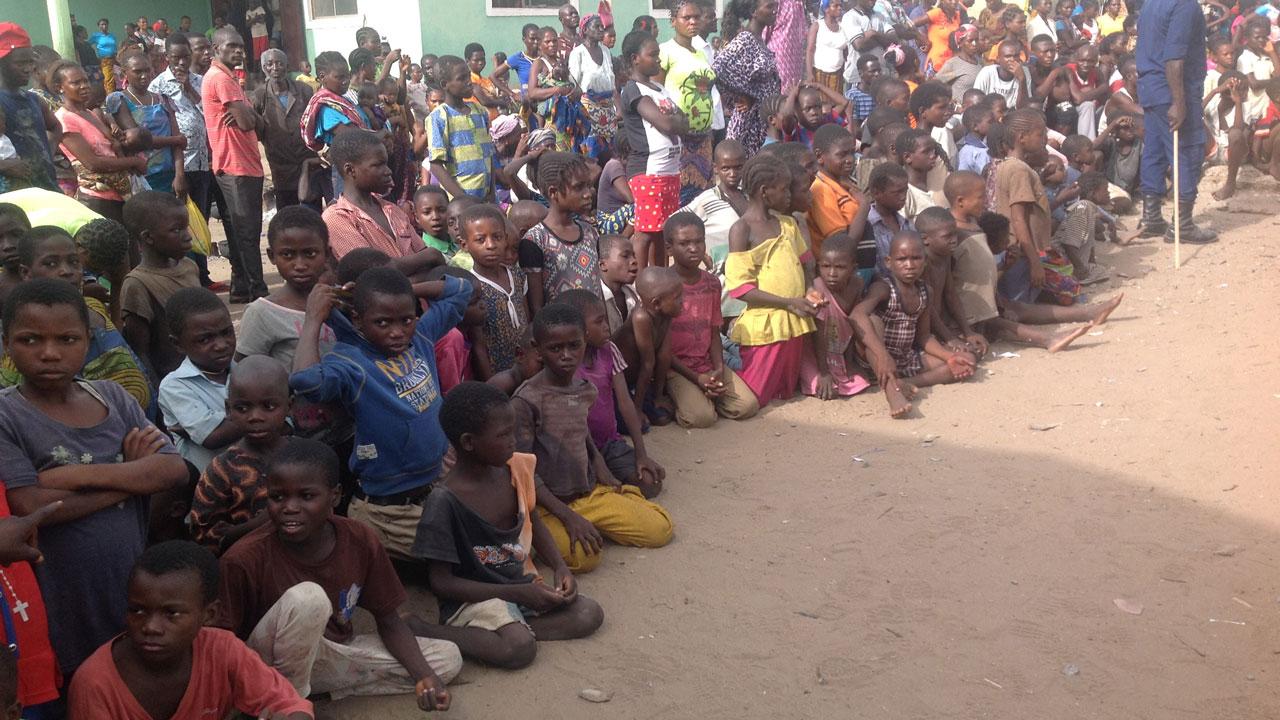
Beyond May 27 celebration: Divergent views on fate of Nigerian child in Tinubu’s administration
May 27 every year is set aside to celebrate the Nigerian child.
May 27 every year is set aside to celebrate the Nigerian child. It offers an opportunity to look at the welfare of the child, child’s rights and issues affecting children in Nigeria generally.
In Nigeria, it would seem that May 27 is just a fulfillment of all righteousness as there seems to be no plan for the Nigerian child by the government beyond the lip service being paid to children’s welfare.
Highlighting the plight of the Nigerian child under the current administration, former vice president Atiku Abubakar, said the three years of the Tinubu led administration is characterised by the haunting images of schoolchildren being abducted by criminals while a complacent government looks the other way.
In a statement issued by Phrank Shaibu, his senior special assistant on public communication, Atiku said that as the Tinubu administration marks three years in office, its most fitting report card is not the glossy advertisements, expensive media campaigns, or self-congratulatory speeches emanating from Abuja, but the tears of hungry families, and the despair of unemployed youth.
“Three years into this administration, Nigerian children are still being dragged into forests by terrorists and kidnappers,” Atiku said, indicating that the Nigerian child is now an endangered species in their own country.
Currently, there seems to be no child protection system in place. Although the laws are there, they are not being implemented.
The Child’s Rights Act (CRA) 2003, otherwise known as Act No. 26, was enacted by the National Assembly on July 31, 2003.
The CRA guarantees the rights of all children in Nigeria. Under the Act, children was defined as any person under the age of 18.
Currently, 24 out of 36 states of the federation have adopted the CRA as a state law. However, there are twelve (12) states that are yet to domesticate the CRA in their laws.
Section 2, subsection (1) of the CRA states that the “child shall be given such protection and care as is necessary for the well-being of the child, taking into account the rights and duties of the child’s parents, legal guardians, or other individuals, institutions, services, agencies, organizations or bodies legally responsible for the child.”
However, in the recent past, Nigerian children have been targeted by terrorists, bandits and kidnappers who continue to abduct children in their schools, homes and worship centres.
Being a soft target for these criminal elements, Nigerian children are being exposed to various forms of violence against the rights and privileges of the CRA 2003.
“It is a sad moment for the Nigerian child and for the nation. We are marking Children’s Day while children taken from their schools are still being held by terrorists in the forests,” Abimbola Ojenike, co-founder and coordinator, The Destiny Trust, said.
According to him, schools have become a place of no return for many children. He added that it is not that the Nigerian child has always had it good. However, the current reality is a new and far more dangerous phase that shocks the conscience of our collective humanity.
“We shut down schools, cancel excursions, and suspend school trips because, as a society, we can no longer assure our children of safety in and out of school,” Ojenike said.
Terrorist attacks on schools are continually taking out the little glow of hope in the ecosystem.
According to analysts, every attack on children in school is an attack on the country’s future, and is considered a wicked obliteration of everything good that remains. We have failed the children as a people.
“This is not a political commentary on the Tinubu Presidency,” Ojenike said, indicating that it is the outcome of age-long neglect and irresponsibility towards children, which is now wearing a more dangerous garb under the Tinubu administration’s watch while he makes it all about the politics of those who want him out of power.
Accordingly, children have always suffered situations they did not create and have no power to change: abuse, neglect, hunger, disease, illiteracy, poverty, and many more.
The little ray of hope was that education could be the way to rebuild; and that school could offer a safe place for the Nigerian child to rise despite the odds.
Many believed that through learning, Nigeria could have a quiet value revolution that would birth a new generation of young people able to live and thrive here.
But, justice for the Nigerian child is not about the dry letters of child rights legislation at federal and state levels or the volumes of the government’s half-hearted policies on children, education, and wellbeing.
“It is about the true state of the Nigerian child today: are they safe, free, well, provided for, able to learn without fear, and empowered to attain their full potential? It is a depressing time. We have all failed the children,” Ojenike said.
Blessing Anyikwa, a professor of adult education, University of Lagos, said the rights of children should never be taken for granted. According to her, the rights of the Nigerian child are non-negotiable, and the government at all levels must treat it as such.
“The government must not continue to pay lip service to issues affecting children but should take decisive action to protect and rescue them, while ensuring their safety and security are fully guaranteed,” Anyikwa said.
While many children are finding it difficult to live their lives devoid of the socioeconomic challenges facing the country; experts and advocates say Nigeria’s digital scape presents escalating risks for minors.
About 70 percent of Nigerian children between the ages of 6 and 12 currently have internet access, often utilising shared devices or cybercafes.
Also, about 89 percent of Nigerian children have been exposed to unsolicited sexual content online, while about 80 percent of harmful digital content involving minors remains active and accessible on platforms for more than 48 hours.
“We cannot celebrate Children’s Day while ignoring the reality that children are being actively exposed and insufficiently protected online, as global platforms continue to operate with little to no consequence in our market,” Shirley Ewang, advocacy lead at Gatefield, said.
She made this known in a multi-sectoral panel held in commemoration of this year’s Children’s Day, highlighting the pressing need to move away from fragmented legal frameworks and reactive strategies against pervasive child online harms.
Themed, ‘The critical need for integrated legislative frameworks and multi-sectoral protection,’ the dialogue highlighted the need to adopt a hybrid protection model that recognizes the dissolving boundaries between offline and online harm.
Central to the advocacy was the swift implementation of the Child Online.