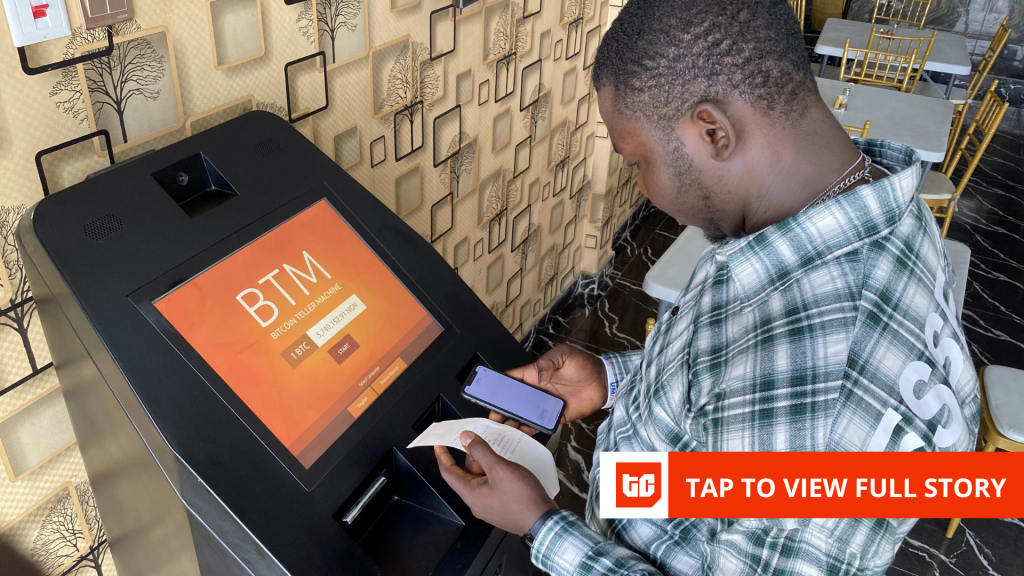
In the past few months, I have covered startups such as Zerocard, CoinCircuit, and Machankura, all operationally distinct, but philosophically trying to do the same thing: plug cryptocurrencies into everyday spending.
- +Why Africa’s crypto sector is entering its ‘pay the milkman’ era
Building solutions like that is a far cry from the first wave of African crypto solutions.
Building solutions like that is a far cry from the first wave of African crypto solutions. In its early years, peer-to-peer (P2P) trading platforms and offshore exchanges accounted for significant activity in the continent’s crypto ecosystem.
It’s the first time the centre of gravity in African crypto is moving from cross‑border arbitrage to low‑value domestic payments, asking a more practical question: can this thing pay my landlord, my Uber driver, or the woman on the corner street who sells me groceries?
That quest is what I mean by Africa’s ‘pay the milkman’ era.
Money only has real utility when it settles small, recurring obligations; the serviceman at the door, the house help’s wages, and the airtime top-up that keeps a phone line active.
For most of the last decade, Africa’s crypto sector has excelled at moving value across borders and around capital controls, but it has struggled to stay in the loop when the bill arrives.
The new wave of products tries to keep crypto under the hood while making the front-end look and feel like the instruments people already trust: debit cards, bank transfers, USSD menus.
Africa’s early crypto story feels familiar. Young Nigerians, Ghanaians, Kenyans, and South Africans discovered Bitcoin and, later, dollar-pegged stablecoins as a way to escape inflation, hedge against their local currencies, and bypass foreign exchange (FX) shortages.
Peer-to-peer (P2P) exchanges and WhatsApp over-the-counter (OTC) groups flourished, especially after regulators in some countries, including Kenya and Nigeria, discouraged or restricted banks from serving crypto businesses.
While Sub-Saharan Africa still accounts for a modest share of global cryptocurrency transaction volumes, up to $205 billion in 2025, some of that value still exists outside real-world economic activity.
Many young people still prefer to save, invest or hold cryptocurrencies long-term, receive cross-border stablecoin payments, or speculate and earn from price movements. Only a few countries, such as Ethiopia, account for recorded small-ticket retail-sized transactions, though the regulatory status in most countries still recognises crypto as fringe technology.
Users bought USD Tether (USDT), a digital currency tied to the dollar, to store value, receive freelance income, or pay suppliers abroad. They flipped in and out of Bitcoin for quick gains. In many markets, crypto became a parallel dollar system for people locked out of the official one.
But there was a catch: to pay school fees, rent, or electricity, most people still had to exchange their crypto for local currencies (off-ramp) to spend. It made crypto a bridge, not a destination. The journey typically ended in a local bank account, a mobile money wallet, or an envelope of cash. The merchant, the landlord, the supermarket teller at the end of the chain remained firmly in the world of naira, cedi, shilling, or rand.
The new startups now emerging want to power that last-mile spending activity to put utility behind crypto.
Take Zerocard, a Lagos-based startup whose entire premise is to make “spending crypto like cash” feel mundane at the point of sale (PoS). Users top up a balance with stablecoins, often USD Coin (USDC), while Zerocard handles conversion and compliance so that merchants see a regular card transaction at the PoS. The card swipes like any other debit card; the unusual mechanics live in the stack behind it, where a smart-contract escrow converts the medium automatically and liquidity providers in the backend provide instant in-and-out from crypto to fiat.
CoinCircuit, one of a cluster of merchant-focused startups, tackles the same problem from the other side of the counter. Instead of issuing cards, it offers a payment gateway for businesses to accept crypto at checkout and still settle in local currency. A restaurant in Lagos can show a “pay with crypto” option, but when the dust settles, its bank statement reflects deposits in naira.
Then there is Machankura, which uses a channel that is as old as mobile banking in Africa: USSD. Users dial short codes on feature phones, navigate text menus that feel like checking airtime or mobile money, and in the background, Bitcoin moves across the Lightning Network.
These three startups are solving different pieces of the same puzzle. Zerocard is a card rail for urban consumers who already hold stablecoins. CoinCircuit is a merchant rail for businesses that want to widen their customer base without inheriting token risk. Machankura is an access rail, dragging crypto onto basic phones and patchy connectivity.
Several other solutions are now building around that promise: spend crypto like cash.
African companies, including Kenyan startups Tando and Kotani Pay, Nestcoin-incubated Onboard Global, and South Africa’s MoneyBadger, are leaning on this promise. In Nigeria, several other startups, including Roqqu and Busha, are planning to launch crypto cards that make spending cryptocurrencies and stablecoins feel like using an everyday debit card.
Infrastructure providers, including liquidity providers, bank-grade payment processors, and wallet providers, are also stepping in to support this new growth wave for Africa’s crypto sector. Together, they are sketching a future where a cryptocurrency balance can pay for groceries, a cab ride or airtime directly, instead of taking a detour through a broker, an off-ramp platform, or a P2P desk.
Despite the momentum, there remains a fundamental uncertainty: whether the recipient at the end of the transaction chain actually wants to receive crypto.
For all the talk of “spend crypto like cash,” most of these products still terminate in fiat. The Zerocard user spends USDC, but the cashier in the supermarket settles in naira.
In South Africa, one of the continent’s most developed crypto markets, digital asset infrastructure is already bleeding into everyday payments. Consumers use apps like Luno Pay, Binance Pay, and Zapper to scan quick response (QR) codes and pay at major retailers, while merchants receive rand.
South Africans spent over R2 million ($112,000) monthly on everyday items through Luno Pay, the payment gateway operated by Africa‑focused crypto firm Luno, in 2025. While the figure is still small in the context of the broader payments market, it is real volume, happening at tills, not trading desks.