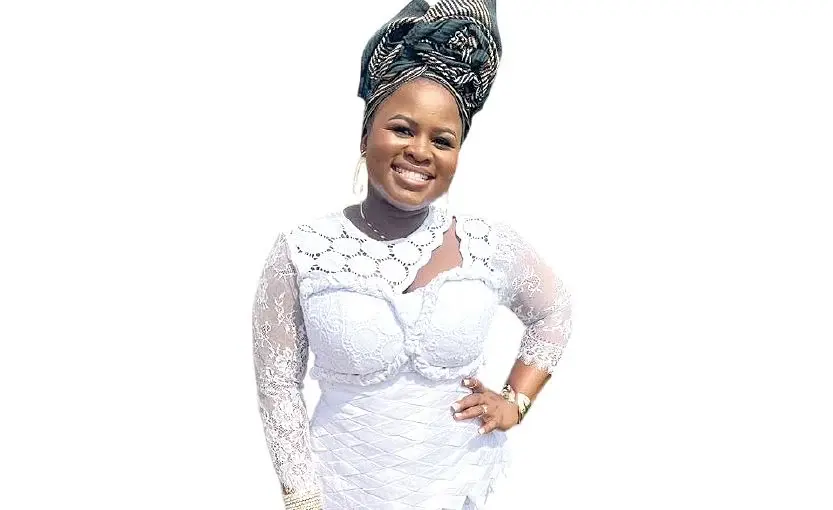
Fashion designer and founder of Kemsol Clothing, Kemisola Ogunmuyiwa, speaks with OGHENOVO EGODO-MICHAEL about building her fashion business, difficult clients, and the sacrifices she has made to keep her brand growing
- +Customers undervalued me because of my stature – Fashion designer, Ogunmuyiwa
- +What were your earliest challenges and how did you overcome them?
- +How has the rising cost of fabrics and materials affected your business?
- +How do you balance your artistic input with clients’ demands?
- +What happens when a client insists on a design you know will not work?
- +What strategies do you use to retain clients?
What inspired the creation of Kemsol Clothing, and how did your journey into tailoring begin?
What inspired the creation of Kemsol Clothing, and how did your journey into tailoring begin?
What inspired me was something quite simple but powerful. I was working with someone back in the day and I had a colleague who was also a fashion designer. One day, she was working on a machine, doing something we call threading underneath the machine. She handled it so effortlessly and pulled out the thread with such precision that I was amazed. I remember thinking to myself, “This girl is so skilled and intelligent. I want to be able to do this too.”
That moment sparked my interest in tailoring, and I decided to take it seriously. In 2017, I went ahead to learn tailoring professionally. That was how the journey started, from curiosity to commitment, and eventually, to building Kemsol Clothing.
What were your earliest challenges and how did you overcome them?
One of my earliest challenges was pricing, and it affected me a lot in the beginning. At that time, I was quite young, and I’m also petite in stature. People often judged me based on how I looked rather than the value of my work.
I remember a particular incident when I delivered a dress I had sewn for a client. I charged about N15,000 for it. When her husband saw me, he said something like, “This small girl is the one charging this amount? Just give her N6,000” It was discouraging, but it also taught me an important lesson.
From that moment, I decided to always stand my ground. Once I state my price, that is my final price, unless I personally decide to adjust it. Over time, my clients came to understand that about me. If I give you a quote, it reflects the value of my work, and I don’t allow people to pressure me into reducing it unfairly. That confidence helped me overcome that challenge.
How would you describe your brand identity in a market filled with both traditional and modern fashion styles?
We operate within both traditional and modern fashion spaces. The industry is constantly evolving, especially with social media influencing trends daily. A new design can emerge today and become widely popular tomorrow.
So, our identity is rooted in versatility. We adapt to both traditional and contemporary styles while continuously improving to meet current demands.
Many young entrepreneurs struggle with funding. How did you finance your business in the early stages?
Starting was not easy at all. Before beginning my tailoring business, I worked as a stylist for five years. During that period, I saved as much as I could through small contributions and budgeting. When I had enough, I started investing gradually. I bought an industrial sewing machine first. Then, with any extra money I had, I purchased other essentials, such as an iron, a table, and basic tools. It was a step-by-step process. I didn’t wait to have everything at once. I built my business gradually, and that approach really helped me.
How has the rising cost of fabrics and materials affected your business?
The rising cost of materials has significantly affected operations. Sometimes, you give a client a price based on current market rates, but by the time you go to buy the fabric or materials, the prices have increased drastically.
For example, something that used to cost N2,000 might suddenly rise to N6,000. When you go back to inform the client, some understand and are willing to adjust, but others feel you are being dishonest or inconsistent. This situation can lead to losing customers, even when you are being transparent. It is quite draining. However, some loyal clients stay because they understand the value of your work and the realities of the market.
How do you balance your artistic input with clients’ demands?
Clients approach this in different ways. Some come with a clear style they want, while others combine different elements from multiple designs, such as sleeves from one outfit and the bodice from another.
In some cases, they ask me to merge everything and still add my creative touch. It can be challenging, especially when the ideas do not naturally work together.
I always try to guide clients by explaining what will work and what will not. Some are open to suggestions, while others insist on their preferences. When clients allow me to contribute creatively, the final result is often more satisfying for both of us.
What happens when a client insists on a design you know will not work?
I always try to explain clearly, so we are on the same page. However, some clients still insist even after you advise them.
I once had a client who wanted a particular back design that I knew would not turn out well. I explained it several times, but she insisted. Eventually, I made it as requested. After trying it on, she realised it did not work as expected.
Experiences like that happen. Some clients are very strong-willed, especially those with limited understanding of tailoring. They can be the most difficult to convince.
How has social media impacted on your growth and visibility as a fashion entrepreneur?
Social media has been incredibly important. It is one of the most effective marketing tools available today.
When you post your work online, potential clients often check your social media pages before reaching out. They want to see your portfolio. If they like what they see, they proceed with inquiries. If not, they may move on.
Hashtags also play a role in visibility. I have had clients find me through Instagram simply by searching for fashion-related content. Some even come directly to my workspace after seeing my posts. Overall, social media has greatly increased my reach and visibility.
How do you handle clients who bring complex celebrity-inspired designs but expect them at very low prices?
I am always honest with clients. If I see a design and I cannot execute it properly, I say so immediately. I do not take on work just to please someone if I know it will not turn out well.
For complicated designs, I assess whether I can handle them. If I believe I can achieve a good result with effort, I accept the job. If not, I decline.
Some designs may look simple but are actually very complex when you begin working on them. So honesty is important, both for the client and for maintaining my standards.
What strategies do you use to retain clients?
The most important strategy is delivering quality work. Your work should speak for you.
I make every outfit like it’s a chance to show off. I pay attention to details and ensure the finishing is excellent. When clients wear well-made clothes and receive compliments, they are more likely to return. Good results naturally attract repeat customers.