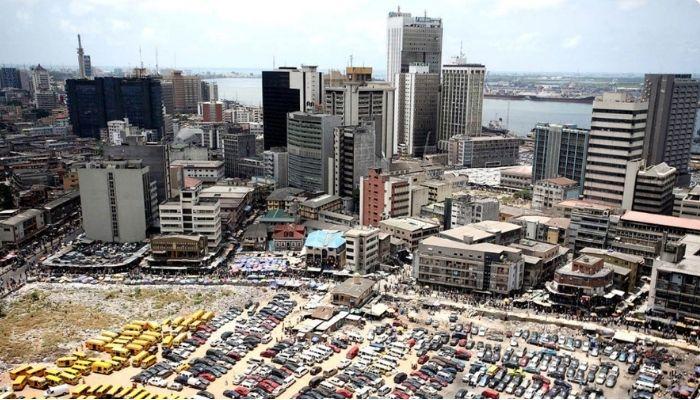
Public frustration in Nigeria today is less about the logic of reform and more about the lived experience of it. Economic restructuring, particularly the removal of fuel subsidy and the unification of the foreign exchange market, was always going to be disruptive. Many Nigerians understand this. What they struggle to reconcile, however, is the apparent absence of deliberate cushioning mechanisms and the widening disconnect between policy messaging and leadership conduct.
- +Hardship and hope: Nigerians demand empathy in economic reforms
- +Credibility gap and public trust
- +A question of governance style
Across markets, transport hubs, and households, the consequences are immediate and unrelenting.
Across markets, transport hubs, and households, the consequences are immediate and unrelenting. The cost of living has surged, eroding purchasing power and pushing more families to the brink. For traders, the issue is not abstract macroeconomic correction but the daily arithmetic of survival.
“Cost keeps rising and prices are increasing. Customers complain, but what can we do? Even we are suffering,” a trader at Ikotun Market in Lagos said, summing up a sentiment echoed nationwide.
Economists and policy analysts have long maintained that reforms of this magnitude must be sequenced with robust social protection frameworks, targeted subsidies, transport support schemes, food security interventions, and transparent cash transfers. Yet, many Nigerians argue these buffers have been inadequate, poorly implemented, or too slow to materialise.
The result is a reform narrative that feels one-sided: sacrifice without visible relief.
Poverty levels remain elevated, with nearly two-thirds of the population estimated to be poor. Unemployment and underemployment persist, forcing millions of youths into a relentless hustle for basic survival. Small and medium-sized enterprises (SMEs), traditionally the backbone of job creation, continue to buckle under rising operational costs, with many shutting down in recent years.
“Reforms are not the problem. The problem is reform without empathy. Governance must anticipate pain points and respond proactively, not reactively,” said Samuel Odekunle, a public policy analyst.
This critique is gaining traction, as citizens increasingly interrogate not just policy decisions but the philosophy driving them.
Credibility gap and public trust
Compounding the economic strain is a growing perception of elite detachment. While government officials urge patience and fiscal discipline, reports of lavish spending, expensive convoys, and expanded political offices have deepened public skepticism.
“You cannot ask people to tighten their belts when those in power are loosening theirs. Leadership must model the restraint it demands,” Odekunle added.
This perceived contradiction is eroding trust, an essential ingredient for the success of any reform agenda. Public buy-in is not secured through policy pronouncements alone but through visible alignment between rhetoric and action. When citizens see leaders sharing in the burden, cutting costs, reducing excess, and prioritising welfare, it reinforces the social contract.
Speaking at Eagle Square in Abuja during this year’s Workers’ Day on Friday, leaders of the Nigeria Labour Congress (NLC) and the Trade Union Congress (TUC) warned that current realities fall far short of the promise of decent work.
They pointed to rising living costs, job insecurity, and declining purchasing power as evidence of deepening economic strain on workers. Without urgent intervention to address insecurity, stabilise the economy, and strengthen the currency, they cautioned that living standards could deteriorate further.
Joe Ajaero, NLC president, said Nigerian workers are being squeezed by insecurity, inflation, poverty, and currency devaluation, factors he noted are undermining job creation and widening inequality.
Festus Osifo, TUC president, highlighted the central role of currency stability, noting that while the naira has shown some recovery, more progress is needed.
“At a point, the exchange rate was about N1,700 to the dollar. today, it is around N1,350, but more needs to be done,” he said. “Even if you pay a worker N1 million, if it cannot buy basic goods, it is meaningless. The value of the naira determines purchasing power.”
A question of governance style
Beyond economic hardship, there is a broader debate about governance. Many Nigerians are calling for a shift from a top-down, state-centric model to one that is genuinely people-centred. This entails not just designing policies with citizens in mind, but actively engaging them in decision-making processes.
Transparency, accountability, and effective communication are no longer optional, they are central to restoring confidence.
Yet, within the frustration lies cautious optimism. Some Nigerians acknowledge that difficult reforms can yield long-term benefits if properly managed.
“If these policies will stabilise the economy in the future, fine,” a young business owner in Lagos said. “But we need to survive the present first.”
Despite mounting criticism, President Bola Tinubu, in his Workers’ Day message, insisted that the government remains committed to easing the burden. He pointed to targeted interventions in agriculture, infrastructure, small businesses, and social protection as steps toward inclusive growth.
The challenge, however, lies not just in policy intent but in execution and perception.
The path forward is unlikely to involve a reversal of reforms but rather a recalibration of their implementation. Strengthening social safety nets, enforcing fiscal discipline at the highest levels of government, and improving policy communication could help bridge the growing trust deficit.
Governance is judged not by its intentions but by its impact on everyday lives. Nigerians are not rejecting reform outright; they are demanding fairness in how its burdens and benefits are distributed.
In that demand lies a clear expectation: that leadership should not only chart the course but walk it alongside the people.