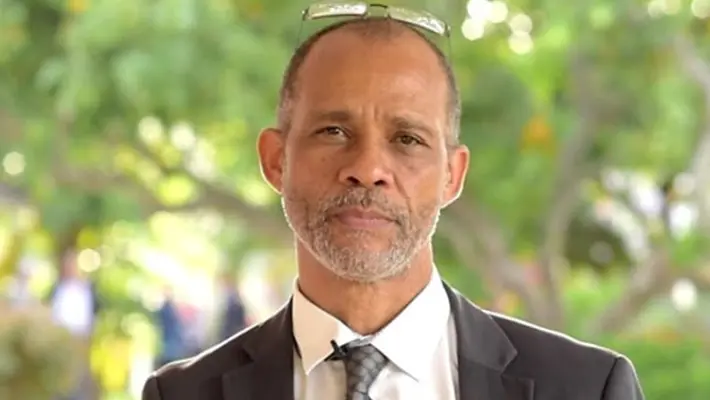
The Lagos State Government says it plans to fully digitalise the state’s public healthcare system within the next six to nine months as part of efforts to strengthen healthcare delivery and data management.
- +Lagos to fully digitalise public health sector within 9 months
This was disclosed by the Lagos State Commissioner for Health, Akin Abayomi, during the launch of the Data Science and Medical Image Analysis Training for Improved Healthcare Delivery in Nigeria (DATICAN) and a High Performance Computing Facility at the Lagos State University Teaching Hospital.
This was disclosed by the Lagos State Commissioner for Health, Akin Abayomi, during the launch of the Data Science and Medical Image Analysis Training for Improved Healthcare Delivery in Nigeria (DATICAN) and a High Performance Computing Facility at the Lagos State University Teaching Hospital.
According to Abayomi, the state government has already commenced the Smart Health Information Platform (SHIP), an initiative designed to digitise healthcare services across public health facilities.
Abayomi said the digitalisation project covers the state’s general hospitals, teaching hospitals and more than 300 primary healthcare centres.
He added that initiatives such as DATICAN could complement the state’s digital health programme by producing trained personnel and providing data resources for research and policy development.
Abayomi noted that data governance remained critical, particularly as citizens were increasingly concerned about the security of financial and health information.
The Programme Director of DATICAN, Benjamin Aribisala, said the initiative was established to address gaps in data-driven medical research in Nigeria.
Aribisala explained that the programme is designed to build capacity in data science and encourage collaboration between medical professionals and computer scientists.
He noted that Nigeria and other African countries still face uneven adoption of data science technologies compared to developed economies, largely due to a shortage of skilled professionals capable of applying these tools in healthcare.
According to him, another challenge is the limited collaboration between medical experts and computer scientists, as well as the lack of a national repository of medical images for research.
The minister added that the newly launched Medical Image Repository would provide thousands of curated medical images to support research and the development of artificial intelligence diagnostic tools tailored to Nigerian and African populations.
Lagos State authorities are also moving to strengthen oversight of healthcare providers in the state. The Speaker of the Lagos State House of Assembly, Mudashiru Obasa, recently announced plans to establish a new regulatory agency dedicated to monitoring private healthcare facilities.
Lagos is also pursuing broader health financing reforms. The state’s Health Commissioner, Akin Abayomi, said Lagos could unlock over N400 billion annually for healthcare if at least 20 million residents enroll in the Lagos State Health Scheme (Ìlera Èkó).