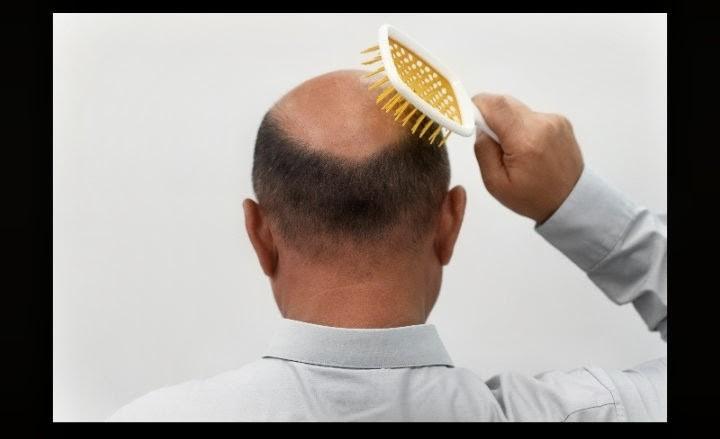
There’s a particular moment many people recognize — standing in front of the mirror, noticing the hairline, and thinking: “This is exactly what happened to my father.” Or your mother. Or your grandmother. That moment of recognition carries a strange mix of resignation and anxiety. But understanding what hereditary hair loss actually means — biologically, not just superficially — changes how you approach it.
- +When Family History Catches Up: Treating Hereditary Balding
- +What Hereditary Balding Actually Is
- +Why Family History Doesn’t Mean a Fixed Destiny
- +The Timeline Problem: Why Most People Start Too Late
- +What Treatment Actually Involves
Hereditary balding, medically called androgenetic alopecia, is the most common cause of hair loss in both men and women.
What Hereditary Balding Actually Is
Hereditary balding, medically called androgenetic alopecia, is the most common cause of hair loss in both men and women. The word “androgenetic” tells you a lot — it involves androgens (hormones) and genetics working together.
Here’s the core mechanism: certain hair follicles in your scalp are genetically sensitive to a hormone called DHT (dihydrotestosterone), which is derived from testosterone. Over time, DHT binds to receptors in these sensitive follicles and causes them to shrink — a process called miniaturization. Each hair growth cycle produces a thinner, shorter strand than the previous one, until eventually the follicle stops producing visible hair altogether.
This isn’t random. Your genes determine which follicles carry this sensitivity and how strongly they respond to DHT. That’s why the pattern is so consistent — receding temples and crown thinning in men, diffuse thinning along the part in women.
Why Family History Doesn’t Mean a Fixed Destiny
A common misconception is that if a parent went bald, you will too — and there’s nothing to be done. That’s only partially true.
Yes, genetics set the predisposition. But genetics are probabilistic, not deterministic. The expression of those genes depends heavily on other factors: your overall hormonal balance, scalp health, nutritional status, stress levels, and how early or late you start addressing it.
Understanding genetic hair loss means recognizing that while you can’t change your follicle sensitivity, you can influence the environment those follicles live in. A follicle that is nutritionally supported, has good blood circulation, and is not under constant hormonal stress will miniaturize more slowly than one that is neglected.
The Timeline Problem: Why Most People Start Too Late
One of the biggest challenges with hereditary balding is the delay between when it starts and when it becomes visually obvious. By the time you notice significant thinning, you may have already lost 30–50% of the density in that area. The follicles don’t die suddenly — they slowly produce less and less until the change becomes undeniable.
This is why early signs matter:
None of these alone confirm androgenetic alopecia, but together — especially with a family history — they’re worth taking seriously. A proper diagnosis involves looking at the pattern, doing a scalp examination, and sometimes bloodwork to rule out other contributing factors like thyroid issues or iron deficiency.
What Treatment Actually Involves
Treating hereditary balding is not about reversing genetics. It’s about slowing the process, supporting follicle health, and — if caught early enough — potentially recovering some density in areas where follicles are still active.
Approaches typically work on a few levels:
This is where a root-cause approach matters more than chasing a single solution. Traya hair treatment is built on this multi-layered thinking — addressing the scalp, the hormones, and the nutritional gaps simultaneously rather than treating just the surface symptom.
Patience is non-negotiable with hereditary hair loss. Results — whether you’re using topical treatments, internal supplements, or a combination — typically take three to six months to become visible. This doesn’t mean nothing is happening; hair growth cycles are long and changes are gradual.
Setting realistic expectations helps: the goal early on is stabilization, not sudden regrowth. If the rate of hair fall slows down, that’s a meaningful win. Density improvements come later and are more likely when treatment begins before follicles are completely inactive.
Hereditary balding is one of the most understood forms of hair loss — and that’s actually good news. When the mechanism is clear, the intervention can be more targeted. You may not be able to change what you inherited, but you can absolutely influence how and when it progresses. The key is understanding what’s happening beneath the surface and addressing it with consistency, not panic.