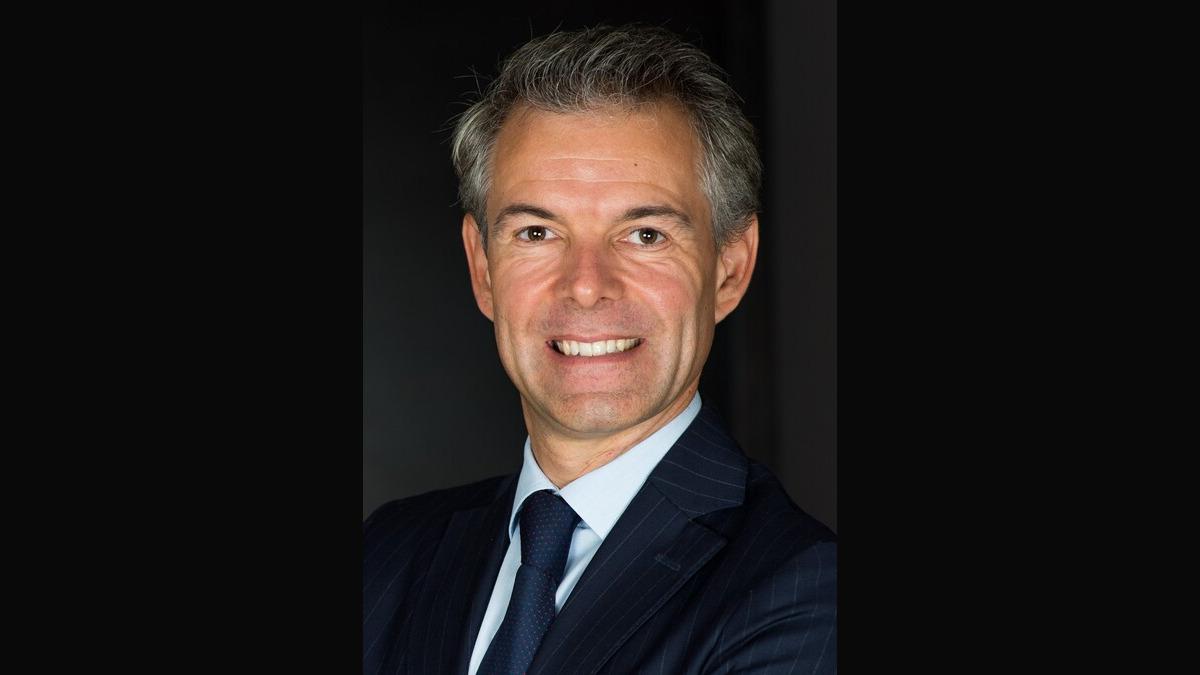
Benjamin Toulouze, the head of corporate venture capital (CVC) at Axian Group, a multinational conglomerate, spent most of his career as a banker at Société Générale, France’s third-largest bank by total assets, working across France and several African markets.
- +AXIAN’s Benjamin Toulouze says CVCs can move faster than VCs
These days, he runs the CVC arm at AXIAN Investment, the investment arm of the Madagascar-headquartered AXIAN Group.
These days, he runs the CVC arm at AXIAN Investment, the investment arm of the Madagascar-headquartered AXIAN Group. Based in Dubai, his team of four is split between the UAE and Antananarivo.
Toulouze got the green light to launch the corporate VC unit in late 2021, making it one of the first CVC vehicles from an African group. Four years in, AXIAN Investment has invested in 33 startups directly and holds stakes in 38 funds. Its direct portfolio includes MaxAB in Egypt, LipaLater in East Africa, Djamo in Côte d’Ivoire, Curacel, Anda in Angola, WideBot AI, and Nucleon Security in Morocco. Cheque sizes range from $50,000 for very early ideas up to $1.5 million in total exposure per company.
AXIAN Group might not be a household name in African tech, but its footprint is significant. The pan-African conglomerate, founded half a century ago by the Hiridjee family, operates in 32 countries across Africa and the Indian Ocean, with interests in telecoms, financial services, energy, real estate, and innovation. Its telecoms arm was ranked 74th on the Financial Times’ 2025 list of Africa’s fastest-growing companies.
The firm takes minority stakes of 1% to 5%, deliberately small, Toulouze says, to avoid conflicts with AXIAN’s operating businesses and to keep trust with founders and co-investors.
It has not yet had an exit, but as the parent group builds out data centre infrastructure through its STELLAR-IX brand across four markets, the CVC is leaning heavily into AI, cybersecurity, digital assets, and what Toulouze calls the “sovereignty issue”; African countries controlling their own data.
In our conversation, Toulouze explains why his team chose Dubai and Madagascar over Lagos or Nairobi, how he pitches against the “CVCs move slowly” objection, why he thinks 1–5% stakes are an important feature, how he sources in North Africa after living there, and what he looks for in founders.
This interview has been edited lightly for clarity and length.
You started your career as a banker in France before moving into venture capital. How did that transition happen?
I actually wanted to be an investor before being a banker. I started my career in France, in Paris, at a big audit firm doing acquisition due diligence, standard CPA work at the time for big French groups listed on the CAC 40. I worked for a fund that wanted to acquire a startup in France. That was in 2004. From then on, I wanted to be an investor.
But for different reasons, I got very good opportunities as a banker, first in France and then in different countries. But the dream of being close to the entrepreneur was already there. I came to AXIAN in 2019 with this idea, but it was a bit early. At the end of 2021, we got a green light internally to launch one of the very first corporate VCs from an African group. I enjoy it a lot.
You’re based in Dubai, AXIAN is in Madagascar. Those aren’t typical tech markets. Why not operate from Lagos, Nairobi, Cairo, or Johannesburg?
We are four at the corporate VC. Two of my teammates are still based in Madagascar, and we are two in Dubai. The point is, we are close to all the markets, including the big operational tech ecosystems in Africa. But the goal is to be everywhere, to be in touch with the entire ecosystem. That’s entrepreneurs, but also venture capitalists locally and internationally.
The big tech companies and we have good examples like Flutterwave in Lagos, Moniepoint, FairMoney, or in Egypt, MNT-Halan, are based in their own countries, but they go beyond.
That’s what we do. We’re ready to go and be as close as possible to different companies. All these big countries are our major zones of investment: Egypt, Nigeria, Kenya, West Africa, and South Africa. We stay close to all these ecosystems, and we go on-site as soon as possible. We don’t see any issue with not being there permanently. We have a big network in different countries now, so it’s fine.
A lot of corporate VC professionals I’ve spoken to say CVCs don’t move as fast as typical VCs or that there can be strings attached. How do you convince a founder that AXIAN is the best partner?
We’ve already got these kinds of objections. The first part of my answer is that at AXIAN, we have a very strong entrepreneurship mindset. We are ready to decide quite quickly. Sometimes we move faster than the regular VCs. I don’t have any internal barriers to moving forward. If I need to get all my investment committee members for a decision, I can get one very quickly. Most of the time, when we take time, it’s because we are still questioning the business model and want to go deeper. In terms of governance and decision-making, we don’t have any issues.
On convincing the entrepreneur, interestingly, entrepreneurs are really keen to add corporate VCs to their cap tables. Because we have a complementary value proposition to regular VCs. We know the operations, and most of the time we come from the operations themselves. We know the challenges of launching a company, of keeping it striving, of day-to-day operations, HR, accounting, organisation, and strategic vision. One of the values we bring is our experience as intrapreneurs or entrepreneurs who have led either divisions or departments within a very large group.
The second thing is, as a corporate VC, we can bring potential new markets for the startup. It’s not a commitment, but when we invest in a company, we try to push for a solid partnership between the startup and the AXIAN Group—synergies, working together, going in the same direction. That’s why entrepreneurs are interested in working with us. We have a complementary value proposition, we know the operations, and we can offer a potential new growth lever.
You’ve invested in 33 startups and 38 funds. What’s the split between direct startup investment and fund commitment? Has that shifted since you launched the CVC?
It’s a complementary approach. At the very beginning in 2017, AXIAN launched the fund-of-funds activities. Of the 38 funds, more than half are very focused on the African market, where we are invested in large private equity and venture capital funds like Partech, DPI, P1 Ventures, and others.
Progressively, it became interesting to be more crisp and to have more traction on the companies themselves. Making the corporate VC was relevant. It was also relevant because in 2021 and early 2022, the group understood quite quickly that mastering technology for the African population was a strong pillar to ensure financial inclusion, energy inclusion, and digital inclusion. It is still in our mandate to push startups to give more options and new capabilities to the African population.