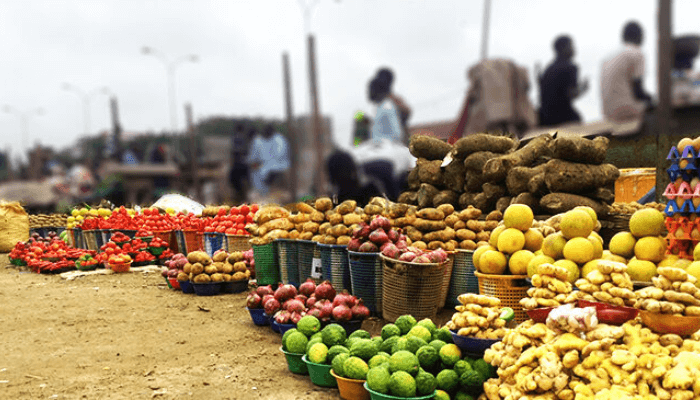
In January, Salewa Tokunbo, a Lagos trader who is into frozen food items, was confident that whatever she stocked from her wholesale suppliers would be rushed by customers. Prices were fair, and the business environment was good.
- +Nigerian business economy under fresh pressure as US-Iran war fires on
But nothing prepared Tokunbo for the impacts of the United States and Iran war that began on February 28.
But nothing prepared Tokunbo for the impacts of the United States and Iran war that began on February 28. Today, her customer demand has declined, energy costs have tripled due to her reliance on generators, and she now worries about the outlook of her business in the coming months.
“Frozen turkey prices are so high. A carton ranges around N100,000. I’m not even sure customers can afford it if I buy it from the market,” she complained in an interview with BusinessDay.
Like Tokunbo, several businesses in Africa’s most populous nation are faced with concerns over the impact of the US-Iran war on their operations.
A survey polled by SB Morgen Intelligence, a Nigerian research firm in a new report titled, ‘How a Middle East War Broke Nigerian Pockets’, reveals a new reality for traders: about 63 percent of traders in Nigeria believe the war will harm their business in the next three months.
Data tracking fuel prices between late February and early April shows a near doubling of pump prices within four weeks, driven by global crude price increases, refinery price adjustments, and marketer margins.
Before the war, fuel prices were roughly about N830/litres. However, it costs about N1,300/litre today, reflecting a 63 percent surge since the war started, putting pressure on businesses that depend heavily on fuel to keep their operations going.
Diesel prices also surged from around N1,100 per litre pre-crisis to about N1,550 at the peak, significantly raising logistics and production costs across sectors.
Muda Yusuf, chief executive officer of the Centre for the Promotion of Private Enterprise (CPPE), said the most immediate domestic risk of the war lies in inflation transmission.
According to him, energy costs have a strong multiplier effect in Nigeria’s inflation dynamics, noting that transportation and food prices account for a significant share of consumer expenditure.
Across Lagos, Abuja, Akwa, Bauchi, Ibadan, Onitsha, and Port Harcourt, 83 percent of traders noted that the cost price of goods have surged making it difficult for them to stock and make gains at the same time, the SBM survey found.
“Top worries were goods becoming too expensive and transport costs rising ahead of fears about weak customer demand,” the report noted.
Despite an unprecedented high in inflationary pressures in 2024, Nigerians have seen respite in cost of living.
Headline inflation eased to 15.06 percent in February 2026, up from 23.18 percent in the same period of 2025, according to data from the National Bureau of Statistics.
Prices of food also crashed underpinned by improved harvests, easing logistics bottlenecks and a steadier naira after years of sharp price increases that strained household budgets.
But analysts say the war could erode these wins.
“With purchasing power already fragile, sustained increases in fuel prices could intensify cost-of-living pressures and deepen poverty level,” Yusuf added.
The rise in fuel costs quickly fed into transportation and food logistics. Transport fares increased sharply across major routes, with Lagos intra-city fares rising from N200–N300 to as high as N550, while Abuja fares climbed to N900 on some routes.
According to the report, freight costs also jumped by more than 50 percent, with the cost of moving goods from Kano to Lagos rising to N70,000 from N45,000 in pre-war.
Muhammed Magaji, president of All Farmers Association of Nigeria (AFAN), told BusinessDay that with the persistent economic slowdown driven by the war, food prices will increase.
“Prices of food will rise because of an increase in logistics cost,” he said. “It costs more now to transport commodities from farms to markets,” Magaji told BusinessDay.
While many traders and farmers confirmed awareness of the ongoing war, some traders were oblivious, acknowledging only the increase in market prices without knowing the real cause.
“51.8 percent of traders learned about the war primarily through WhatsApp and social media and 44.5 percent heard about it through family and friends,” the SBM reported.
This poses questions about the Nigerian government’s handling of the crisis.
“President Bola Tinubu did not deliver a standalone national broadcast devoted specifically to the economic impacts of the war in Iran, and public communication on the conflict has largely come through broader speeches and ministerial statements rather than concrete, time-bound relief measures for households,” the report said.