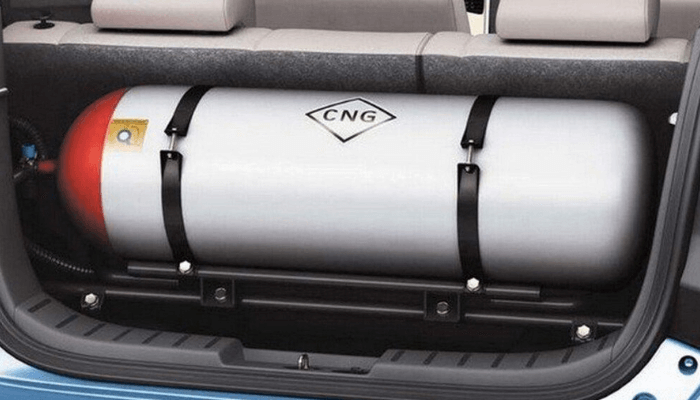
Nigeria is turning to cheaper transport alternatives such as Compressed Natural Gas (CNG), but limited access, conversion costs, and infrastructure gaps slow adoption, limiting its impact on surging transport costs.
- +High fuel prices spur CNG, yet barriers slow adoption
- +CNG vs Petrol: Cheaper fuel, costly conversion
As fuel prices continue to rise, increasing transportation costs, talks around transitioning to CNG for mobility are gaining traction to mitigate the effects of the ongoing United States–Israel conflict with Iran on global oil prices.
As fuel prices continue to rise, increasing transportation costs, talks around transitioning to CNG for mobility are gaining traction to mitigate the effects of the ongoing United States–Israel conflict with Iran on global oil prices.
The conflict, which has been ongoing for over three weeks, affecting the Strait of Hormuz, a key energy supply route, has forced Nigerians to seek more sustainable and cost-effective energy alternatives, with local fuel prices soaring by over 40 percent.
Muhammad Sani, CNG engineer and energy consultant, said that adoption in Nigeria is driven by necessity, steadily increasing, particularly among high-usage segments such as commercial transport operators and fleet owners, but constrained by structural gaps.
“These groups are more responsive to fuel price volatility and are actively seeking cost-saving alternatives.
“However, at the retail level, adoption remains relatively limited, indicating that the market is still in its early growth phase,” Sani said.
He added that CNG offers a clear economic advantage in terms of lower cost per kilometre, noting that in a properly developed ecosystem, this can translate into substantial reductions in transport costs, but it is faced with insufficient refuelling infrastructure, which is yet to support widespread adoption.
“The primary challenge is infrastructure. Refuelling networks are not yet sufficiently developed to support widespread adoption, which directly impacts user confidence.
“Closely linked to this is the high upfront cost of conversion, which limits accessibility for many individuals despite the long-term economic benefits, and a significant gap in awareness and technical understanding, both at the consumer level and within parts of the automotive ecosystem,” Sani said.
Over the years, compressed natural gas (CNG) has existed in Nigeria but remained largely underutilised, particularly in transport. Its early entry into mobility dates back to January 2010, when the Nigerian Independent Petroleum Company (NIPCO) introduced the country’s first CNG-powered vehicle initiative in Benin City.
This further led the Federal Government to approve the National Gas Policy, which emphasised the development of CNG infrastructure and natural gas vehicles, and the launch of the National Gas Expansion Programme (NGEP), aimed at positioning CNG as a key transport fuel, with a target of one million vehicle conversions by 2021.
Following the 2023 petrol subsidy removal, discussions around CNG intensified, which led to the creation of the Presidential Initiative on Compressed Natural Gas (Pi-CNG) to boost adoption and infrastructure.
The recent pressure from rising fuel prices has also increased interest in the transition, as people now seek cost-effective alternatives to cut high transportation costs.
Anne Obode, team lead Evrytn CNG, noted that while interest in compressed natural gas (CNG) is growing in Nigeria, actual adoption remains limited due to a combination of low awareness, inadequate infrastructure, and high conversion costs.
According to Obode, awareness has improved compared to previous years, but is still largely concentrated in a few states, such as Lagos and Abuja, where refuelling infrastructure exists.
She added that the limited spread of CNG stations across the country continues to discourage wider adoption, as motorists are unwilling to switch without reliable access to refuelling points.
“Gas itself is cheap, but the infrastructure to set up the gas, or to get the gas from the ground to your vehicle, that whole process is very expensive,” Obode said.
CNG vs Petrol: Cheaper fuel, costly conversion
The cost of CNG, despite being a cheaper alternative to petrol, costs even more when converting a vehicle.
Currently, CNG is sold by volume at N380 per Standard Cubic Metre (SCM), indicating a 109 percent difference when compared to N1,200 at which petrol is sold per liter.
However, the costs for motorists converting their cars are around N800,000 to N900,000, putting the option out of reach for many drivers, especially without affordable financing.
“The cost for motorists is actually high. You can convert a four-plug vehicle for N800,000 or N900,000, depending on where you’re doing your conversion.
“Gas itself is cheap, the process of converting your vehicle from running on PMS to running on both CNG and PMS can cost some people as much as 900,000, which they might not be able to pay at once,” Obode said.
She further said that despite these challenges, CNG has strong potential to significantly reduce transport costs in Nigeria over time, given that the country has abundant domestic gas resources.
Sani added that scalability depends on coordinated efforts, expanding infrastructure, ensuring standardisation in conversion processes, and implementing supportive regulatory policies.
“CNG is not just an alternative fuel but a strategic pathway for Nigeria to improve energy efficiency, reduce transport costs, and build a more resilient energy system. The opportunity is significant, but execution will determine the pace and scale of impact,” he said.