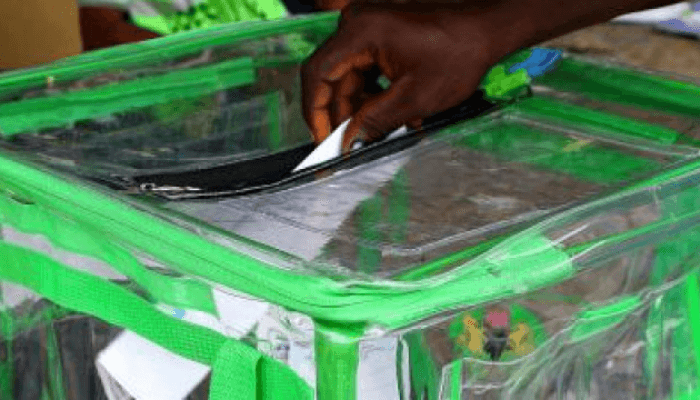
Four months to the commencement of official campaigns for the 2027 general elections, persistent killings, abductions and attacks across several parts of the country are raising fresh fears that a large number of vulnerable communities may be effectively cut off from the political process.
- +Rising insecurity threatens rural voters in Borno, Plateau, Zamfara, Benue
From rural areas of Borno and Plateau to troubled communities in Zamfara, Benue and parts of Niger, Katsina, Kebbi, Kwara, Taraba and Adamawa states, insecurity has intensified in recent weeks, with residents fleeing their homes and entire villages left deserted following attacks by the Boko Haram terrorists and bandits.
From rural areas of Borno and Plateau to troubled communities in Zamfara, Benue and parts of Niger, Katsina, Kebbi, Kwara, Taraba and Adamawa states, insecurity has intensified in recent weeks, with residents fleeing their homes and entire villages left deserted following attacks by the Boko Haram terrorists and bandits.
Findings indicate that in many of these areas, fear of attacks has made normal socio-economic activities difficult, casting serious doubt on the feasibility of political rallies, voter mobilisation, campaigns and even election day participation.
Security analysts warn that if the trend persists, candidates may be unable to physically access several communities to canvass for votes, while residents, many of whom are displaced or living under constant threat, could be excluded from the electoral process.
The 2023 governorship elections across the states saw consistently low participation, with every state recording a voter turnout of less than 50 percent. Only four states managed to exceed the 40 percent threshold, all located in the northern region.
Jigawa led the country with 45 percent participation, followed by Adamawa at 43 percent and Sokoto at 41 percent. Plateau recorded a 40 percent turnout, which stood as the highest figure within the North-Central zone.
Engagement in other northern states showed significant variation. Zamfara fell just below the top tier with a 38 percent turnout, while Benue recorded a lower participation rate of 29 percent. Borno saw the least activity among these specific states, with voter turnout reaching only 26 percent for the executive contest.
The Independent National Electoral Commission has scheduled the Presidential and National Assembly election campaigns to begin on 19th August 2026, while campaigns for Governorship and State Houses of Assembly elections are slated to start on 9th September 2026.
However, the reality on the ground suggests a growing disconnect between electoral timelines and security conditions, particularly in conflict-prone rural areas where state presence remains weak.
In recent weeks alone, hundreds of Nigerians have reportedly been killed in coordinated attacks, with many others abducted in the affected states.
The situation was particularly dire during the Easter period, when several communities in Plateau and Benue states came under violent assault, further heightening fears about the safety of political gatherings.
Jackson Lekan Ojo, a security expert and golden member of the International Security Association (ISA) in Switzerland, told BusinessDay that “Without coordinated security operations, improved intelligence, and stronger inter-agency collaboration, the elections risk being uneven; credible in urban centres but compromised in rural Nigeria.”
Ojo, who is also a fellow of the International Institute of Professional Security (IIPS), said in a telephone interview, “For many communities already living under siege, the question is no longer who to vote for, but whether they will be able to vote at all.”
He added that the situation poses a deeper democratic risk, as thousands of eligible voters in conflict-affected areas may be unable to engage meaningfully in the build-up to the 2027 polls.
Bolaji Abdullahi, National Publicity Secretary of the African Democratic Congress (ADC), has criticised the federal government’s handling of insecurity, accusing President Bola Tinubu of repeatedly issuing strong statements without corresponding results.
In a post shared on his X (formerly Twitter) account on Tuesday, Abdullahi argued that since assuming office in May 2023, the President’s responses to violent attacks and killings across the country have followed a predictable pattern of assurances that are yet to translate into lasting solutions.
He cited several incidents, including attacks in Plateau State in December 2023, as well as subsequent outbreaks of violence in Plateau, Kwara, Benue and Kebbi states between 2025 and early 2026, noting that each episode was met with firm presidential pronouncements and promises of decisive action.
According to him, despite these repeated commitments, the cycle of killings and abductions has persisted.
“Since May 2023, President Bola Tinubu has turned ‘never again’ into a template response to insecurity and killings of Nigerians. Every massacre under his watch. Every abduction under his failed leadership. Same script. Same lines. Same outcome,” he posted.
Abdullahi further referenced the latest wave of violence during the Easter period in April 2026, which affected parts of Kaduna, Borno, Plateau and Benue states, resulting in attacks on communities, places of worship, and security personnel.
Aminu Yakudima, a chieftain of the People’s Democratic Party (PDP), also expressed concerns that the intense focus on 2027 politicking could further distract political actors in government from efforts to stabilise affected regions.
Prof. Joash Amupitan, INEC Chairman, had warned that credible elections cannot be separated from national security.
Speaking at a security forum, he stressed that elections and security are “two sides of the same coin,” cautioning that Nigeria is entering a delicate phase following the release of the 2027 timetable.
Dabo Sambo, public affairs commentator, also urged President Bola Ahmed Tinubu to urgently address banditry and insurgency, warning that failure to do so could carry political consequences in 2027.
Similarly, Muhammadu Sa’ad Abubakar III, the Sultan of Sokoto, has repeatedly decried the deteriorating security situation, describing it as a threat to national cohesion and democracy.
But reacting to fears that rural voters may be unable to participate in the 2027 elections due to worsening insecurity, Alhaji Bala Ibrahim, the All Progressives Congress (APC) National Director of Publicity, told BusinessDay in a telephone interview that the situation remains a major concern for both the party and the government.
He noted that security has become a top priority for the government, as reflected in the consistent position of its leadership, and stressed that the APC is not indifferent to the situation.
Ibrahim explained that tackling insecurity is central to the government’s Renewed Hope Agenda, adding that the issue is constantly discussed at the highest levels of the party and national leadership.
“It’s an issue that is on the table in the daily discussion of the party and the leadership of the country. And the right thing is going to be done, just like it is being done,” he said.