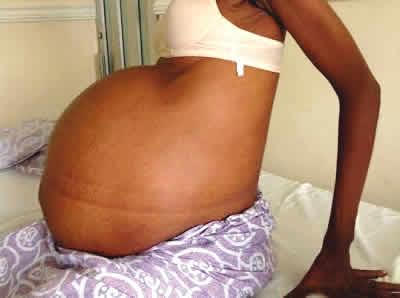
Many women, whether married or single, have long questioned why uterine leiomyomas, also called fibroids, occur, often believing virginity offers protection, but doctors say this is a myth.
- +Why virginity does not protect against fibroids
- +Delayed childbirth increases risk
According to the online journal, Obstetrics and Gynaecology International, in a report titled “The Epidemiology and Pathogenesis of Uterine Fibroids,” Black women are more likely to develop multiple fibroids.
According to the online journal, Obstetrics and Gynaecology International, in a report titled “The Epidemiology and Pathogenesis of Uterine Fibroids,” Black women are more likely to develop multiple fibroids.
The report states that Black women have approximately a 1.5-fold higher likelihood of having seven or more leiomyomas compared to white women.
On age-related factors, it noted that women who experience their first menstruation before the age of 10 have a relative risk of 1.24 of developing leiomyomas.
In contrast, those whose first occurrence of menstruation occurs after age 16 have a significantly lower relative risk of 0.68.
Similarly, the United States National Library of Medicine, in a report titled “Management of Uterine Fibroids,” confirms that most women will develop one or more uterine fibroids during their reproductive years.
The report estimates that in the United States, about 26 million women between the ages of 15 and 50 have uterine fibroids, with more than 15 million experiencing associated symptoms or related health concerns.
It also states that, on average, African American women tend to develop fibroids at a younger age and are more likely to have larger and more numerous tumours, as well as to undergo surgical interventions for treatment.
The report added that one concern in surgical management is the risk of discovering a leiomyosarcoma, a rare cancer of the uterine muscle, instead of a fibroid during surgery.
The report noted that such cases are uncommon but severe, with an estimated 1,600 new cases recorded annually in the United States.
A consultant obstetrician, gynaecologist and fertility specialist at Monatan Central Specialist Hospital and IVF Centre in Ibadan, Oyo State, Dr Olakunle Oloko, told Sunday PUNCH that virginity does not protect women from developing uterine fibroids.
He also said the risk may increase with prolonged estrogen exposure without pregnancy.
Oloko described fibroids as growths of the womb, largely influenced by long-term hormonal activity, especially estrogen when not used for conception.
He noted that the increasing trend of early menstruation among young girls has significantly extended the number of years women are exposed to oestrogen, thereby increasing their vulnerability to fibroid development over time.
The surgeon stressed that women who remain virgins for long periods may face a higher likelihood of developing large fibroids because the hormone continues to act on the womb without interruption.
“Uterine fibroids are non-cancerous tumours of the womb. In many cases, fibroid-related problems are linked to prolonged exposure to oestrogen, particularly when it is unopposed.
“These days, many girls begin menstruation at a very early age, sometimes as early as nine or ten years old. When there is prolonged exposure to oestrogen without pregnancy, uterine fibroids may begin to develop,” he said.
Oloko explained that biological inactivity of the womb over a long period creates conditions that encourage abnormal growth.
Using a simple but vivid analogy, he illustrated how the body responds to inactivity within the reproductive system by allowing other forms of growth to take place in the absence of pregnancy.
The gynaecologist explained that the womb is biologically structured to either sustain pregnancy or become susceptible to other forms of growth, which is why prolonged inactivity can be problematic.
“Naturally, nature does not allow vacancy. Fibroids have been widely documented among women who have not had children. One way to understand this concept is through a Yoruba proverb, aisinle olongbo, ile di ile eku, meaning “when the cat is away, the rats take over.”
Similarly, when the womb is not engaged in pregnancy over time, fibroids may develop. That is why it is very worrisome and huge among Black women who are even virgins,” he said
He added that early childbearing helps to redirect oestrogen towards supporting foetal development, thereby reducing the likelihood of fibroid growth and limiting their size when they occur.
“Those who give birth early rarely develop large fibroids because, as they give birth, oestrogen continues to feed the baby rather than the fibroid. Whereas, for those who have not had sex and start their menstruation early, the oestrogen will have no choice but to feed the womb to build up fibroids. That’s why fibroids are very big among virgins, nuns and the reverend sisters who are not married,” he said.
Delayed childbirth increases risk
Oloko linked rising fibroid cases to modern social realities such as delayed marriage and childbirth, which extend reproductive years without pregnancy.
He also highlighted genetic and racial factors, noting that Black women are more predisposed due to inherited biological characteristics.
“The way God created the womb, God created it for the purpose of carrying babies, and it is expected that any woman who is menstruating after four to six years should start making babies, as was done in the old days.
“However, in modern times, due to factors such as education, career pursuits and religious beliefs, many women delay childbirth, thereby causing undue exposure to oestrogen, which leads to an increase in the risk that fibroids can occur,” he said.
The doctor emphasised that fibroids are not limited by age and can occur at any point during a woman’s reproductive years, especially when hormonal exposure begins early and continues uninterrupted.
He identified low parity and extended reproductive years without pregnancy as additional factors that contribute to fibroid development, particularly among women who delay or limit childbirth.
“Fibroids are not a function of age, as I have seen a 22-year-old lady with huge fibroids and even a 20-year-old with fibroids, which shows that anybody within the reproductive age group stands the risk of developing uterine fibroids. Many people who have a low number of children also stand the chance of having fibroids, especially when they still have many years of reproductive age left after stopping childbirth,” he said.
He contrasted this with earlier generations, where women had multiple pregnancies over a longer period, thereby reducing the window for fibroid growth.
The consultant also expressed concern about the growing number of women who reach their late thirties and forties without children.
“We now have many women around 39, 40, 42 and 44 years old who have fibroids and no children, and some do not even have spouses or partners, which makes management more difficult,” he said.
Oloko outlined the wide range of complications associated with fibroids, particularly their impact on fertility, menstrual health and overall wellbeing.