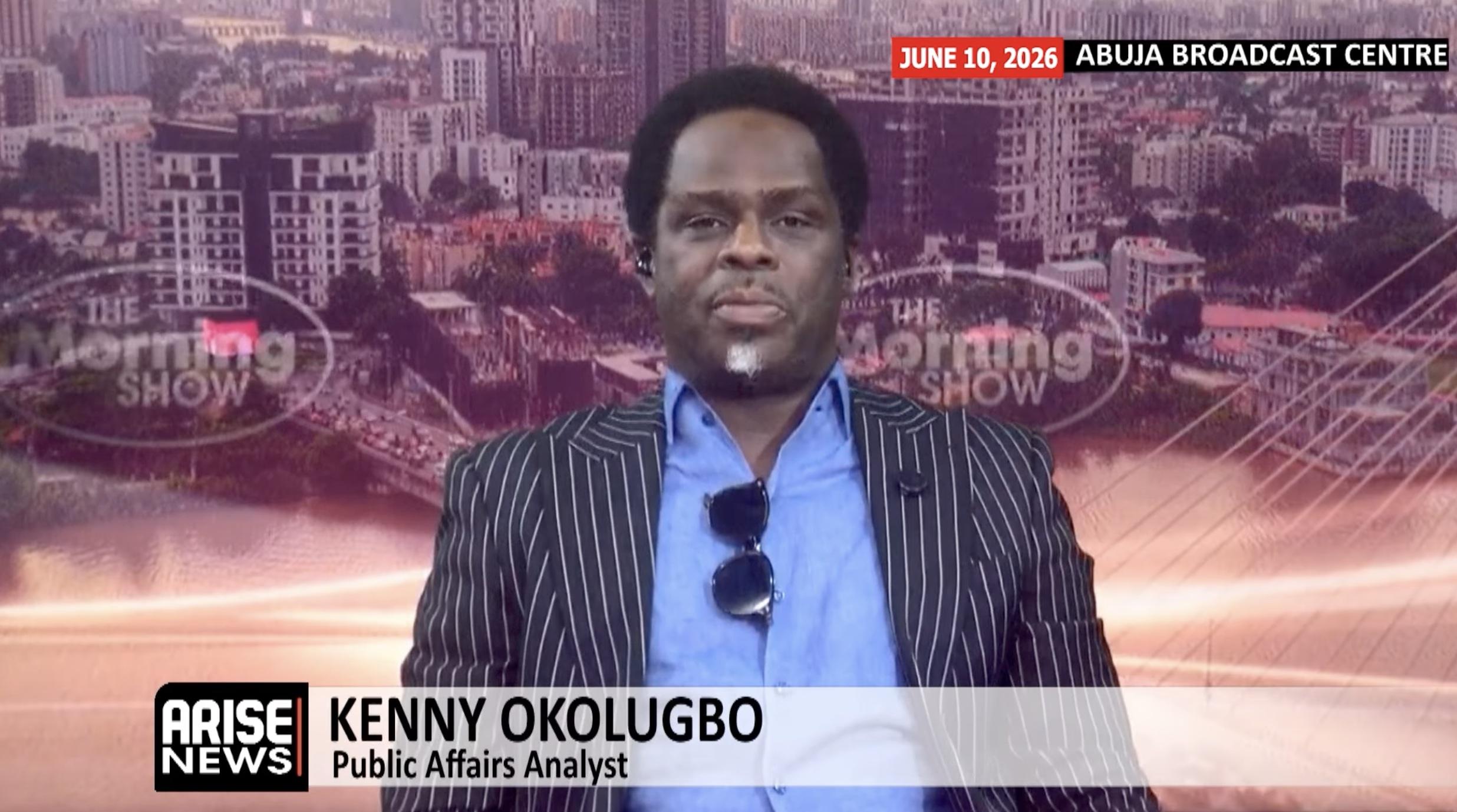
Okolugbo: Nigeria’s Silence And Delay Emboldened Attacks On Citizens In South Africa
Kenny Okolugbo says Nigeria missed opportunity to lead from the front in protecting citizens during South Africa unrest.
Kenny Okolugbo says Nigeria missed opportunity to lead from the front in protecting citizens during South Africa unrest.
Public Affairs Analyst, Kenny Okolugbo has asserted that Nigeria’s response to the recent xenophobic attacks on its citizens in South Africa was too slow and lacking in decisive action, emphasising that the delay and silence from authorities may have emboldened further attacks.
Speaking in an interview with ARISE NEWS on Wednesday, Okolugbo criticised what he described as Nigeria’s failure to take a leadership role in protecting its nationals during the crisis and evacuating them promptly.
“Nigeria should have led, being the giants of Africa, we should have led from the front in evacuating its citizens.”
He argued that the federal government’s reaction came late and was limited in scope, saying earlier intervention and stronger diplomatic pressure could have altered the trajectory of the crisis affecting Nigerians in South Africa. “The minister’s statement came very late, and a lot of us were quite unhappy that the statement was only communicating Afrophobia.”
Okolugbo also questioned the absence of stronger punitive measures against South Africa. “It should have come with very steep sanctions to South Africa, which has about 120 companies operating here in Nigeria.”
He further pointed to previous incidents involving attacks on foreign migrants, arguing that Nigeria did not respond strongly enough when early warning signs emerged, allowing the situation to escalate over time. “If you remember where the Kalfongo hospital in August 2022 was blocked by the Dudula movement, I thought that was the beginning of when these vigilantes started their actions against foreign migrants.”
Okolugbo also referenced killings of Nigerians in South Africa, saying repeated incidents had not triggered a sufficiently strong diplomatic or policy response from Abuja. “There was this chap that was killed, Emmanuel Amarimo, on April 20, where our consul general, Loke Uche, just made his sweeping statement, and it ended at that.”
He added that another Nigerian was later found dead in Pretoria, arguing that these incidents reflected a worsening security situation for Nigerians abroad. “Another Nigerian was killed, again, is it Edgar Young, Andrew, and his body was found in the morgue in Pretoria.”
Okolugbo also drew attention to what he described as Nigeria’s historical moral position against apartheid. “In my time in school, I remember we used to write on the blackboard, apartheid was a crime against humanity.”
He insisted that Nigeria should have taken the lead in evacuation efforts rather than allowing other African countries to set the pace. “So Nigeria should have led, being the giants of Africa, we should have led from the front in evacuating its citizens.”
Okolugbo said the evacuation plan, though welcome, was long overdue and came after significant damage had already been done, including displacement and loss of livelihoods for affected Nigerians. “It’s a welcome that they are going to be evacuated and the evacuation starts from tomorrow. But I think Nigeria has been slow in evacuating.”
Okolugbo further criticised the South African leadership’s response to the violence, saying it failed to provide adequate reassurance or deterrence against groups carrying out attacks. “He rather said he was not, he didn’t even put a ban on Dudula, he did not even condemn their actions.”
He argued that stronger action from Pretoria could have helped de-escalate tensions and protect foreign nationals more effectively.“It just paid big service to the fact that, oh, those who are employing illegal migrants at this particular point in time and paying them low wages, it will not be a fine anymore, it will be a prison term.”
Okolugbo concluded that Nigeria must rethink its diplomatic posture and consider stronger measures, including economic pressure, to defend its citizens abroad more effectively. “Only way we can hurt them is by these sanctions, you know, suffocating their companies and making it very difficult for them to do business in Nigeria.”