The Future Belongs to Those Who Show Up Confidence rarely arrives before the opportunity
It arrives afterwards, once we have found the courage to begin.
It arrives afterwards, once we have found the courage to begin.
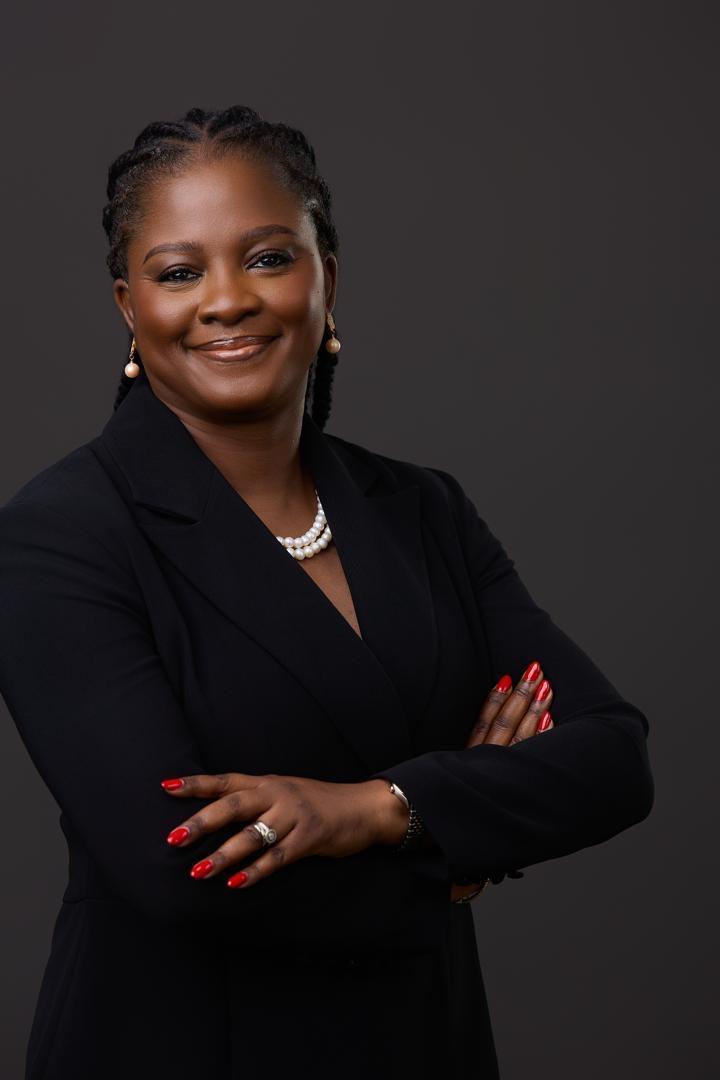
By Yetunde B. Oni |Managing Director and Chief Executive Officer, Union Bank of Nigeria
There is a conversation I have had, in one form or another, with many talented people over the years. It usually begins with hesitation. Someone capable and clearly gifted explains why they are not quite ready for the role, the platform, or the opportunity in front of them. They are waiting to feel certain. What I have learned, across a career in banking and through my own seasons of doubt, is that certainty is seldom the first thing to arrive.
Confidence does not always come before the opportunity. Very often it comes afterwards, once you have accepted the challenge, prepared properly, and allowed the process itself to change you. This is one of the reasons I encourage people, women and men alike, to show up even when they are unsure. Apply for the role. Compete for the opportunity. Go through the process. Even if you do not emerge with the position, the experience will sharpen your skills, broaden your understanding, and prepare you for what comes next. Waiting until you feel completely ready may cause you to miss the very process that would have made you ready.
I say this not from a distance, but as someone who has had to practise it. No one steps into leadership with everything figured out. What matters is clarity of purpose, the humility to keep learning, and the willingness to take responsibility for something larger than yourself.
Leaders set the tone If there is one lesson I learned early, it is that people take their cue from those who lead them. They watch what we say, what we tolerate, what we reward, and how we conduct ourselves under pressure. Culture is not built in policy documents alone. It is built in the daily accumulation of words, decisions, and examples. If we want an institution where people are confident, accountable, innovative, and honest, we must create that environment deliberately.
Part of creating it is ensuring that people feel psychologically safe. The best decisions are often made when people feel secure enough to contribute honestly, to ask questions, to offer feedback, and even to make mistakes and learn from them without fear of being diminished. When people feel safe, they bring their best thinking to the table. When they do not, they retreat into silence, and the institution is the poorer for it.
This is why I place such value on candid feedback. We must learn to tell one another the truth with respect. Too often, people avoid honest conversations and carry their dissatisfaction elsewhere, into corridors and quiet corners where nothing is ever resolved. That helps no one. A memo, a query, or a difficult conversation is not an act of hostility. It may well be the very thing that shapes character and helps a person grow. Leaders, for their part, must show through their actions that feedback is genuinely welcome. If a person speaks up and is embarrassed or punished for it, everyone else quickly learns to stay quiet. But when leaders listen, respond fairly, and treat feedback as an opportunity to improve, openness becomes part of the culture.
Character before competence People sometimes ask what I consider the most important quality in leadership. My answer is ethics and integrity, because trust is the foundation on which every strong team is built. I do not wish to be misunderstood. Competence matters a great deal. But character determines how that competence is used. Skills can be developed over time. Trust, once absent, is far harder to rebuild, and without it very little of lasting value can be achieved together.
I look for people who do what they say they will do, who can be relied upon, who act with honesty, and who understand that leadership is not about personal power but about responsibility. A leader must be someone others can trust, particularly when the decisions are difficult and the path ahead is uncertain. That, more than any single achievement, is what holds an institution together.
Redefining success My own understanding of success has evolved over the years. Career milestones matter, and I would never diminish the value of ambition or hard work. But they are not the only measure of a life well lived. The wellbeing of my family, the joy of ordinary moments, and the ability to make a positive difference have become just as meaningful to me. Some of the most valuable things in life are not material at all. They are the intangible things that give our days depth and purpose.
I have learned not to postpone happiness until I reach a particular position or level. Life is unpredictable, and if we are always waiting for the next promotion before we permit ourselves to be content, we may miss the beauty of where we already are. Every stage of the journey has something to teach us. This is also why I have come to believe that rest is not laziness. It is necessary. Setting boundaries, saying no when something is not essential, asking for help, and being honest about what we can realistically carry are not signs of weakness. They are the marks of people who intend to lead well over the long term rather than exhaust themselves along the way.
The courage to be seen I offer these reflections in the context of a conversation I recently shared with colleagues through weHub, our women employee network at Union Bank. The exchange returned, again and again, to a theme I care about deeply: the importance of women not merely being present in the room, but being heard, supported, and considered for opportunities.
It is not enough to have women at the table. They must feel safe to speak, to share ideas, to ask questions, and to put themselves forward. Leaders carry a real responsibility here, to notice potential, to create platforms, and to encourage participation, especially from those who do not naturally push themselves forward. And those of us who already hold positions of leadership owe one another something too. We should amplify each other’s voices, offer sincere and constructive feedback, and encourage one another to reach for roles we might otherwise hesitate to pursue. Sometimes support is as simple as saying, ‘you should speak on this’, or, ‘you are ready for that opportunity’.
Many capable people, women in particular, wrestle with self-doubt even when they are plainly able. My encouragement is always the same. Do not disqualify yourself before the opportunity arrives. Apply, compete, speak, contribute, and do it, even if you must do it afraid. You may not always feel ready, but every step builds capacity. Your voice matters. Your contribution matters. And your courage to show up can open doors, not only for yourself, but for those who are watching and learning what is possible.