When Tola Talabi proposed creating a dedicated power ring around Victoria Island, Nigeria’s most valuable commercial area, experienced investors told him that the national grid would eventually improve.
- +Embedded power push puts grid-weary businesses on notice
- +A broken promise, a market opportunity
- +The embedded model takes shape
- +The Ogba bet: Industrials join the queue
That was several years and many national grid failures ago.
That was several years and many national grid failures ago.
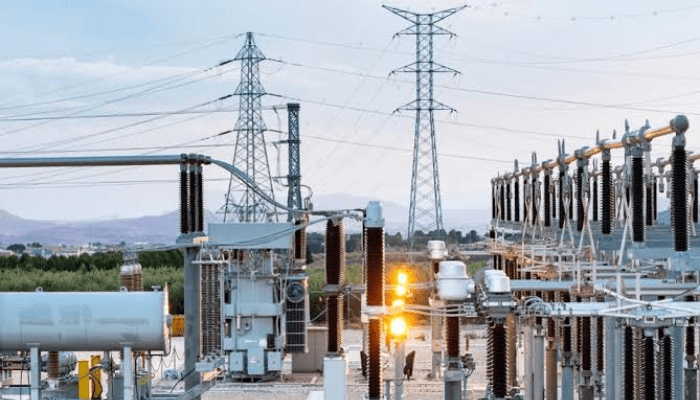
Now, Talabi’s company, Elektron Energy Development Strategies Limited, is launching a 30-megawatt gas-fired power plant integrated into the Eko Electricity Distribution Company’s network on Victoria Island. Finnish engineering firm Wärtsilä will supply the turbines and operate them for five years.
At the same time, Elektron is collaborating with Odu’a Investment Company Limited to start construction on a 50-megawatt facility at the old Cocoa Industries complex in the Ogba Industrial Estate, Ikeja.
Together, these two projects represent one of the strongest commitments to decentralised, private-sector power in Nigeria’s history since deregulation. A growing number of developers, state agencies, and institutional lenders are paying close attention.
“This is not just a single generator,” Talabi said in a recent briefing. “This is essential infrastructure for economic activity.”
A broken promise, a market opportunity
Nigeria’s power situation has frustrated policymakers and investors for decades. The country has over 200 trillion cubic feet of proven gas reserves and around 13 gigawatts of installed generation capacity. Despite this, it consistently delivers only 5 to 7 gigawatts to consumers.
The gap between the grid’s theoretical production and what actually reaches factories, hospitals, and offices has created a shadow economy of diesel generators, which the World Bank estimates cost Nigerian businesses up to $30 billion annually in lost productivity and fuel expenses.
Between 2022 and 2024, the national grid failed more than fifteen times. Each collapse spreads from the transmission network, which engineers consider the sector’s biggest bottleneck, into distribution systems that are already struggling due to commercial losses and neglected infrastructure.
Victoria Island, classified in the Nigerian Electricity Regulatory Commission’s premium Band A tariff category and theoretically entitled to at least twenty hours of daily supply, does not escape these issues. Voltage drops and unexpected outages are common frustrations for the financial institutions, data centers, and multinationals located there.
“The economic cost is huge,” said Oladipo Ogunniyi, Elektron’s head of engineering. “Band A theoretically guarantees supply. In reality, the volatility is still present.”
The embedded model takes shape
Elektron’s Victoria Island Power Plant, set up under a special purpose vehicle called Victoria Island Power Ltd., deviates from Nigeria’s traditional Independent Power Producer (IPP) model.
Instead of sending power into the larger national grid and hoping distribution companies relay it properly, the plant connects directly to EKEDC’s infrastructure at the NEPA Close site.
This creates what Ogunniyi calls a dedicated ring-fence, a secured loop of reliable supply for specific commercial customers under individual power purchase agreements.
The project’s 33-kilovolt and 11-kilovolt distribution network, which spans about 12.6 kilometers through one of Lagos’s busiest urban areas, was finished before the generating equipment arrived. Talabi says this sequencing is deliberate and financially smart.
“Building the distribution network first ensures that once the gas engines are commissioned, power flows into the system right away and reliably,” he said. “It shows progress to lenders and reduces execution risks.”
That compelling execution story helped secure a N4.64 billion Series 1 bond under a N200 billion program. This was structured through Project Halo with support from InfraCredit and backing from institutional investors. This financing structure is one of the most sophisticated project finance arrangements seen in Nigeria’s embedded power sector.
Wärtsilä’s involvement, which includes both equipment supply scheduled for the fourth quarter of 2024 and a five-year operation and maintenance agreement, adds a level of technical credibility that has often been hard to gather for mid-size Nigerian power projects.
The Ogba bet: Industrials join the queue
Forty kilometres north of Victoria Island, the Ogba project tells a different but related story. The Cocoa Industries complex, once a symbol of Lagos’s manufacturing dreams, now supports a 50-megawatt IPP designed to supply the broader Ogba area, an industrial and commercial zone that has long depended on self-generation for production.
Odu’a Investment Company, a Yoruba regional investment group with diverse interests in infrastructure, real estate, and hospitality across the Southwest, is co-developing the plant through a jointly established special purpose vehicle. This combines its capital and land with Elektron’s regulatory approvals and engineering plans.
Bimbo Ashiru, Odu’a’s group chairman, described the investment in explicitly long-term terms.
“This project serves as a strategic catalyst for industrial revival, improved energy security, and sustainable economic growth across the Southwest,” he said.
For manufacturers in Ogba, the message is clear: abandon diesel, secure a negotiated tariff, and free up working capital currently spent on generator maintenance and fuel purchases.
What makes Lagos’s embedded power cluster significant beyond its immediate output numbers is the model it provides to other commercial hubs in Nigeria. Elektron is already developing an Ibadan Hybrid Power Project in Oyo State, aimed at a mixed-use district and integrating renewable elements alongside gas.
The company’s Alausa Independent Power Project, a 10.6-megawatt gas-fired plant with its own 15-kilometre distribution network, has been supplying Lagos State government facilities since 2013. This successful project serves as the foundation for current expansion efforts.
Ogunniyi points to India and Kenya as examples where combining central generation with regionally embedded plants stabilised supply and shortened electrification timelines.
He argues that Nigeria’s geography and load profile make a strong case for embedded generation, given the distance between demand centers and generation sites.
The financing innovation is just as important as the engineering. If the InfraCredit-backed bond structure at Victoria Island Power Ltd. performs well during construction and into operations, it could open a replicable pathway for capital markets for projects in Abuja’s Maitama district, Port Harcourt’s industrial waterfront, and Kano’s textile centers. Each of these areas has demand profiles similar enough to Victoria Island and Ogba to attract comparable investor interest.