Our sister publication, Zikoko, is bringing back the Naira Life Conference, and we’re excited to see Yield by Credit Direct join as Headline Sponsor for the 2026 edition. Visit the Yield booth on the conference day to complete fun activities, earn Yield Naira points, and win instant prizes and cash rewards.
- +👨🏿🚀TechCabal Daily – E-buses in Cape Town
Download the Credit Direct app, activate your Yield account with the referral code Nairalife26, and get a head start on earning points before the event.
Download the Credit Direct app, activate your Yield account with the referral code Nairalife26, and get a head start on earning points before the event.
Don’t miss your chance to learn, connect, and build wealth at the Naira Life Conference on August 22 at Jewel Aeida, Lekki, Lagos. Secure your ticket today.
The biggest retail market in Francophone Africa is hiding in plain sight. While modern supermarkets grab attention, up to 90% of consumer goods still move through informal markets and neighbourhood stores. TechCabal’s latest Francophone Weekly edition explains why investors see these businesses as the foundation of the region’s next commerce boom. Read it here first or subscribe below.
Think of shares as ownership certificates. Every share represents a tiny piece of the company. Airtel, one of Africa’s largest telecom companies operating in 14 countries, has been buying back some of those certificates—and tearing them up so they no longer count.
What happened: Airtel Africa has spent the past two months buying back its own shares from investors. So far, it has bought 13.7 million shares.
Here’s the twist: it isn’t buying them so it can keep them. It’s buying them to erase them permanently.
Explain like I’m new here: The plan began in May, and between July 13 and July 17, the telco bought back over 800,000 shares. The buy–back programme is targeting 1% of Airtel’s issued capital, which means there could be more buy-backs in future.
How does this benefit shareholders? Imagine Airtel has 10 shares in existence, and you own one of them; it means you own 10% of the company. If Airtel buys back two shares from other investors and cancels them, there are now only eight shares left. You still own just one share (you haven’t bought anything extra), but your ownership has increased from 10% (1 out of 10) to 12.5% (1 out of 8) because there are fewer shares in circulation.
Why is Airtel destroying the shares? If Airtel held on to those shares, it could reissue or sell them later, increasing the number of shares again and diluting existing investors. Cancelling them makes the reduction permanent. For retail investors who keep their shares, that means each share represents a slightly larger stake in the company and a bigger claim on its future profits. It also means future profits are spread across fewer shares. Even if Airtel earns the same amount of money next year, earnings per share (EPS), a measure of how much profit is attributable to each outstanding share, could still increase because fewer shares are sharing the same profits.
Doesn’t Airtel need the cash it would have gotten from selling the shares? Airtel seems confident. Despite spending about $100 million on buying back shares, it has more than tripled capital spending to $389 million in Q2 2026. The company also noted that it built over 920 new network sites and expanded its fibre network to 82,100 kilometres. Airtel is also preparing to list Airtel Money, its fintech arm, on the London Stock Exchange (LSE) later this year to unlock capital.
Fincra now issues dedicated GHS virtual accounts to enable businesses to collect payments. See how Fincra GHS virtual accounts work.
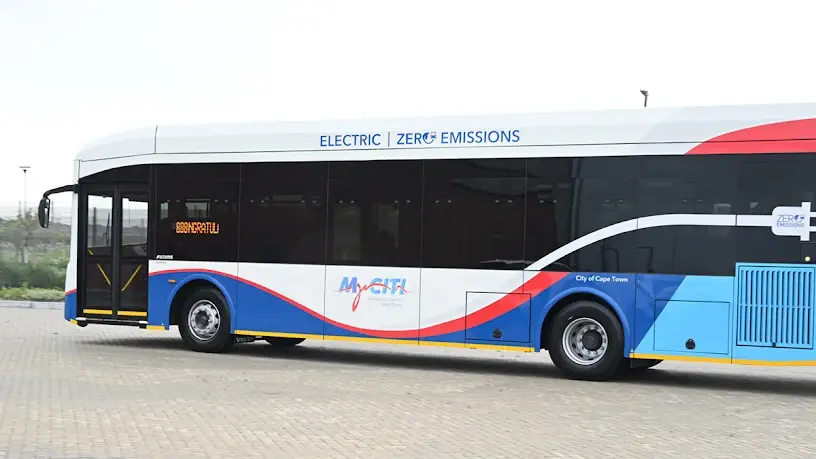
Cape Town has launched its first battery-powered MyCiTi bus, becoming the first South African city to put electric buses (e-buses) on the road for public use.
On July 24, Geordin Hill-Lewis, the city’s mayor, unveiled the Volvo BZRLE e-buses at Khayelitsha, a southeastern town in Cape Town, South Africa. An initial 38 of those buses will immediately be deployed on South African roads, with more batches scheduled for March 2027.
South Africa’s car manufacturing ambitions are working: The Volvo e-buses, nicknamed “Evie,” were partly manufactured in South Africa, with their frames assembled locally, making them the first electric buses produced in South Africa specifically for local roads. They will operate on routes linking Mitchells Plain, Khayelitsha, Wynberg, Claremont, and Cape Town’s CBD as part of the R7.2 billion ($427 million) MyCiTi Phase 2A expansion, which will extend the bus network to more than 30 communities.
Explain like I’m new here: Cape Town has been testing electric buses since 2020, when Golden Arrow Bus Services began piloting them. Golden Arrow now has over 80 electric buses on the road. Cape Town’s MyCiTi fleet is catching up. The city is partnering with the University of Cape Town (UCT), one of the country’s top universities, on a 12-month research programme to study battery performance and charging times before rolling out the full fleet.
The bigger picture: South Africa has lost roughly half its oil-processing capacity in recent years as refineries closed; it now imports the bulk of its refined fuel, becoming Africa’s largest fuel importer. An electric fleet hedges against transport complications that could arise from fuel issues.
But there is a catch: National Treasury is phasing out the Public Transport Network Grant that funds Bus Rapid Transit (BRT) systems, with R8.4 billion ($500.9 million) in cuts over three years. Hill-Lewis warned that the MyCiti expansion depends on continued national funding. Cape Town accounts for roughly 42% of all BRT passenger trips in South Africa.
Transaction Guard lets you set single, daily, or monthly transaction limits. Whenever a transaction exceeds your chosen limit, facial verification is required before it can be completed, helping to prevent unauthorised transfers. With PalmPay, you stay in control. Learn more.
Since March when Kenya’s National Treasury opened the draft regulations for public comment, it has taken four months of back-and-forth and arguing the fine print, but this almost feels unbelievable to write: Kenya has become one of the African countries with the most complete regulations for cryptocurrency businesses, including exchanges, wallet providers, token issuers, custodians, and stablecoin companies that want to operate in the digital asset space.
What happened? On Friday, Kenya gazetted its Virtual Asset Service Providers (VASP) Regulations, completing the legal framework that began with the VASP Act last year. Crypto exchanges, wallet providers, stablecoin issuers, tokenisation platforms, and other digital asset firms can now apply for licences and operate under formal supervision. Oversight will be split between the Central Bank of Kenya (CBK), which will regulate crypto-to-fiat services and stablecoins, and the Capital Markets Authority (CMA), its capital markets regulator, which will oversee exchanges, token offerings, and tokenised assets.