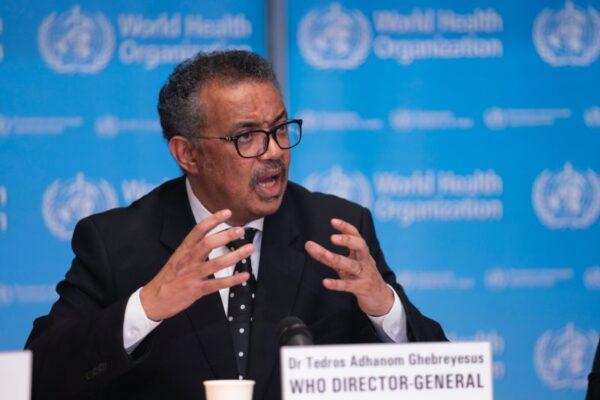
The World Health Organisation (WHO), Tedros Ghebreyesus, has condemned the killing of health workers in Amhara region of Ethiopia.
- +WHO condemns killing of health workers in Ethiopia, calls for investigation
- +He also called for “an impartial investigation into the incident.”
In a statement posted on X on Wednesday, WHO Director-General, Tedros Ghebreyesus said three health workers from North Mecha district in North Gojjam Zone were fatally shot on 2 April.
In a statement posted on X on Wednesday, WHO Director-General, Tedros Ghebreyesus said three health workers from North Mecha district in North Gojjam Zone were fatally shot on 2 April.
Mr Ghebreyesus said two of the victims, including a nurse, worked at the Abiote Fana Primary Health Centre, while the third was employed at a private health facility.
He added that the killings occurred amid “expanding conflict in Amhara involving Ethiopian government and regional forces.”
He called for the protection of health workers and an impartial investigation into the incident.
Reacting to the incident, Mr Ghebreyesus stressed the need to safeguard health personnel, especially in conflict settings.
“Health workers must always be protected and enabled to perform their life-saving duties for anyone needing care,” he said, adding that “Health is #NotATarget.”
In a related statement, he reiterated concerns over attacks on health professionals in the region and called for accountability.
He said the killings took place amid “escalating conflict between the Ethiopian federal government and regional forces in the Amhara Region.”
He emphasised that “health professionals should be protected at all times and allowed to carry out their life-saving work for all those in need.”
He also called for “an impartial investigation into the incident.”
The killings occurred amid a protracted conflict in Ethiopia’s Amhara region, which has intensified since April 2023 following tensions between federal authorities and regional actors.
The crisis escalated after the Ethiopian government announced plans to integrate regional Special Forces into the national military structure, a move widely opposed by stakeholders in Amhara who viewed it as an attempt to weaken the region’s security architecture.
Fighting subsequently broke out between federal troops and local militias, leading to widespread violence across parts of the region.
PREMIUM TIMES had reported that the unrest has been marked by arrests, casualties, and growing humanitarian concerns, with hundreds of people detained during security crackdowns linked to the violence.
Analyses also indicate that the conflict is rooted in deeper political tensions, including disputes over power-sharing, security control, and ethnic divisions within Ethiopia’s federal system.
Despite earlier peace efforts following the conflict in the Tigray region, fresh violence in Amhara has continued to threaten stability, with experts warning that a comprehensive political solution is needed to address the underlying issues.
The incident reflects a broader pattern of attacks on health workers in conflict zones, which the WHO has repeatedly condemned.
PREMIUM TIMES has reported several incidents in which the health agency raised concerns over attacks on health workers and facilities across different regions.
They condemned the killing of paramedics in Lebanon during the ongoing regional conflict, warning that health workers are increasingly exposed to violence while providing emergency care.
They also documented multiple attacks on health facilities in Iran, verifying incidents that disrupted services and led to casualties among health personnel.
Beyond the Middle East, they have raised alarm over similar trends in countries such as Sudan, where thousands have been affected by attacks on health infrastructure, and in Afghanistan and Pakistan, where rising hostilities have led to repeated strikes on hospitals and increasing casualties.