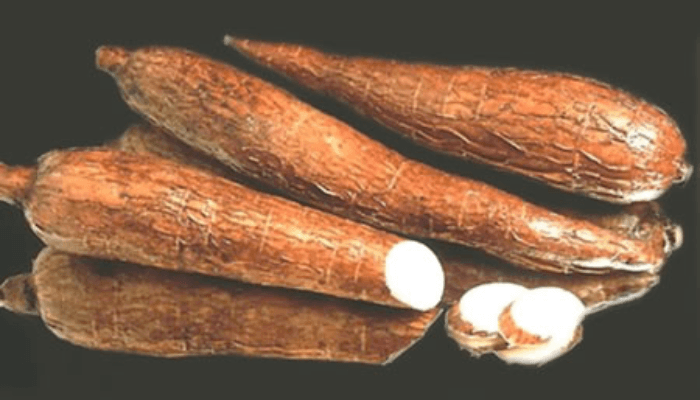
Nigeria, the world’s largest cassava producer, is well-positioned to tap into the lucrative sorbitol market, according to NCIA.
- +Unlocking Nigeria’s cassava’s industrial value through sorbitol production
The country has a clear opportunity to produce sorbitol locally and serve demand across multiple industries, including pharmaceutical and food processing.
The country has a clear opportunity to produce sorbitol locally and serve demand across multiple industries, including pharmaceutical and food processing.
Sorbitol, a widely used sweetener and humectant, is typically produced from glucose derived from corn starch. However, cassava’s high starch content provides a viable alternative feedstock.
Nigeria’s sweetener demand is large and growing, expected to reach approximately 2.15 million metric tonnes (MT) in 2026, with domestic production capacity covering only ~2.5 percent of demand, according to the Raw Material Research and Development Council (RMRC).
The country is heavily reliant on imports for industrial polyols like sorbitol, with approximately 7,700 MT imported in 2023, according to data from UN Comtrade.
According to the Nigeria Cassava Investment Accelerator (NCIA), Psaltry International Company Limited is one of the few domestic players moving to bridge the sorbitol demand-supply gap.
In August 2022, Psaltry commissioned Nigeria’s first cassava-based sorbitol plant in Iseyin, Oyo State, with a production capacity of 25 tons per day, as stated in the company’s profile.
Intake and screening: Cassava roots are logged at entry, with farm source details recorded for traceability. The roots are then weighed and sampled, and starch meters are used to assess whether they meet the required standard for processing; otherwise, it is rejected.
Washing, sorting and chopping: Accepted cassava is washed to remove soil, stones, and other foreign material. It is then sorted and chopped into smaller pieces to improve milling efficiency and create a more uniform feed for the next stage.
Milling and starch extraction: The chopped cassava is wet-milled into a slurry. From this slurry, starch is separated from pulp, peel, fibre, and other waste. This is an important process, as starch recovery directly affects downstream yield.
Starch purification and drying: The extracted starch slurry is thickened and purified using equipment such as a hydrocyclone, then passed through filtration to reduce moisture. It is then dried using steam to produce a more stable starch intermediate for further processing.
Conversion of starch into sorbitol: The starch is first converted into glucose syrup through enzymatic breakdown. That glucose-rich syrup is then hydrogenated to convert the glucose into sorbitol. This is the core transformation step that turns cassava-derived starch into an industrial sweetener.
Purification and packaging: After conversion, the sorbitol is further refined to improve colour and remove residual chemicals, including through ion exchange. Once it meets the required standard, it is packed into drums for industrial customers.
Sorbitol is used across a range of products. In oral care, it is a common ingredient in toothpaste and mouthwash, while chewing gum, pharmaceuticals, and confectioneries contribute to the demand. Its ability to retain moisture and provide controlled sweetness makes it valuable in several industrial applications.
According to NCIA, Psaltry’s sorbitol plant demonstrates cassava’s potential as a high-value industrial input beyond traditional food uses.
As local production scales, stronger domestic offtake could help reduce import dependence, and support the growth of a more competitive market for cassava-based industrial products.