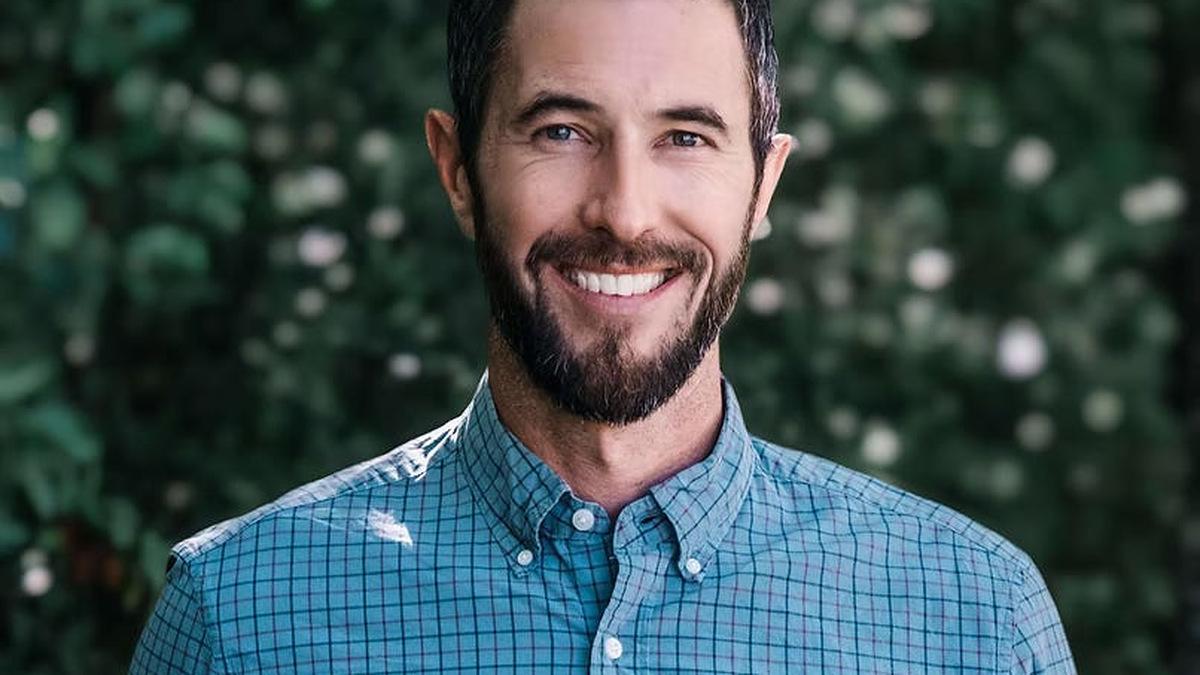
After raising $3 million to fund African climate tech startups, Josh Romisher thinks he can solve the sector’s biggest problem: the lack of exits. His approach has become popular among African tech investors: they write cheques at deliberately low valuations so as not to price out eventual buyers.
- +Why Holocene raised a $3 million fund to solve Africa’s climate-tech exits
- +What is your typical first cheque size and target ownership?
Romisher, the general partner at Holocene, a South-African climate tech venture capital firm, said he has raised $3 million from 32 investors, 60% of them based in Southern Africa, and has deployed most of it across 11 investments in cheques of $100,000 to $200,000.
Romisher, the general partner at Holocene, a South-African climate tech venture capital firm, said he has raised $3 million from 32 investors, 60% of them based in Southern Africa, and has deployed most of it across 11 investments in cheques of $100,000 to $200,000.
Holocene buys a 10% to 20% stake in each startup while its valuation is still low. If Holocene pays little going in and gets a sizeable piece of the company, even a modest sale later can create outsized returns. If a company is acquired for $30 to $50 million, his stake can return 20 to 30 times what he put in.
With this math, Holocene is not trying to build the next billion-dollar climate company in Africa but is trying to build several worth $30 to $50 million each and sell them within three to five years.
Holocene’s portfolio is roughly 60% Southern Africa, 20% Kenya, and 20% Uganda, weighted toward energy and e-mobility, according to Romisher, with companies including Yongeza Capital, an e-mobility charging infrastructure player; ScootHero, a two-wheeler delivery company; and circular-economy retailer FARO.
Romisher argues that the African venture capital industry is exit-starved because the rest of the market has been doing the opposite. Seed and Series A valuations, he says, have been priced too high, leaving funds with paper markups and no buyers. His response is to go earlier and cheaper and to keep equity valuations down by stacking debt, grants, carbon, and asset finance so every dollar of equity does the work of five to ten.
His thesis is based on his experience before becoming an investor, as Romisher spent almost a decade as an entrepreneur, including a stint that produced one of the few climate-tech exits the continent has seen, the sale of Fenix International, an off-grid solar company that delivered solar power in East Africa, to ENGIE, a French multinational utility company, for an undisclosed amount in October 2017.
In our conversation, Romisher explains why a $3 million fund can still be run with institutional rigour, who he expects to buy these companies, and what threatens the model most.
This interview has been edited for length and clarity.
You raised $3 million for African climate-tech startups. How much did you raise at final close, and how does it compare to the target you set?
The final close was $3 million, which was our target. We were able to hit it, and the fund was always sized in a manner where we believe we can return capital. We started by asking, where do we think we can turn a dollar into three and create climate impact?
That is really the focus for us: proving that the climate sector in Africa can return commensurate capital. We have deployed most of the fund already across 11 investments. Those investments are performing well; so far, everything has gone the way we wanted.
Capital raising is always harder than one expects, especially given that it did not seem like a lot of money. But it falls into an interesting bucket in Africa, where it is a little too small for institutions and sometimes a little too big for individuals. I am really proud to say we have 32 investors, 60% of them from Southern Africa. I am proud that people with a real passion for climate stepped up and put their money into the fund, including ourselves.
Who are your investors, and what did it take to get commercial money into a relatively new asset class in an emerging market like Africa?
It takes both trust and passion. When you are raising primarily from high-net-worth individuals and family offices, most of it is about trust and personal relationships and helping people understand our investment thesis. I also want to add that just because it is a small fund does not mean it is not institutional. I have worked on much bigger things in my career, but we wanted to bring the same rigour and institutional process you would have at a $300 million fund to a $3 million fund. We just believe $3 million is where you can return capital, given the state of the ecosystem at this time.
The people who invested want to do good and do well. The point of doing good is to create positive climate impact, jobs, income upliftment, and more gender equality. But we also want to do well; if people are putting money with us, our goal is to turn a dollar into three and get them liquidity. It takes trust, it takes professional rigour even for small ticket sizes, and it takes a belief that we can both do good and do well.
You mentioned $8 of follow-on capital for every $1 you invest. Is that across the entire portfolio, or just a few standout companies? How does your follow-on policy work?
Our goal is to be the first investor, at least the first institutional investor, in most of our companies. That comes from a belief that in order to return capital, we need to get in early, at valuations that make sense, and find that commercial moment. Most of our companies are post-revenue. We feel like there is a fire starting to burn, and our goal is to push that fire into a full-fledged inferno. That is what venture capital is about: finding the moment when you are not buying the future growth; you are buying the opportunity to push something to the next level of scale.
Of our 11 portfolio companies, four have now raised follow-on capital. To be clear, in climate tech, you do not need to raise tons of equity. If you are smart about how you build, you can raise off-balance-sheet debt, think about asset finance, and use grants effectively. One dollar of our capital is leading to at least eight dollars of follow-on. But I want to be clear that follow-on is not the metric we should focus on. It is really about capital efficiency, unit economics that make sense, and realising exits at valuations where companies can be sold. Those are the most important metrics.
What is your typical first cheque size and target ownership?
Our ideal investment profile is generally a two-to-three-person team that has been working at something for at least two to three years, has put in some of their own cash, and is post-revenue, with anywhere between $50,000 and $200,000 of trailing 12-month revenue. They have proven there is something commercially happening and shown they are willing to put in the hard work.