Here’s what I’ve got for you today:
- +Liberia’s ID rollout stalled by $1.7M debt
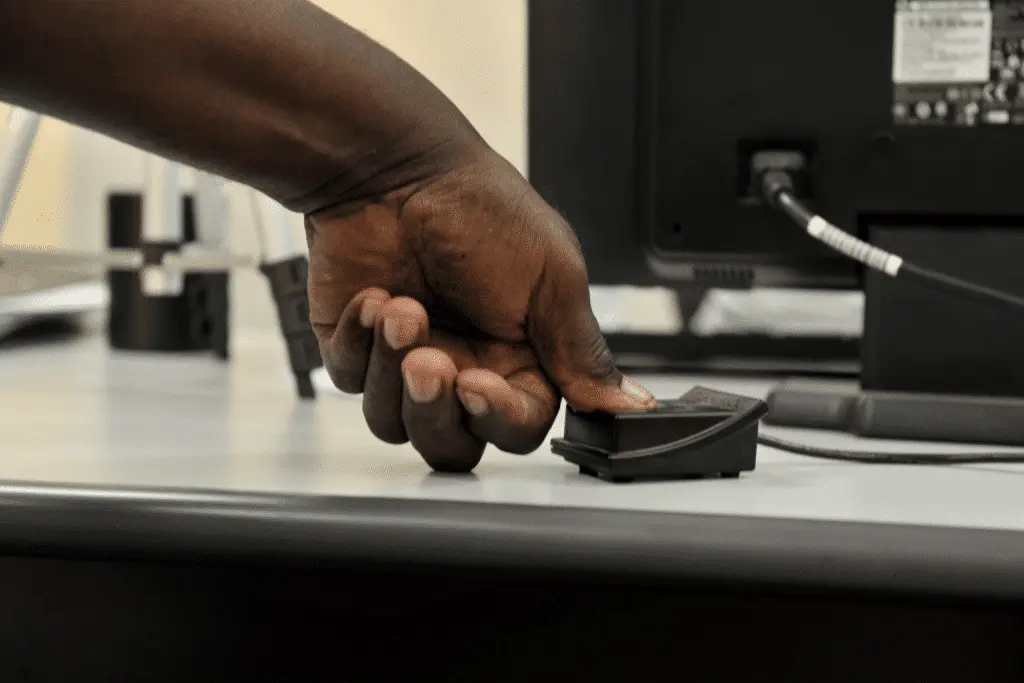
Liberia’s national ID rollout is still stuck, and the reason is surprisingly simple: money.
Liberia’s national ID rollout is still stuck, and the reason is surprisingly simple: money. The government owes about $1.7 million to a foreign tech contractor, and until that debt is cleared, the entire system remains effectively locked.
What this means is that millions of Liberians are unable to access or renew their national ID cards, a document that is increasingly required for basic services like banking, telecoms, and government processes. Without it, people are being forced to rely on alternatives like passports or voter cards, which are either expensive or limited in use.
Why this matters goes beyond inconvenience. The stalled system is slowing Liberia’s push toward a digital economy. National IDs are meant to power everything from financial inclusion to public service delivery, so when the system goes down, it creates a ripple effect, locking people out of essential services and widening the digital divide.
How did we get here? The crisis has been building for a while. The rollout was first paused in 2025 over “technical issues”, but it later emerged that the real problem was financial. The biometric database powering the system is controlled by the contractor, and unpaid debts mean the government cannot fully access or operate it. Efforts to switch vendors have also been slowed by procurement concerns.
What’s more, Liberia’s situation highlights a broader challenge across Africa: building digital public infrastructure is expensive, complex, and often dependent on external vendors and funding. When those relationships break down, whether due to debt, policy, or execution gaps, entire national systems can grind to a halt, as Liberia is now experiencing.
Most startups don’t expect a message from xAI. But Sulaiman Adewale isn’t building most startups.
His product, Xara, started as a personal fix. Short-sighted and tired of squinting at account numbers, he built an AI assistant that could “see” through his camera and complete transfers.
Now, it’s something much bigger. Xara turns WhatsApp into a banking interface. No apps, no buttons — just chat. You can send money, analyse your spending, or even set recurring transfers in plain language.
And people are using it. In just ten months, Xara has grown to over 45,000 users and processed ₦8 billion ($5,000,000) in transactions — doubling its volume in three months.
But here’s the real question: is this the future of banking, or just a flashy new interface? Under the hood, Xara depends on partner banks, thin transaction margins, and a technology (LLMs) that’s powerful, but unpredictable.
Uber is doubling down on motorbike rides in South Africa, with plans to scale its Uber Moto service to as many as 300,000 motorcycles carrying passengers across the country. The ambitious target signals a major shift in how the company sees the future of mobility in one of Africa’s biggest markets.
The idea is simple: cheaper, faster rides for short distances. Uber Moto, already piloted in parts of Johannesburg, lets passengers hop on the back of a motorcycle for quick trips, often starting at very low fares. As the service scales, Uber is betting that two-wheel transport can fill gaps where traditional public transport is unreliable or too expensive.
What this means is more earning opportunities for drivers and more affordable mobility for users. Motorbike taxis are already common across many African cities, and Uber is essentially trying to formalise and digitise that model in South Africa. It also aligns with its broader investment push in the country’s mobility and digital economy.
But the plan is not without concerns. Safety experts have already raised red flags about the risks of carrying passengers on motorcycles, citing South Africa’s high road accident rates, training gaps among riders, and issues such as helmet safety and regulation. These concerns could shape how quickly, or whether, the service scales to Uber’s ambitious target.
Uber’s push into motorbikes reflects a bigger trend: the search for low-cost, last-mile transport solutions in African cities. While the model has worked in places like Kenya and Nigeria, South Africa’s regulatory environment and road safety realities could determine whether Uber Moto becomes a game-changer or another experiment that struggles to take off.