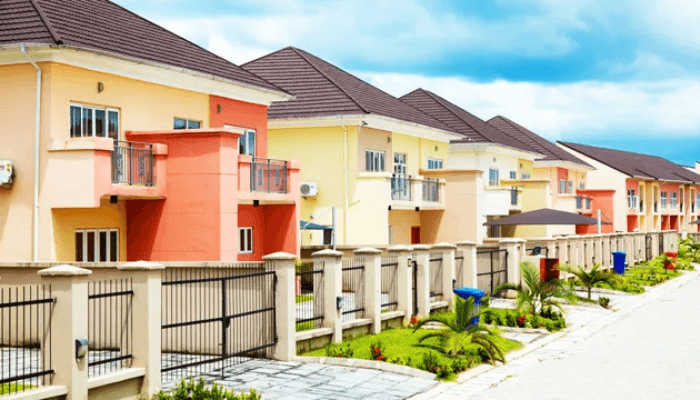
Investment interest in rental property is gradually declining, creating a curious situation in a country where the rental market is experiencing a boom, or what experts have described as a price revolution.
- +Investors’ interest in build-to-let dying despite $2trn rental boom
Before now, corporate and individual developers built houses solely for rent.
Before now, corporate and individual developers built houses solely for rent. Stories abound of individuals who built three to four blocks of flats for rental in various locations in cities and other areas with large concentrations of potential renters.
In those days, rents were quite stable, and demand was not as high as it is today, because many people could build and live in their own houses. Additionally, the population of the country was not as large as it is today, and rural-urban migration was limited to only those looking for white-collar jobs.
today, Nigeria’s population has increased to an estimated 230 million, with an annual growth rate of approximately 2.08 percent as of 2024, according to the World Bank. Urbanisation has also increased significantly.
Ahmed Dangiwa, the country’s Minister of Housing and Urban Development, recently estimated the country’s urbanisation rate at 3.8 percent annually, noting that the country is now over 50 percent urbanised.
House rents have ballooned in the cities, such that in the last five years, spanning 2020-2025, the rental market has seen about 200-300 percent increase in rent. This increase is no respecter of locations, as both the city centres and suburban communities are affected.
Taibat Lawanson, a professor of urban management and governance at the University of Lagos, was quoted recently as saying that Lagos has a housing shortage of more than 3.4 million units, noting that the city’s population is growing faster than its housing supply, pushing many people to relocate to cheaper areas.
In a moderate estate in the Ojo area of Lagos, three-bedroom bungalows that rented for N500,000 in 2020—2021 now go for N2 million per annum. Similarly, in other locations like Surulere, Ilupeju, and Bucknor, two-bedroom apartments that rented for N850,000 per annum, today go for between N2 million and N3.5 million.
All these are the challenging situations that renters face in the cities, especially Lagos. But even challenges, they also come off as low-hanging fruit for savvy and yield-hungry investors, yet nobody is going into that space, leaving close market watchers curious and wondering what is keeping the monkey away from the banana.
“Building rental properties is like building legacies that one would bequeath to the next generation. The money comes back slowly, and the owner may worry a lot because that may not be his major source of income,” Odunayo Ojo, managing director and chief executive officer of UPDC, explained to this reporter.
He added that building to rent for commercial or investment purposes is not sustainable because “you need to recoup your money quickly and move to the next site, which can only happen in sales, not in the rental market. And this is why not many people go into rentals.”
Another major reason investors are running away from rental properties is a mismatch between investment realities and market conditions. Developers face rising construction costs driven by inflation, foreign exchange volatility, and dependence on imported materials.
Added to these are land acquisition and registration processes, which are often bureaucratic and expensive, while access to affordable construction finance remains limited, largely unaffordable where it is available.
In many urban locations, there is a lack of essential infrastructure such as roads, water supply, and reliable electricity. As a result, developers must provide these services themselves, thus significantly increasing project costs and reducing profit margin.
Legal and regulatory challenges also discourage investment. Existing tenancy laws in many states, like Lagos and Enugu, are largely unfavourable to landlords, while enforcement mechanisms remain weak. Foreclosure laws are yet to take root in Nigeria, while rental disputes often take years to resolve in courts, creating uncertainty and risk for property owners.
Moreover, the prevalence of informal rental arrangements, where landlords and tenants operate without standard contracts, adds another layer of insecurity. This lack of structure undermines investor confidence and discourages institutional participation. For many developers, the economics simply do not favour rental housing.
Even where a developer overcomes these challenges, M.I.Okoro notes that rent payment default is a major headache. “The state of the economy is affecting many people. Due to loss of jobs or business slowdown, many tenants can no longer pay. In that situation, you can’t get your rent or recover your property. It is a huge challenge,” he stated.