Here’s what I’ve got for you today:
- +Ghana halts MTN’s MoMo fee before it even begins
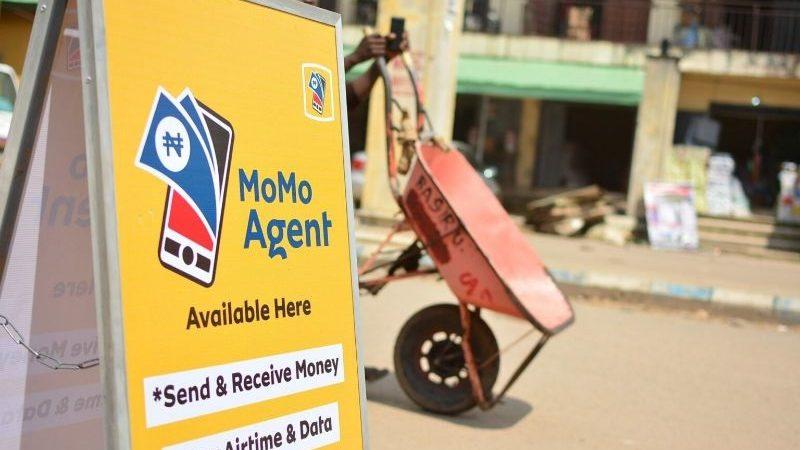
MTN Ghana tried to introduce a new mobile money fee on Monday, and by Tuesday, the Bank of Ghana had already stepped in to stop it, at least temporarily.
MTN Ghana tried to introduce a new mobile money fee on Monday, and by Tuesday, the Bank of Ghana had already stepped in to stop it, at least temporarily. MTN had sent customers a text saying that from June 1, anyone transferring money from a MoMo wallet to a bank account would pay a 0.75% fee, capped at GHS 5. The company said the charge would help it “continue to serve customers better,” but the announcement immediately sparked backlash online and in political circles.
Less than 24 hours later, the Bank of Ghana ordered MTN’s mobile money subsidiary, Mobile Money Fintech Limited, to suspend the planned fee while regulators hold consultations with stakeholders. The central bank made it clear that any new charges in Ghana’s digital finance space must be introduced fairly and with consumer protection in mind. The speed of the response strongly suggested the regulator hadn’t approved the fee beforehand and didn’t want to appear supportive of it.
On paper, the fee didn’t seem huge. A GHS 500 transfer would cost GHS 3.75, while larger transfers would max out at GHS 5. But in a country with over 26 million active mobile money wallets, even small charges can affect millions of daily transactions. For many Ghanaians, moving money from MoMo to a bank account is part of everyday life, from small business payments to salary transfers and savings deposits. Critics argued that frequent users, especially lower-income people making smaller transfers, would feel the impact the most.
The backlash intensified because of Ghana’s recent history with the controversial E-Levy. Introduced in 2022, the tax on electronic transactions triggered massive public anger before eventually being scrapped in 2025 by President Mahama’s government. So when MTN announced a new MoMo-related charge, opposition politicians quickly accused the government of trying to sneak the E-Levy back in “through the backdoor.” Whether fair or not, that comparison instantly made the issue politically explosive.
At the same time, MTN and other mobile money operators are under pressure to make money from services that are costly to run. Infrastructure expansion, Inflation, fuel prices, and currency issues are all increasing operating costs. MTN Ghana is also investing heavily in new network infrastructure this year. So while the central bank’s intervention protects consumers for now, the bigger debate remains unresolved: how do African countries keep mobile money affordable for ordinary people while still allowing telecom and fintech companies to run sustainable businesses?
“Cash or transfer?” has become one of the most familiar questions in Nigeria’s everyday economy. Whether you’re buying food, paying for fuel, or shopping at a store, most payments still happen through cash or bank transfers. But a Nigerian startup called CashAfrica thinks the next big shift could be contactless payments, where people simply tap their phones or cards to pay in seconds.
Founded by Malik Asamu and Bello Opeyemi, the two-year-old startup is building infrastructure that could help tap-to-pay payments become more common in Nigeria. The company has already partnered with PalmPay to roll out contactless payment features on 1,000 POS terminals during a pilot in 2025. It also teamed up with ChamsSwitch to handle switching and settlement, a move designed to strengthen its regulatory credibility as it tries to win over large financial institutions like UBA, Zenith Bank, and Kuda.
CashAfrica believes the biggest problem isn’t technology anymore. It’s a habit. While NFC-enabled phones and contactless cards are becoming more common, many Nigerians still default to transfers because tap-to-pay options are rarely available in stores. The startup says once users actually try contactless payments, adoption becomes much easier because of how fast and seamless the experience feels. Since launching, the company says more than ₦2 billion has already been processed through its infrastructure.
Now, CashAfrica is positioning itself as a possible local alternative to services like Google Pay and Apple Pay while betting that Nigeria’s payment culture is ready for another evolution. The startup has also attracted backing from investors linked to Draper University and the Afropreneur Angel Group as it pushes deeper into the fintech space. Find out more in Chimgozirim’s latest for Techpoint Africa.
Kenya’s electric vehicle industry says a small line buried inside the 2026 Finance Bill could end up slowing down the country’s entire EV push. Treasury wants to move electric motorcycles, buses, bicycles, lithium-ion batteries, and solar batteries from “zero-rated” VAT status to “VAT-exempt” status, a technical tax change that sounds minor but could make EVs far more expensive almost overnight, per BusinessDaily.
Right now, EV companies can recover the VAT they pay on parts and components from KRA because their products are zero-rated. Under the new proposal, they would lose that refund. That means manufacturers would absorb the tax cost themselves or pass it directly to customers. Industry players say that could push EV prices up by as much as 16%. An electric motorcycle currently selling for around KSh 290,000 could jump to more than KSh 336,000, while electric buses and vans could become millions of shillings more expensive.
Companies like Roam, Spiro, ARC Ride, and BasiGo say the bigger problem is what happens to local manufacturing. Many EV assemblers spent the last three years building Kenyan supply chains after the government introduced incentives in 2023 to attract investment into electric mobility. But if firms can no longer recover VAT on locally sourced parts, executives warn they may abandon Kenyan suppliers and switch back to importing cheaper components from China. That would hit local factories, technicians, and assembly jobs that the sector has been creating.
The timing is also awkward politically. Kenya has spent years marketing itself as East Africa’s EV hub, offering tax incentives to convince investors that the country was serious about clean transport. The government positioned electric mobility as part of its climate strategy and a way to reduce fuel import costs. Now, as the sector is finally gaining traction, Treasury is looking for more tax revenue to help meet a KSh 2.985 trillion collection target, and the EV industry says it is being asked to pay the price before it has fully matured.