Nigerian crypto startups built their businesses on facilitating the buying and selling of digital currencies for retail customers. Now, that may no longer be enough.
- +Why Nigerian crypto startups are expanding beyond retail trading
- +Analyze the unit economics of retail trading
The country is one of Africa’s largest crypto markets.
The country is one of Africa’s largest crypto markets. Yet, at least two operators say competition is compressing margins. Costs do not fall with volume, and the customers driving the most revenue are hard to retain.
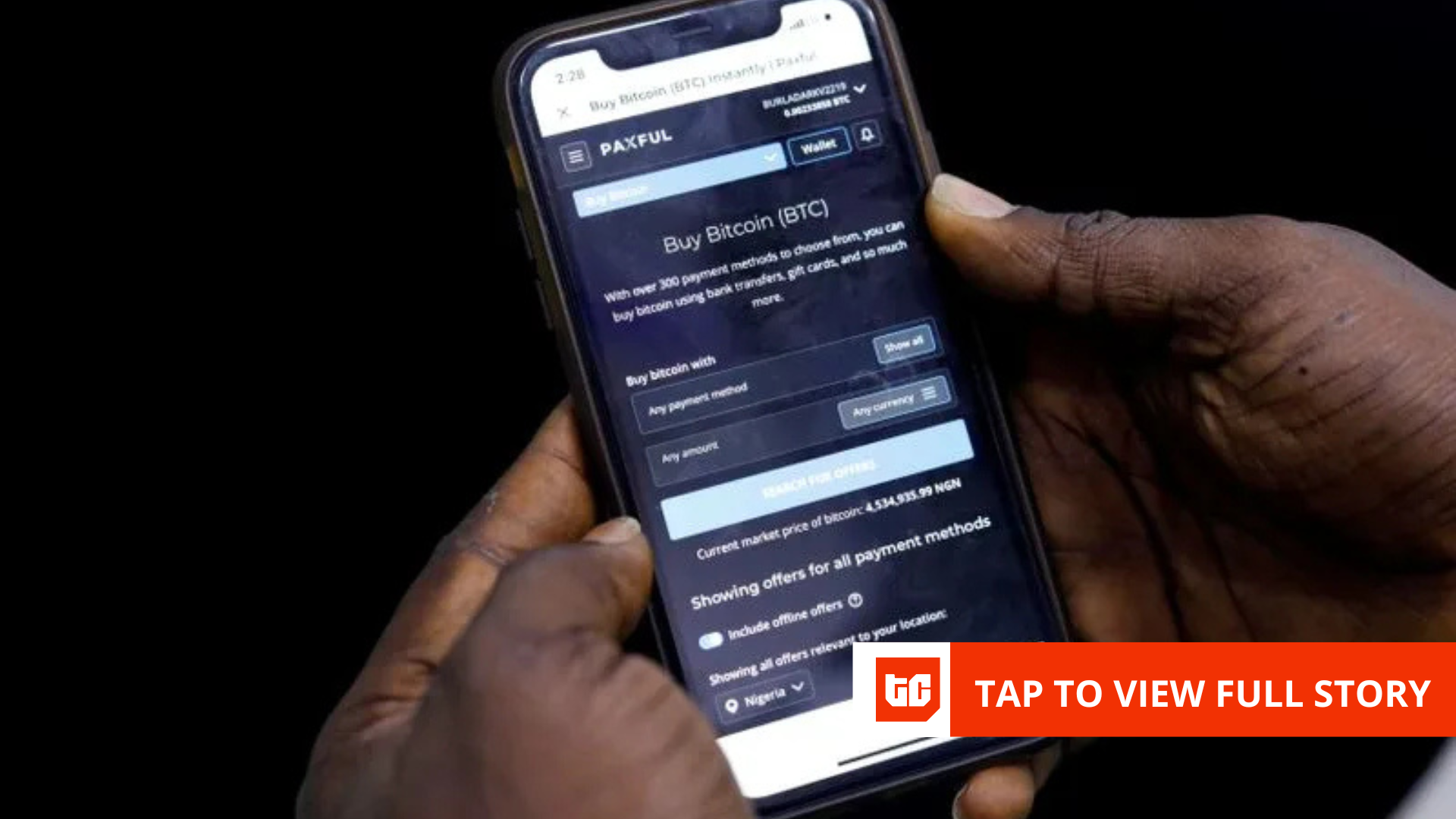
Peer-to-peer (P2P) trading became a lifeline for Nigerian crypto users after the Central Bank of Nigeria (CBN) barred banks from servicing crypto transactions in 2021. It forced local startups to find workarounds as global platforms like Paxful, a P2P marketplace that has since shut down, and Binance competed for the same users.
Nigerian startups began offering a broader range of products, including P2P and bill payments, around that time. The serious push into stablecoins, B2B payment rails, futures, and more complex financial products accelerated from 2023 onward to diversify income beyond the volatile retail cycle. Recently, that strategy has become more pronounced.
Several crypto startups operating in Nigeria, including Busha, Roqqu, Dantown, Luno, and Blockchain.com, have all expanded beyond retail crypto trading. Startups like Yellow Card have shut it down entirely to focus on the B2B side of digital currencies, signalling that the pressure on retail margins is acute enough to force a complete strategic pivot.
The unit economics of running a crypto retail trading business begin with one trade.
On a typical $100 retail transaction, the gross revenue a platform earns ranges from about $0.3 to under $1.40, three crypto startups told TechCabal.
One founder, who asked not to be named to speak freely due to the sensitivity of the details being disclosed, breaks this down: a 1% transaction fee earns $1, while foreign exchange (FX) spread on the naira conversion adds roughly $0.35. After deducting direct costs like payment processing and liquidity, gross profit exceeds $1.25.
Another operator, who also spoke on the condition of anonymity, said that gross profit after all costs is $0.30 to $0.50, reflecting the startup’s leaner, flat-fee pricing model with zero spread.
In normal market conditions, a startup keeps between 0.5% and 1.6% of every transaction, a figure known as the blended take rate. During volatile periods, when spreads widen, that range climbs to between 1.6% and 2.3%, according to the three startups.
One startup charges a fixed flat fee regardless of market conditions; others run tiered models from 0.35% to 1% depending on trade size.
The cost side is where things get complicated.
Running a regulated crypto trading platform means carrying expenses that do not shrink when trading slows: staff, security, compliance, banking and payment partnerships, and the infrastructure needed to move money reliably. These costs are largely fixed regardless of the number of trades a platform processes.
When retail trading activity slows, revenue falls, and sometimes becomes disproportionately lower than these fixed expenses, according to the three operators who spoke to TechCabal.
“While certain costs scale down with lower activity, a significant portion of the cost base is fixed or semi-fixed,” said Joshua Avoaja, chief technology officer and co-founder of Azza, a Nigerian WhatsApp-based crypto payments startup that said it has processed over $17 million. “Costs don’t compress proportionally during periods of lower trading volume.”
A typical active retail customer makes between two and six trades a month—rising to eight during market peaks—and spends between $13 to $15 per trade, according to the range provided by the three operators.
Taking the midpoint—about four trades monthly at $14 per trade—and applying the take 1% take rate, a crypto startup would earn about $0.56 per customer per month in gross revenue.
Set against a customer acquisition cost (CAC) of between ₦8,000 and ₦22,000 (about $5 to $14), recouping that investment on the average user spans between nine months and over two years.
For a business solely dependent on retail trading, it needs a deep runway to sustain its operations.
“[Crypto retail trading] is a solid but structurally constrained business,” said Avoaja. “Customer acquisition costs are relatively low, gross margins on individual trades are healthy, and demand has proven resilient. But there are limitations. Monetisation is uneven across the user base, with a smaller cohort of highly active users driving a disproportionate share of value.”
The business works with sufficient scale, but it has real limits as a standalone product, Avoaja said. Those limits become clearest when you look at who actually moves the revenue needle.
High-frequency retail traders called ‘power users,’ make between 20 and 30 transactions monthly and generate a disproportionate share of platform revenue, said Avoaja. These are the customers every crypto startup wants to keep.
Yet, they are also the most demanding customers: price-sensitive, quick to move to a competitor offering tighter spreads, and unforgiving of downtime or rate inconsistencies. Retaining them is not a growth problem; it is a reliability problem.
Despite the margin compression, Emmanuel Peter, Head of Trading and Markets at Roqqu, a Nigerian crypto exchange, said retail trading remains “a great business” for the startup.
Analyze the unit economics of retail trading
Data Source: TechCabal Research (Assumes 1% blended take rate & $1.25 avg gross profit per $100 trade).
The trading business is cyclical. Volume peaks in December and March, the former driven by end-of-year remittances and bonuses, said Avoaja.
These peak periods can deliver 50%–100% more volume per user than slow months, driven primarily by larger transaction sizes rather than increased frequency, he added.
During bearish stretches or low-activity periods, users transact more deliberately: fewer trades, more intentional, and with a slight tilt toward off-ramping (converting crypto back to cash).
For platforms whose revenue is entirely tied to that cycle, the income curve is lumpy and hard to plan around, making the case for expansion beyond retail trading more sensible.
Some platforms are moving into payment-driven use cases: utility bill payments, airtime top-ups, and other everyday financial services that generate activity independent of whether Bitcoin is up or down.
While retail trading features remain a mainstay in most Nigerian crypto startups, expanded product lines are quickly becoming “convenience features” during off-peak periods, said Avoaja.
According to three operators who spoke to TechCabal, these expansive products are still early in monetisation.