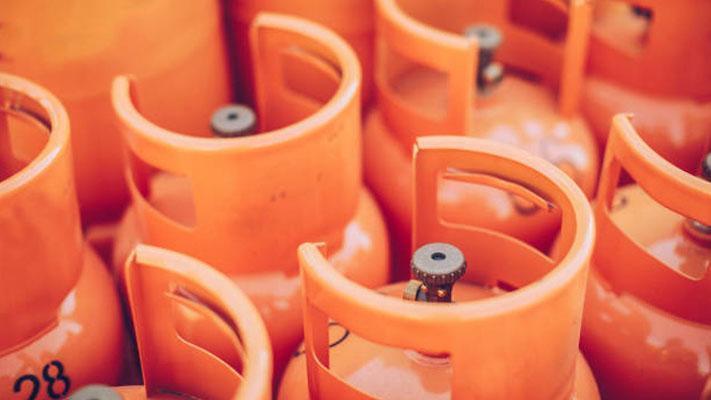
The price of liquefied petroleum gas in Nigeria has surged past N1,500 per kilogram, pushing millions of households to the financial edge and threatening to reverse nearly a decade of progress on clean cooking energy, according to the country’s main association of cooking gas marketers.
- +Cooking gas hits N1,500/kg as marketers sound alarm over supply crisis
The Nigerian Association of Liquefied Petroleum Gas Marketers (NALPGAM) issued a stark warning on Sunday, telling the federal government that the situation risked provoking public anger against gas station owners if left unaddressed.
The Nigerian Association of Liquefied Petroleum Gas Marketers (NALPGAM) issued a stark warning on Sunday, telling the federal government that the situation risked provoking public anger against gas station owners if left unaddressed.
The group said its members were now paying as much as N25.2 million, and in some locations N26.2 million, for a single 20-metric-ton consignment of LPG, costs that are being passed down the supply chain directly to consumers.
“We cannot stand by and watch millions of Nigerian families suffer in silence while access to clean cooking energy becomes increasingly difficult and unaffordable,” Edu Inyang, national president of NALPGAM Mr. Bassey Essien, executive secretary, said in a joint statement.
Food vendors who rely on gas-fired stoves to run their businesses, low-income families for whom LPG was only recently becoming affordable, and small enterprises operating on thin margins are all absorbing costs they were not structured to bear.
BusinessDay’s findings showed at N1,500 per kilogram, a standard 12.5-kilogram cylinder now costs upward of N18,750 to refill, a figure that, for a large portion of Nigeria’s population, represents several days’ income.
For years, successive administrations in Abuja promoted LPG as the centrepiece of Nigeria’s clean cooking agenda, steering households away from kerosene, charcoal, and firewood. Investment flowed into retail infrastructure.
Awareness campaigns ran nationwide. Cylinder penetration rates climbed. The policy appeared, by most accounts, to be working.
That progress is now unwinding in real time.
NALPGAM says its members across the country are reporting persistent supply shortages at depots, mounting logistics bottlenecks, and operating costs that have become unmanageable. Where product is actually available, the prices are out of reach for ordinary Nigerians.
The consequence is a visible reversal of consumer behaviour: households that had adopted LPG are returning to firewood and charcoal, a shift with serious downstream implications for public health, urban air quality, and Nigeria’s commitments under international climate frameworks.
The association did not mince its words on the stakes involved.
“This situation is seriously eroding the substantial progress made by the Government on the usage of clean energy in the country,” the statement read.
The roots of the crisis are multiple and, according to NALPGAM, structural. Domestic LPG allocation to the Nigerian market has been insufficient to meet demand. Import pipelines are constrained by what the group describes as unresolved bottlenecks in storage, transportation, and terminal operations. Regional distribution is uneven, leaving parts of the country critically underserved even when supply exists elsewhere in the system.
The association has directed its appeal at a wide range of actors: the federal Ministry of Petroleum Resources, the Nigerian Midstream and Downstream Petroleum Regulatory Authority, NNPC Ltd, domestic producers, depot operators, and international suppliers. Its demands are specific, increase domestic allocation, improve distribution equity across regions, reduce import friction, and deploy strategic pricing interventions at the retail level.
Beyond kitchen economics, NALPGAM is flagging broader systemic risks. Accelerated food inflation is the most immediate concern, given how directly cooking fuel costs feed into the price of prepared food across Nigeria’s enormous informal food sector.
Beyond that, the group warns of business closures in the retail LPG segment, job losses along the distribution chain, and a potential collapse of investor confidence in an industry that had, until recently, attracted significant private capital.
Nigeria’s clean energy and climate commitments, made in international forums and embedded in domestic policy documents, could take a credibility hit if households are visibly retreating to solid fuels at scale.
The association says it is ready to work with regulators and government toward durable solutions, but it is insisting that the window for voluntary, coordinated action is closing. “Decisive action is needed now,” the statement concluded.