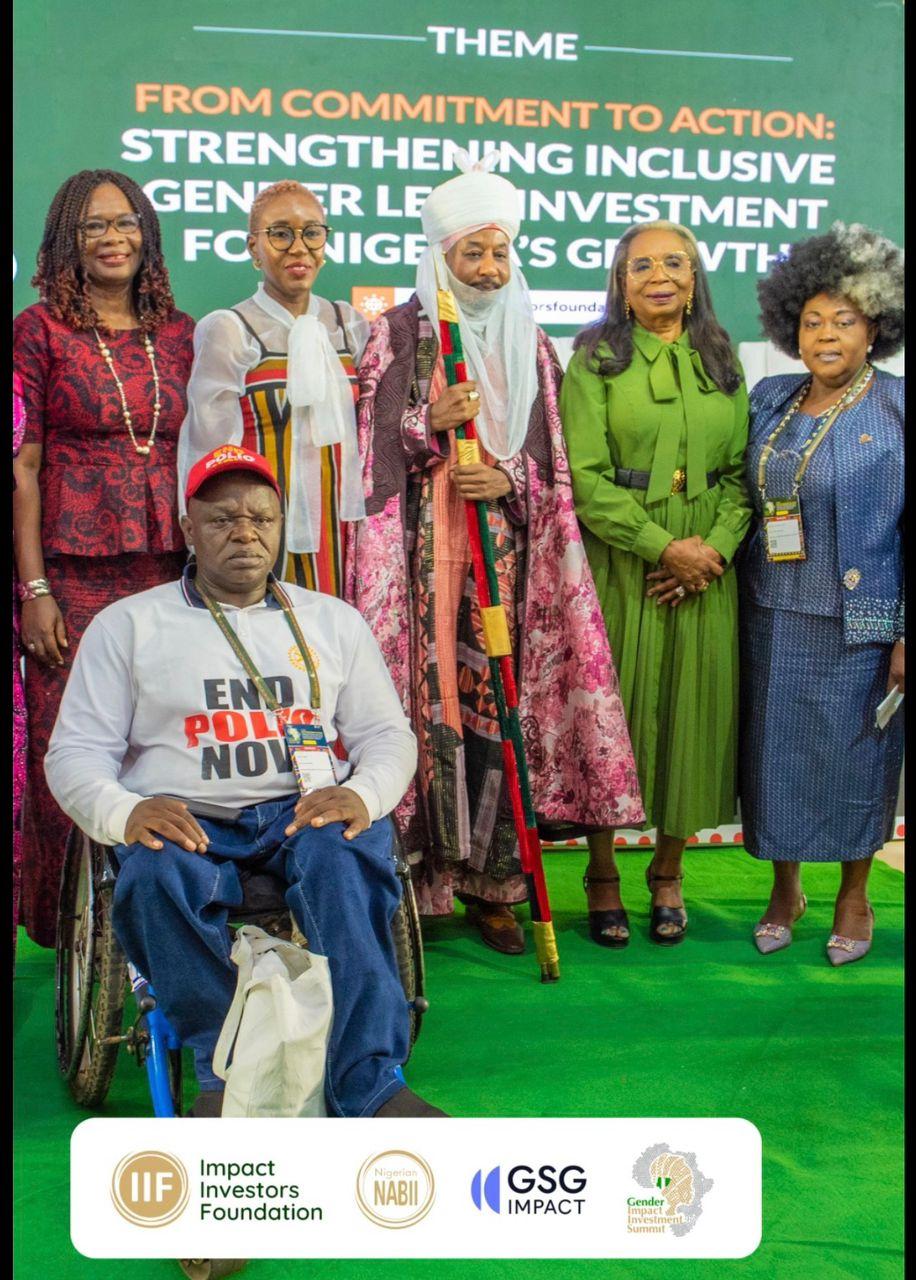
Sanusi revives gender banking reforms as Nigeria battles N6.75bn inclusive finance deficit
Former Central Bank of Nigeria (CBN) Governor and 14th Emir of Kano, Muhammadu Sanusi II, has revived calls for stronger gender-focused banking reforms as Nigeria struggles to close a widening inclusive finance gap estimated at $6.75 billion.
Former Central Bank of Nigeria (CBN) Governor and 14th Emir of Kano, Muhammadu Sanusi II, has revived calls for stronger gender-focused banking reforms as Nigeria struggles to close a widening inclusive finance gap estimated at $6.75 billion.
Sanusi made the call on Thursday during the 4th Gender Impact Investment Summit organised by the Impact Investors Foundation in Lagos.
The summit, themed “From Commitment to Action: Strengthening Inclusive Investment for Nigeria’s Growth,” brought together government officials, banks, development agencies, private investors and civil society groups to discuss practical ways of expanding access to finance for women, youths, persons with disabilities and other underserved groups.
Speaking during the keynote session titled “Turning Gender Equity into Economic Advantage,” Sanusi said Nigeria cannot achieve sustainable economic growth without deliberate policies that promote women’s inclusion in politics, business and finance.
He criticised what he described as years of political neglect of women in national development conversations. “Since 1999, I have never seen a political cycle where there was serious discussion about women as part of campaigns,” he said.
Sanusi recalled reforms introduced during his tenure as CBN governor in 2012 aimed at increasing women’s participation within the banking industry.
According to him, banks were directed at the time to ensure 50 percent female recruitment, improve women’s representation in management positions and reserve at least one-third of board seats for women.
“These things do not happen by accident,” he stated, stressing that inclusion must be driven through policy enforcement and institutional accountability.
He also proposed fresh political reforms, including reserving one senatorial district in every state exclusively for female candidates, alongside mandatory disclosure of gender diversity data and lending figures for women-led businesses.
According to him, changing Nigeria’s economic future would require a broader national conversation around inclusion. “We need a national conversation that changes the mindset and worldview of the country regarding women and inclusion,” he added.
The renewed push for reform comes as stakeholders warn that Nigeria’s inclusive finance ecosystem remains weak despite years of public commitments.
Etemore Glover, the chief executive officer of the Impact Investors Foundation, disclosed that the summit community had set a target of mobilising $8 billion in inclusive capital by 2035 but has secured only $1.25 billion so far, leaving a financing gap of $6.75 billion.
She said studies conducted between 2024 and 2025 under the Research and Innovation Systems for Africa project revealed persistent structural barriers limiting access to finance for women, youths and persons with disabilities.
According to Glover, while 91 percent of surveyed institutions claim to support Gender, Equity and Social Inclusion (GESI) objectives, only 41 percent have formal policies backing those commitments.
She also expressed concern over poor disability inclusion across Nigeria’s investment landscape, noting that persons with disabilities account for less than five per cent of beneficiaries reached through current programmes. “The findings are not just numbers. They are a call to action for our community to bridge these systemic gaps,” she said.
Presenting findings from the Baseline Study on Nigeria’s Gender and Social Inclusion Landscape, Kingsley Eze Otu, monitoring, evaluation and learning manager at Impact Investors Foundation, said none of the surveyed organisations currently maintain dedicated GESI budget lines.
He added that only 41 percent collect gender-disaggregated data, while just 37 percent use harmonised reporting standards.
The report showed that women account for 55 percent of beneficiaries reached by current programmes, while youths represent 40 percent. However, inclusion for persons with disabilities remains significantly low.
Stakeholders at the summit argued that inclusive investment should no longer be treated as a corporate social responsibility initiative but as an economic necessity capable of reducing poverty, driving innovation and supporting long-term growth.
Elizabeth Boggs Davidsen, the chief executive officer of GSG Impact, said women own nearly 40 per cent of Nigeria’s micro, small and medium enterprises but receive less than five per cent of formal credit.
She called for stronger mobilisation of domestic capital from pension funds, insurance pools and sovereign wealth resources to support women-led businesses and inclusive sectors.
Ibukun Awosika, chairman of GSG Nigeria Partners and vice chairman of GSG Impact Global, warned that countries that fail to utilise women’s economic potential weaken their own development prospects. “This is not a girl child conversation. It is a national development issue conversation,” she said.
Also speaking, Bamidele Elosho, business development and relationship manager for Microfinance Banks at the Development Bank of Nigeria, said the bank has disbursed over N1.4 trillion to more than one million MSMEs since 2017. According to him, over 749,000 beneficiaries were women-owned or women-led businesses.
Panel discussions at the summit also focused on flexible financing structures tailored to women entrepreneurs.
Ayodele Olojede, divisional head of retail and SME at Wema Bank, disclosed that the bank has disbursed more than N250 billion in loans to women-owned businesses within the last two years.
Experts at the summit concluded with a joint call for stronger policies, gender-responsive financial products, improved data systems and deliberate investments capable of transforming excluded groups into active drivers of Nigeria’s economic growth.