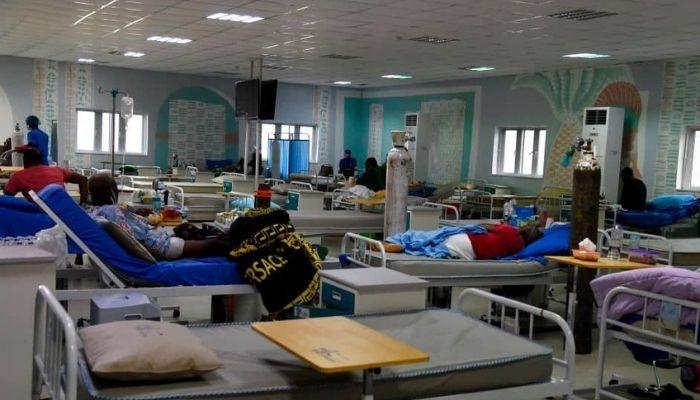
CAPPA decries budget discrepancies in healthcare, says Nigerians are short-changed
Akinbode Oluwafemi, Executive Director of Corporate Accountability and Public Participation Africa (CAPPA), has lamented longstanding gap between budget promises and actual releases, saying it has weakened the health system and is short-changing Nigerians.
Akinbode Oluwafemi, Executive Director of Corporate Accountability and Public Participation Africa (CAPPA), has lamented longstanding gap between budget promises and actual releases, saying it has weakened the health system and is short-changing Nigerians.
Oluwafemi, who disclosed this in a statement through Robert Egbe, the Media and Communication Officer, CAPPA decried Nigeria’s persistent failure to adequately fund the health sector over the past decade
According to him, “as Nigeria joined the global community to mark World Health Day 2026 today, CAPPA is urging governments at all levels to move beyond rhetoric and urgently address the chronic underfunding and policy gaps undermining the country’s health sector and worsening its disease burden”.
He decried Nigeria’s persistent failure to adequately fund the health sector over the past decades.
CAPPA, noted that Health allocations had consistently fallen short of the 15% benchmark set under Abuja declaration, lamenting that even the acclaimed approved funds are often not fully released.
The statement gave recent examples where the Federal Ministry of Health and Social Welfare reportedly decried the inability of the Ministry to implement its 2025 capital budget after only N36 million was released out of the N218 billion allocated.
It maintained that similarly, in 2024, just N26.552 billion was released from the N233.656 billion earmarked for capital projects.
“This longstanding gap between budget promises and actual releases has weakened the health system and is short-changing Nigerians which shows the limited access to essential medicines, overstretched facilities, a severe shortage of health workers worsened by the ‘Japa’ trend, high out-of-pocket costs, and a growing burden of non-communicable diseases driven by unhealthy food environments.”
CAPPA warned that non-communicable diseases (NCDs) including hypertension, diabetes, obesity and heart-related conditions now account for about 29% of annual deaths in Nigeria, placing enormous strain on families and the health system.
“It stressed that reversing this trend requires urgent preventive policies, particularly the curbing of excessive consumption of salt, sugar and trans fats”, he noted.
Referencing on the World Health Day 2026 theme, “Together for health: Stand with science,” the organisation called on governments to prioritise evidence-based policies on Health ”
One such measure, CAPPA said, is a stronger Sugar-Sweetened Beverage (SSB) tax.
The Group also welcomed moves by the National Assembly to review the current N10 per litre levy and transition to a percentage-based tax tied to retail price, with part of the revenue earmarked for health promotion.
“We maintain that the current SSB tax is too low to significantly reduce consumption. We are calling for an increase to at least 50 per cent of the retail price, in line with World Health Organization recommendations.
“There is compelling evidence that stronger fiscal measures can reduce consumption while generating much-needed revenue for health financing.
“Beyond taxation, the organisation reiterated its call for complementary policies, including mandatory sodium reduction targets, front-of-pack labelling for processed foods, and restrictions on the marketing of unhealthy foods, especially to children, setting mandatory salt targets for processed and pre-packaged foods, the group argued, is a practical and evidence-based intervention to protect public health.”
It added that simple, visible warning labels would empower Nigerians to make informed choices at a glance, counter deceptive marketing tactics, and encourage manufacturers to reformulate products to meet healthier standards.
“These measures are critical to tackling what is now a silent epidemic of diet-related diseases, fiscal and regulatory policies that promote healthy diets remain among the most cost-effective tools available to governments”, he said.
CAPPA further highlighted the rising burden of diseases linked to tobacco use and emerging nicotine products, urging increased funding for tobacco control, describing the current N13 million allocation to the Tobacco Control Fund (TCF) as grossly inadequate, even as he called for a review to at least N300 million.
“Tobacco use remains one of the leading causes of preventable deaths worldwide, including in Nigeria,” Oluwafemi said. “Effective implementation of the National Tobacco Control Act requires far greater investment than what is currently provided.
“The organisation called on governments, policymakers and relevant agencies to scale up health sector funding, ensure full and timely release of budgeted funds, fast-track the adoption of healthy food policies, and strengthen accountability across the system.
“Prevention must become central to Nigeria’s health strategy means backing science with action through adequate funding and strong policies that protect public health”, he concluded.