UNICEF Femtech Ventures backs 11 startups tackling women’s health gaps across Africa, Asia
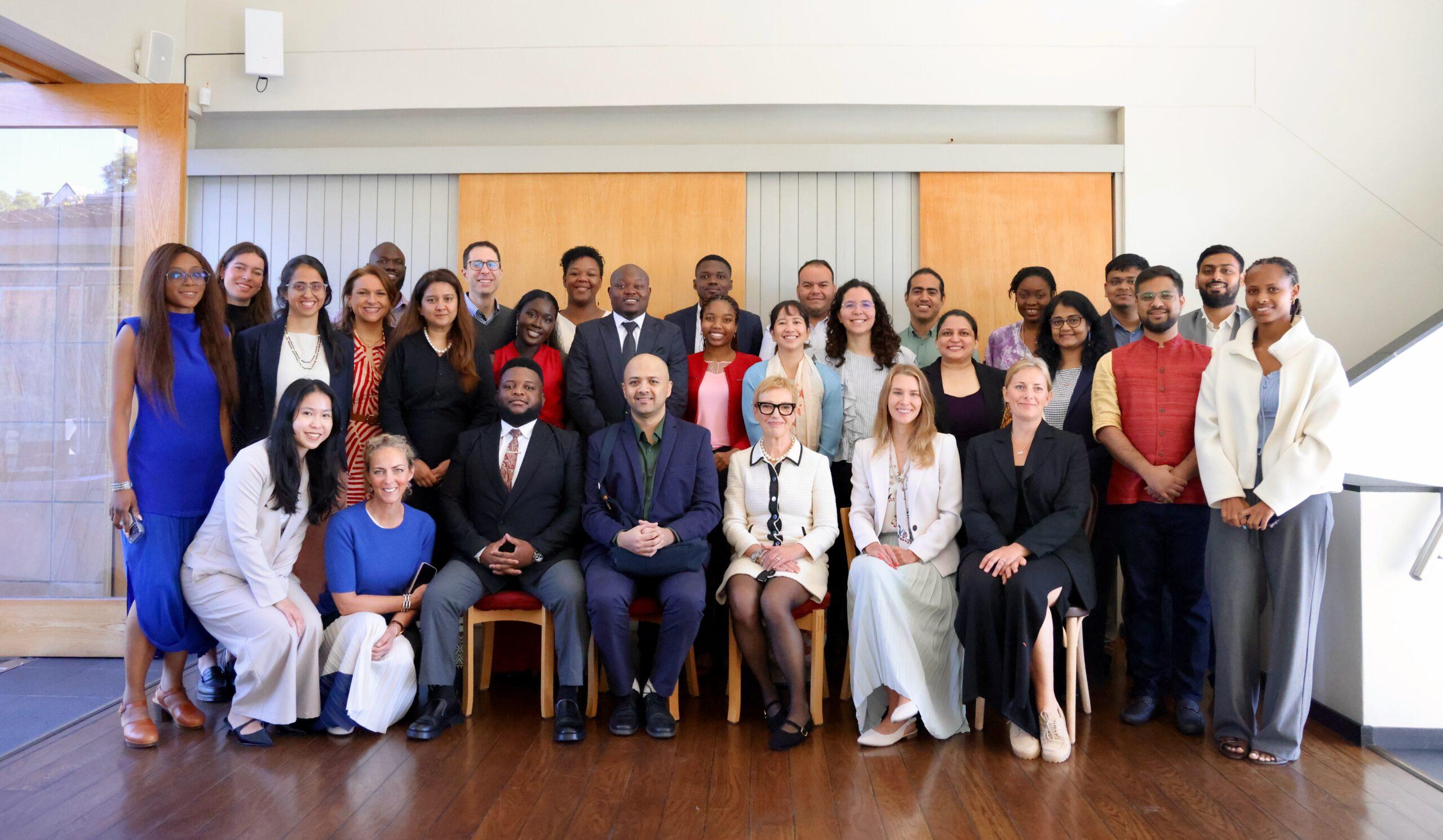
Tech startups playing in various sectors of women’s health and safety across Africa and Asia will convene in South Africa’s capital, Pretoria, this week to activate the first cohort of UNICEF Femtech Ventures – a five-year catalytic investment platform backed by the Government of Sweden and the Temasek Foundation.
Tech startups playing in various sectors of women’s health and safety across Africa and Asia will convene in South Africa’s capital, Pretoria, this week to activate the first cohort of UNICEF Femtech Ventures – a five-year catalytic investment platform backed by the Government of Sweden and the Temasek Foundation. The cohort gathers to engage South Africa’s tech and business ecosystem – one of Africa’s most developed, and a mature market for addressing sexual and reproductive health and rights.
This first cohort activates a global network of frontier tech startups in emerging economies, applying artificial intelligence (AI), data science and blockchain to address maternal and reproductive care, safe mobility, gender-based violence response and financial inclusion. Each one was selected from over 1,100 applications from 85 countries, more than half from Africa. The shortlist of 151 startups across 53 countries was 89 per cent woman-led.
“The most important innovation for women and girls is already being built – by the entrepreneurs closest to the challenge. UNICEF Femtech Ventures backs them with the capital, technical support and partnerships to turn what works locally into access at scale,” said Thomas Davin, Global Director, UNICEF Office of Innovation.
For millions of girls and women, access to quality care, trusted health information, safe mobility and digital economic opportunity remains uneven or out of reach. The inaugural UNICEF Femtech Ventures cohort marks a deliberate shift from documenting equity gaps to backing the entrepreneurs closing them.
The startups will receive up to $100,000 in equity-free capital, business mentorship, alongside a year of tailored technical assistance to test, strengthen and scale their solutions.
UNICEF Femtech Ventures pairs equity-free capital with hands-on technical assistance, a model designed to de-risk future investment and direct catalytic capital toward locally built innovation. Solutions are built by founders with deep market knowledge, tested in conditions that expose false assumptions, and designed to scale where systems are weakest – built there, proven everywhere.
“Investing in local founders solving local problems is an effective use of public funding. It is how African- and Asian-built innovations thrive, scale and solve some of the world’s most intractable sexual and reproductive health challenges. Improving outcomes for girls and women is proven to have a catalytic social economic effect,” said Anna-Karin Eneström, Ambassador, Embassy of Sweden in Pretoria, South Africa.
The maiden edition comprises 11 startups, shared between Africa and Asia, that solve parallel challenges across different market conditions, policy environments, and technologies where frontier tech for women and girls is being built with urgency. Of the 11, five are Asian, and six are African, providing a near-balanced cross-border collaboration. Here is the full list of the startups:
UNICEF Femtech Ventures will share progress updates from the cohort ahead of the opening of the second call for applications in Q4 2026, building toward a portfolio designed to reach millions of women and girls.