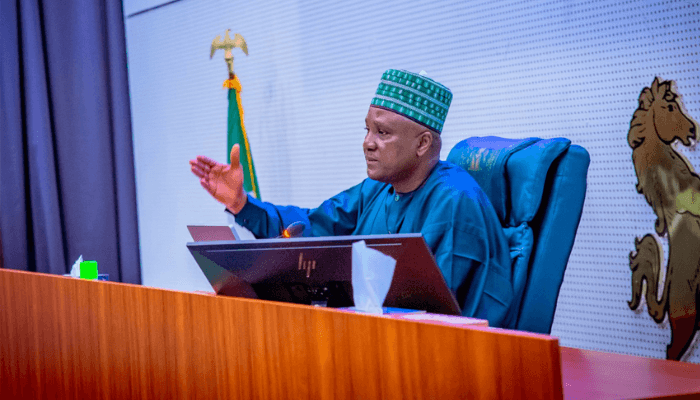
Abbas Tajudeen, Speaker of the House of Representatives, has said crude oil theft in Nigeria remains at “concerning levels”, despite recent improvements in pipeline security.
- +Crude oil theft still at concerning levels, calls for reforms – Speaker
The speaker called for reforms to strengthen transparency, accountability and surveillance systems in the oil sector.
The speaker called for reforms to strengthen transparency, accountability and surveillance systems in the oil sector.
Abbas raised the concern on Wednesday at a Parliamentary Roundtable on pipeline surveillance contracts, crude oil theft and the celebration of success stories, held at the Old Chamber of the House of Representatives in Abuja.
While acknowledging progress recorded under the Federal Government’s pipeline surveillance framework, the Speaker said emerging public discourse suggests that oil theft persists even under existing security arrangements.
“There is no doubt that we can do better. There are still a number of challenges, particularly as they concern accountability, transparency, and the effectiveness of certain surveillance frameworks. This underscores the need for continuous oversight and reform,” the Speaker said.
He noted that gaps remain in accountability and the effectiveness of certain surveillance mechanisms.
Abbas traced Nigeria’s long-standing struggle with oil theft to the Niger Delta region, where decades of agitation, weak enforcement and illegal refining have contributed to large-scale losses.
He noted, Nigeria lost between 10 and 30 per lcent of its crude production annually to theft, undermining national revenue and investor confidence.
He credited the introduction of pipeline surveillance contracts, which involve private security actors and community-based structures, with helping to reverse some of those losses. According to him, the approach has improved production levels and strengthened collaboration between host communities and security agencies. Abbas said Nigeria’s crude oil production has risen significantly, from periods when output plunged to as low as about 700 barrels per day to around 1.8 million barrels per day, attributing the improvement largely to enhanced surveillance efforts.
The Speaker also highlighted the social impact of the initiative, noting that it had.created employment opportunities for thousands of youths in the Niger Delta, many of whom were previously involved in unrest and illegal activities.
In addition to these gains, he called for a more coordinated approach involving government, security agencies, private operators and host communities, stressing that protecting oil infrastructure is a shared responsibility.
The Speaker said the roundtable was taking place at a critical moment for global energy markets, pointing to geopolitical tensions in the Middle East and the Russia-Ukraine conflict as factors reshaping global oil supply and demand.
He added that disruptions such as the closure of strategic trade routes have triggered price surges, underscoring the continued importance of crude oil as a dominant energy source.
The speaker urged stakeholders at the roundtable to use the forum to reassess existing surveillance arrangements, deepen community engagement and align legislative frameworks with current realities in the oil and gas sector.
“Nigeria must rise to the challenge,” Abbas said, adding that the country has a critical opportunity to position itself as a reliable energy supplier amid global uncertainty.